
How to turn a performance-class requirement into a specification that fits the facility
A generator’s power rating tells you how much load it can supply under defined conditions. For a data center, its response when that load changes is just as important.
Following a utility outage, the generator may need to accept UPS input power, cooling equipment, and other loads in a planned sequence. Voltage and frequency must remain within the limits that those systems can tolerate.
This is why G3 performance appears in data center generator specifications. It provides a reference for electrical performance, including behavior during load changes. Buyers need evidence that the proposed equipment will meet the facility’s requirements with its actual load.
What the performance classes describe
The ISO 8528 series covers generating sets driven by reciprocating internal combustion engines. Its performance-class framework distinguishes applications with different electrical requirements; Part 5 sets out generating-set design and performance criteria. ISO lists ISO 8528-5:2025 as the current published edition. A project specification should name the edition it uses. ISO 8528-5
The classes can be understood broadly as follows:
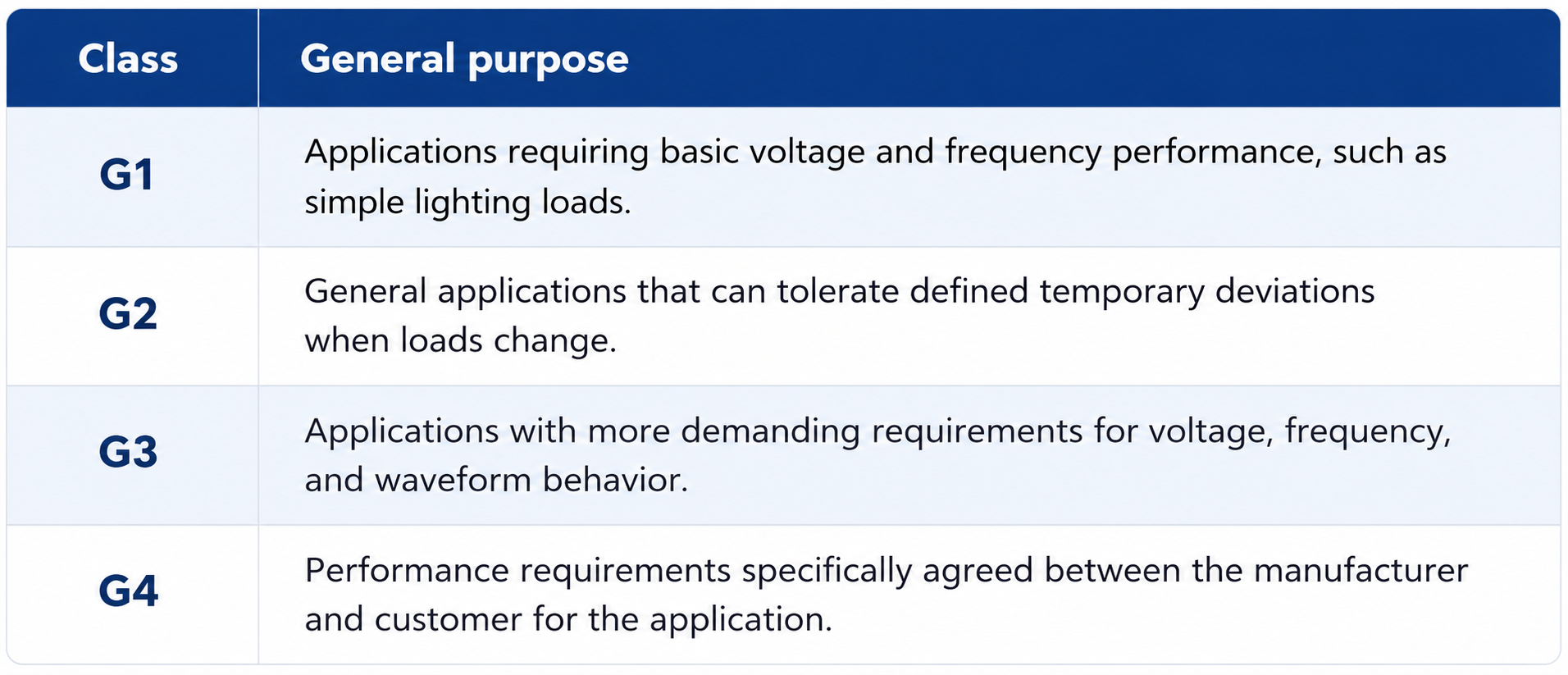
4 uses requirements agreed for the application, rather than a fixed set of limits above G3. Cummins’ explanation of the classes makes this distinction explicit. Cummins: Transient Performance of Generating Sets
G3 is a useful reference for demanding loads, but suitability still depends on the generator configuration, duty, and load behavior. A project may impose requirements that go beyond the standard class definition.
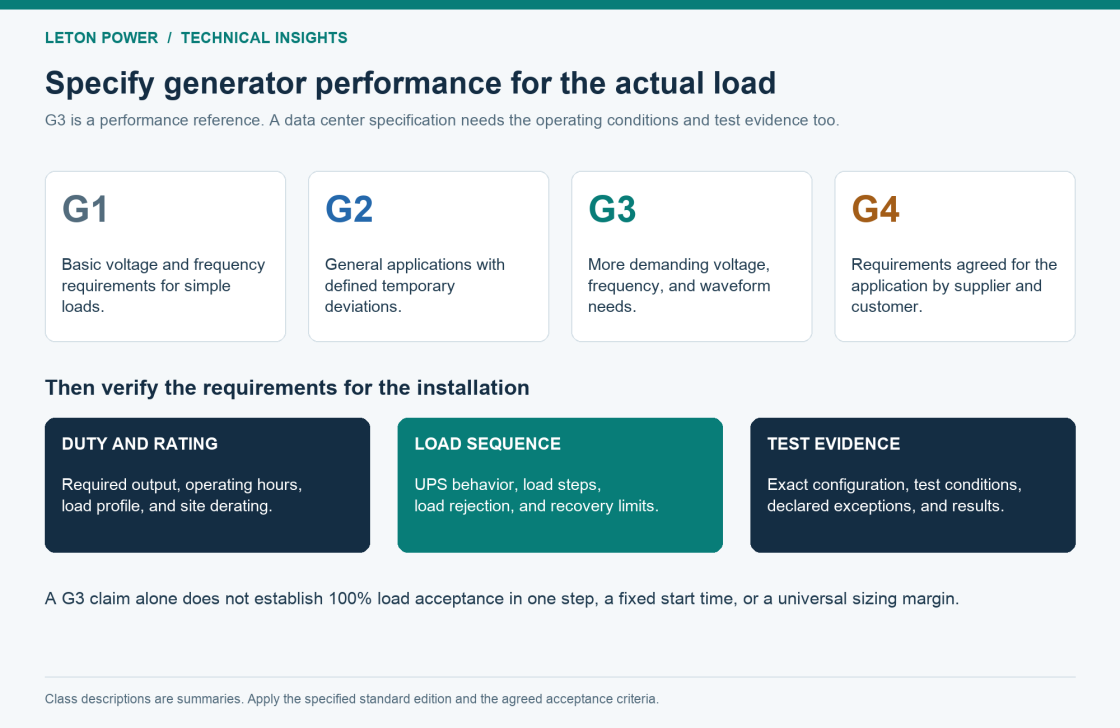
Figure 1. Use the performance class as a reference, then verify the operating rating, load sequence, and compatibility with the facility’s equipment. The class descriptions are summaries, not the standard’s complete acceptance criteria.
G3 does not specify every possible load step
A generator may meet G3 requirements under the standard test sequence without meeting those same limits for a different load step specified by the project.
For example, a requirement to accept 60% of rated power in one step needs its own evidence if that step differs from the standard sequence. The permissible voltage dip, frequency dip, and recovery times must be stated for that event.
Caterpillar’s guidance distinguishes the ISO-defined load steps from custom steps and explains why custom performance requirements need agreement between the supplier and customer. A G3 claim should therefore be read together with the test conditions and its scope. Caterpillar: Transient Performance Specifications
This also means that G3 alone does not establish the ability to accept 100% of rated load in a single step. If the operating sequence requires that capability, specify and verify it for the proposed generating set.
Match the test to the load the generator will see
Servers are often supplied through UPS equipment, so the generator’s interaction with the UPS input matters. Relevant characteristics include rectifier behavior, input-current limits, battery recharge, input harmonics, and the rate at which the UPS transfers its demand to the generator.
Some electronic loads behave approximately as constant-power loads over part of their operating range. During a voltage dip, they can draw more current to maintain power. That differs from a conventional resistive load bank, whose power falls as voltage falls. Caterpillar discusses this distinction in its guidance on constant-power loads. Caterpillar: Constant Power Loads
Factory testing remains valuable, but the test report needs to state what was connected and how the load was applied. A successful resistive load-bank test is evidence of performance under those conditions. Additional analysis or testing may be needed to establish compatibility with the installed UPS and other site loads.
Power quality should be specified with the same care. Steady-state voltage regulation, frequency stability, voltage unbalance, and harmonic distortion are different parameters. Their limits need the appropriate definitions and test conditions. A single THD figure, for example, is incomplete without identifying whether it refers to voltage or current and the load under which it is measured.
Check the operating rating separately
Performance class and operating rating answer different questions. G3 concerns electrical performance. The rating establishes the power available for a particular duty and load profile.
Emergency standby power, prime rated power, and continuous operating power have different conditions of use. Manufacturer-defined data center ratings may provide another option, but their terms must be checked for the specific equipment and project. A rating that permits unlimited operating hours can still have limits on the allowable load profile. Cummins: Generator Ratings for Data Centers and Other Applications
Selection should reflect the expected outage duty, load profile, ambient temperature, altitude, and required output. A long-duration requirement should be addressed explicitly in the technical agreement rather than inferred from the words “data center generator.”
Calculate the capacity margin from supported auxiliary loads, starting demands, load steps, derating, growth, and the required redundancy. Adding 30% to the load without that analysis may leave the generator too small or unnecessarily oversized.
Make the requirements testable
A useful purchase specification should identify:
- The complete generating-set configuration, operating rating, voltage, and frequency.
- The performance class, applicable standard edition, and any declared exceptions.
- The required load-acceptance and load-rejection events, with numerical limits and defined recovery bands.
- The UPS interface, load sequence, and relevant power-quality limits.
- The evidence required at factory acceptance testing and during site commissioning.
The outage sequence should also define the time from utility failure to usable generator supply, the role of the UPS, and the response when a generator fails. Those requirements follow the project’s design and applicable rules. They should not be reduced to a universal ten-second claim or an assumed seamless transfer.
When discussing generator requirements with LETON POWER, pair the performance class with clear operating conditions and measurable acceptance criteria. Buyers and suppliers can then assess whether the proposed generator system will accept the required load and keep the facility within its electrical limits.

