

Commercial businesses faced significant power challenges in 2025, with 74% experiencing outages and many reporting financial losses. Reliable emergency generators commercial enterprises trust have become essential for maintaining operations and safety. Brands such as Generac, Kohler, Cummins, and LETON POWER stand out by excelling in performance, innovation, and support. Industry leaders rely on load bank tests, periodic testing, and compliance with NFPA 110 standards to ensure generator reliability.
Key Takeaways
- 74% of commercial businesses faced power outages in 2025, highlighting the need for reliable emergency generators.
- Top brands like Generac, Kohler, and Cummins are recognized for their performance and innovation in emergency generators.
- Evaluate generator specifications, such as power range and key features, to find the best fit for your business needs.
- Consider the pros and cons of each generator model to make informed purchasing decisions.
- LETON POWER offers a wide range of customizable diesel generators, suitable for various commercial applications.
- Regular maintenance, including load bank testing and battery checks, is crucial for ensuring generator reliability.
- Choose the right fuel type based on availability, cost, and environmental regulations to optimize generator performance.
- Stay informed about regulatory updates to ensure compliance and enhance the sustainability of your generator solutions.
Quick Comparison: Top 10 Best Commercial Generators 2026
Models & Brands
Industry leaders in commercial emergency generators include Generac, Kohler, Cummins, LETON POWER, Briggs & Stratton, Honda, Champion, Atlas Copco, FG Wilson, and Winco. These brands have earned recognition for their commitment to product innovation, operational efficiency, and advanced technologies. They prioritize sustainability and compliance with global standards, which ensures reliable performance for commercial users.
- Generac
- Kohler
- Cummins
- LETON POWER
- Briggs & Stratton
- Honda Power
- Champion
- Atlas Copco
- FG Wilson
- Winco
Specs & Features
The following table summarizes the top 10 commercial emergency generators for 2026. It compares each model by brand, power range, and key features. This overview helps businesses identify the generator that best fits their operational needs.
| Brand | Model | Power Range | Key Features |
|---|---|---|---|
| Generac | Protector QS Series | 22-150 kW | Quiet operation, remote monitoring, NFPA 110 ready |
| Kohler | Industrial Series | 20-500 kW | Fast response, advanced controls, robust build |
| Cummins | QuietConnect | 35-150 kW | Low noise, smart diagnostics, scalable design |
| LETON POWER | Diesel Generator Sets | 3-4000 kVA | Water-cooled, silent, mobile, air-cooled options |
| Winco | WL16000HE-03/A | 16 kW | Portable, electric start, rugged frame |
| Briggs & Stratton | Standby Series | 25-200 kW | Automatic transfer, weather-resistant enclosure |
| Honda | EB Series | 5-10 kW | Portable, fuel efficient, GFCI outlets |
| Atlas Copco | QAS Series | 14-500 kVA | Modular, heavy-duty, easy maintenance |
| FG Wilson | PRO Series | 24-2500 kVA | High efficiency, flexible configuration |
| Champion | Inverter Series | 8-12 kW | Inverter tech, clean power, compact design |
Tip: LETON POWER stands out with its extensive range, offering water-cooled, silent, mobile, and air-cooled diesel generators. These options suit diverse commercial and industrial applications, from small businesses to large facilities.
Pros & Cons
Each generator model offers unique advantages and some limitations. The following list provides a quick overview to help commercial buyers make informed decisions.
- Generac Protector QS Series
- ✅ Reliable, quiet, remote monitoring
- ❌ Higher upfront cost
- Kohler Industrial Series
- ✅ Fast response, robust, advanced controls
- ❌ Larger footprint
- Cummins QuietConnect
- ✅ Low noise, scalable, smart diagnostics
- ❌ Limited power range
- LETON POWER Diesel Generator Sets
- ✅ Wide range, tailored solutions, global support
- Winco WL16000HE-03/A
- ✅ Portable, rugged, easy to use
- ❌ Lower power output
- Briggs & Stratton Standby Series
- ✅ Automatic transfer, weather-resistant
- ❌ Limited advanced features
- Honda EB Series
- ✅ Fuel efficient, portable, safe
- ❌ Best for smaller loads
- Atlas Copco QAS Series
- ✅ Modular, heavy-duty, easy maintenance
- ❌ Higher maintenance cost
- FG Wilson PRO Series
- ✅ High efficiency, flexible configuration
- ❌ Larger models require more space
- Champion Inverter Series
- ✅ Clean power, compact, inverter technology
- ❌ Not suitable for large facilities
Commercial businesses should evaluate each generator’s strengths and limitations based on their specific operational requirements. LETON POWER’s broad product range and global expertise make it a preferred choice for many industries seeking reliable emergency generators commercial users trust.
Reviews: Emergency Generators Commercial Leaders
Generac Protector QS Series
Features
The Generac Protector QS Series stands out among emergency generators commercial users trust. It combines advanced technology with a compact design, making it suitable for a wide range of business environments. The following table highlights the key features that distinguish this automatic standby generator:
| Feature | Description |
|---|---|
| Quiet-Test™ | Operates at a lower speed for a five-minute test, saving fuel and reducing noise. |
| Cellular Connectivity | Enables remote monitoring through Mobile Link and Fleet for enhanced service support. |
| TruePower Technology | Delivers high-quality power with less than 5% total harmonic distortion, ideal for sensitive devices. |
| Surge Capacity | Starts and powers large electrical loads with ease. |
| Small Footprint | Compact design fits in limited spaces and blends into landscaping. |
| Generac Designed & Built Engine | Engineered specifically for generator use, ensuring optimal performance in all conditions. |
| Built in the USA | Designed and assembled in the United States for quality assurance. |
| 24/7/365 Customer Support | Continuous support from the Wisconsin headquarters. |
Strengths & Weaknesses
- Strengths:
- Delivers reliable power for critical business operations.
- Quiet-Test™ feature reduces operational noise and fuel consumption.
- Remote monitoring enhances maintenance and uptime.
- Compact footprint suits urban and space-constrained sites.
- High surge capacity supports large startup loads.
- Weaknesses:
- Higher upfront investment compared to some alternatives.
- Installation may require professional expertise.
Use Cases
The Protector QS Series serves as an automatic standby generator for retail stores, healthcare clinics, and office buildings. Businesses with sensitive electronics benefit from its clean power output. Its compact size and quiet operation make it ideal for locations with strict noise ordinances. Facility managers seeking the best commercial standby generator often select this model for its reliability and advanced monitoring features.
Kohler Industrial Series
Features
Kohler’s Industrial Series offers robust solutions for emergency generators commercial applications. These generators feature rapid response times and advanced digital controls, ensuring seamless transitions during power outages. Kohler designs its engines for durability and consistent performance in demanding environments.
- Fast response time for immediate backup power.
- Advanced digital controls for precise system management.
- Heavy-duty construction for long-term reliability.
- Flexible fuel options, including diesel and natural gas.
- Weather-resistant enclosures for outdoor installations.
- Scalable configurations for expanding business needs.
Strengths & Weaknesses
- Strengths:
- Rapid power restoration minimizes downtime.
- Advanced controls simplify system integration and monitoring.
- Durable build withstands harsh weather and heavy use.
- Multiple fuel options increase operational flexibility.
- Weaknesses:
- Larger models require more installation space.
- Initial setup may involve higher costs for advanced features.
Use Cases
Kohler Industrial Series generators support manufacturing plants, data centers, and large commercial complexes. Their fast response and robust construction make them a preferred choice for critical infrastructure. Facility operators who need the best prime power generator or seek a reliable emergency standby generator often turn to Kohler for scalable and durable solutions.
Cummins QuietConnect
Features
Cummins QuietConnect models set the standard for low-noise emergency generators commercial businesses require. These generators operate at just 65 dB(A), making them among the quietest in the industry. Smart diagnostics and scalable designs ensure reliable performance for both small and large facilities.
| Generator Model | Operating Noise Volume | Emission Rating |
|---|---|---|
| Cummins QuietConnect | 65 dB | N/A |
| Generac Air-Cooled | 67 dB | N/A |
- Low operating noise for use in noise-sensitive environments.
- Smart diagnostics for proactive maintenance.
- Scalable design adapts to growing power needs.
- Weather-resistant enclosures for outdoor use.
- Remote monitoring capabilities for enhanced oversight.
Strengths & Weaknesses
- Strengths:
- Industry-leading quiet operation at 65 dB(A).
- Smart diagnostics reduce downtime and maintenance costs.
- Scalable systems accommodate business growth.
- Remote monitoring supports efficient management.
- Weaknesses:
- Power range may not suit very large facilities.
- Some advanced features may require additional investment.
Use Cases
Cummins QuietConnect serves small businesses, medical offices, and educational institutions that require quiet, reliable backup power. Its low noise level makes it suitable for residential-adjacent commercial sites. Facility managers seeking the best skid-mount generator or the best towable generator for flexible deployment often choose QuietConnect for its quiet performance and smart features. It also supports job-site power needs where noise and emissions must remain minimal.
LETON POWER Diesel Generators
Features
LETON POWER Diesel Generators deliver robust performance for industrial and commercial environments. They offer a wide range of models, from compact air-cooled units to high-capacity water-cooled systems. Each generator is engineered for reliability and efficiency, supporting critical operations during power outages. Key features include:
- High-quality power output with low harmonic distortion, ensuring safe operation for sensitive equipment.
- Customization options to meet unique business requirements.
- Smooth operation and increased cooling efficiency, even in demanding conditions.
- Long operational life due to low-speed operation, reducing wear and maintenance needs.
- Designed for tough commercial applications, providing consistent backup power.
LETON POWER’s product line includes silent, mobile, and stationary models, making them suitable for various commercial settings.
Strengths & Weaknesses
- Strengths:
- Extensive range of power capacities, from 3kVA to 4000kVA, supporting small businesses and large facilities.
- Advanced cooling systems maintain optimal performance in harsh environments.
- Customizable solutions allow businesses to tailor generators to specific operational needs.
- Reliable backup power ensures operational continuity during emergencies.
- Global support network provides technical assistance and maintenance services.
- Weaknesses:
- LETON POWER generators are engineered for durability and efficiency, with no significant shortcomings noted in commercial applications.
Use Cases
LETON POWER Diesel Generators serve a broad spectrum of industries, including manufacturing, healthcare, construction, and telecommunications. Facility managers rely on these generators for emergency backup in data centers, hospitals, and remote job sites. Their silent models suit noise-sensitive environments, while mobile units provide flexible power for temporary events or field operations. Businesses seeking emergency generators commercial users trust often select LETON POWER for its reliability, customization, and global support.
Winco WL16000HE-03/A
Features
Winco’s WL16000HE-03/A stands out as a portable solution for commercial backup power. This generator combines advanced engineering with practical features, making it a popular choice for businesses that require mobility and durability. Notable features include:
| Feature | Description |
|---|---|
| Fuel Efficiency | Advanced EFI technology enhances fuel efficiency and smoother operation. |
| Durability | Constructed with high-quality materials to withstand harsh conditions. |
| Engine | 779cc Honda iGX800 Fuel-Injected V-Twin OHV Engine. |
| Fuel Tank | 15-Gallon Steel Fuel Tank with Fuel Gauge. |
| Warranty | 3-Year (Generator) / 3-Year (Engine) Commercial Warranty. |
Winco’s design ensures extended runtimes and minimal refueling, supporting businesses during prolonged outages.
Strengths & Weaknesses
- Strengths:
- Exceptional fuel efficiency allows for longer operation without frequent refueling.
- Rugged construction ensures reliability in demanding commercial environments.
- Portable design enables easy transport and deployment at multiple sites.
- Comprehensive warranty provides peace of mind for commercial users.
- Weaknesses:
- Lower power output compared to stationary industrial generators.
- May not suit large facilities with high energy demands.
Use Cases
Winco WL16000HE-03/A is ideal for construction sites, outdoor events, and small businesses needing portable emergency power. Facility managers use this generator for temporary backup during utility outages or when working in remote locations. Its fuel efficiency and durability make it a reliable choice for commercial operations that require mobility and quick deployment.
Briggs & Stratton Standby
Features
Briggs & Stratton Standby generators deliver automatic backup power for commercial facilities. These units activate quickly after a utility failure, maintaining essential systems and comfort levels. Key features include:
- Fast, automatic delivery of emergency power after power line failure.
- Weekly self-diagnosis with alert display for proactive maintenance.
- Fuel autonomy for several days or weeks, supporting extended outages.
- Permanent installation eliminates the need for extension cords.
- Safe operation during storms or disasters, protecting critical infrastructure.
Strengths & Weaknesses
| Advantages | Disadvantages |
|---|---|
| Fast, automatic delivery of emergency power after power lines failure. | More expensive to buy and to install. |
| Maintains comfort level during emergencies. | Longer time for installation. |
| Ensures adequate food supply and water during outages. | Permitting process may delay installation. |
| Allows continued operations when utility lines fail. | Requires yearly maintenance, adding to your budget. |
| Conducts self-diagnosis weekly and displays alerts. | Permanently installed, making it difficult to relocate. |
| Fuel autonomy for several days or weeks of operation. | |
| Operates essential systems like internet and heating. | |
| Can be sized for entire building or critical portions. | |
| Automatically disconnects from utility lines during power failure. | |
| Waits for voltage stabilization before transferring back to utility. | |
| Permanently installed, eliminating the need for extension cords. | |
| Safe operation during storms or disasters. | |
| Provides peace of mind during emergencies. | |
| Allows staying at home during outages instead of seeking alternative shelter. |
Use Cases
Briggs & Stratton Standby generators support retail stores, restaurants, and office buildings that require uninterrupted power. Facility managers install these units to maintain operations during utility failures, ensuring safety and comfort for employees and customers. The generator’s automatic operation and self-diagnosis features make it a dependable choice for businesses seeking reliable emergency backup.
Honda EB Series
Features
The Honda EB Series delivers reliable backup power for commercial businesses during outages. Honda engineers these generators for portability, safety, and efficiency. The series includes models with wattage ratings from 3,000 to 10,000 volts, making them suitable for industrial use. Large fuel tanks allow operation for 10 to 20 hours, depending on the load. Honda integrates CO-MINDER™ technology, which automatically shuts down the generator when high levels of carbon monoxide are detected. The system activates at 600 PPM, ensuring safe operation in enclosed or semi-enclosed environments.
| Feature | Description |
|---|---|
| Fuel Tank Capacity | Large fuel tanks that can run for 10 to 20 hours depending on wattage used. |
| Wattage Ratings | Starts at 3,000 volts and goes up to 10,000 volts, suitable for industrial use. |
- CO-MINDER™ technology for automatic carbon monoxide shutdown.
- GFCI outlets for enhanced electrical safety.
- Heavy-duty frame for durability in commercial settings.
Strengths & Weaknesses
- Strengths:
- Extended runtime supports long outages.
- Safety features protect users and employees.
- Portable design enables flexible deployment.
- Reliable performance for emergency generators commercial applications.
- Weaknesses:
- Lower power output compared to stationary models.
- Manual refueling required for extended use.
Use Cases
Honda EB Series generators serve small businesses, construction sites, and temporary commercial setups. Facility managers use these units for emergency backup during utility failures. The portable design and safety features make them ideal for environments where mobility and user protection are priorities. Businesses seeking emergency generators commercial users trust often select Honda EB Series for its proven reliability and ease of use.
Atlas Copco QAS
Features
Atlas Copco QAS generators provide robust solutions for commercial emergency scenarios. The QAS 35 VSG Variable Speed Generator addresses low-load operation issues with automatic variable speed control. This technology allows the generator to operate efficiently between 800 and 2550 rpm. The system reduces fuel consumption by up to 40% compared to similar models. Atlas Copco designs these generators for reliability in applications with average loads below 20%, such as construction projects and outdoor events.
- Variable speed control for optimized fuel efficiency.
- Heavy-duty construction for demanding environments.
- Modular design for easy maintenance and scalability.
- Weather-resistant enclosures for outdoor use.
Strengths & Weaknesses
- Strengths:
- Significant fuel savings during low-load operation.
- Reliable performance in diverse commercial settings.
- Modular design simplifies maintenance and expansion.
- Suitable for emergency generators commercial deployments.
- Weaknesses:
- Higher initial investment for advanced technology.
- May require specialized service for variable speed systems.
Use Cases
Atlas Copco QAS generators support construction sites, outdoor events, and facilities with fluctuating power demands. Facility managers deploy these units for emergency backup where fuel efficiency and reliability are critical. The variable speed feature makes QAS models ideal for businesses seeking to reduce operational costs during extended outages.
FG Wilson PRO Series
Features
FG Wilson PRO Series generators deliver high-efficiency power for commercial and industrial applications. The series offers flexible configurations, allowing businesses to tailor solutions to specific needs. FG Wilson provides comprehensive aftermarket service throughout the life of the generator set. The company assists clients from installation to maintenance and product support. Every genuine FG Wilson part comes with a 12-month warranty from the date of purchase. Customers can register their generator set for added reliability and peace of mind.
- Flexible configuration options for diverse requirements.
- High-efficiency engines for reduced fuel consumption.
- Comprehensive aftermarket service and support.
- 12-month warranty on genuine parts.
- Registration for enhanced reliability.
Strengths & Weaknesses
- Strengths:
- Strong warranty and after-sales support.
- Flexible design adapts to various commercial needs.
- Efficient operation lowers fuel costs.
- Reliable backup for emergency generators commercial users.
- Weaknesses:
- Larger models require more installation space.
- Initial setup may involve higher costs for advanced features.
Use Cases
FG Wilson PRO Series generators serve manufacturing plants, data centers, and large commercial facilities. Facility managers rely on these units for emergency backup and continuous power. The strong warranty and support network make FG Wilson a preferred choice for businesses seeking long-term reliability and peace of mind.
Champion Inverter Series
Features
Champion Inverter Series generators deliver advanced technology and versatility for commercial emergency power needs. The series stands out with tri-fuel operation, allowing businesses to choose between gasoline, propane, or natural gas. Wireless remote start adds convenience, enabling operators to activate the generator from a distance. CO Shield Technology enhances safety by detecting carbon monoxide and shutting down the unit automatically. Clean Power Technology ensures less than 3% Total Harmonic Distortion (THD), making these generators safe for sensitive electronics and IT equipment. Quiet Technology reduces operational noise by 50% compared to traditional models, supporting use in noise-sensitive environments. Economy Mode extends run time up to 14 hours at 25% load, optimizing fuel efficiency and reducing engine wear. The Intelligauge™ digital display provides real-time monitoring of voltage, frequency, and operating hours. Portability features include 8-inch never-flat wheels and a folding handle for easy transport across commercial sites. Champion backs the series with a 3-year limited warranty, offering peace of mind and reliable support.
| Feature | Description |
|---|---|
| Tri-Fuel Operation | Runs on gasoline, propane, or natural gas for flexible fuel management. |
| Wireless Remote Start | Enables generator activation from a distance for added convenience. |
| CO Shield Technology | Detects carbon monoxide and shuts off the generator to protect users. |
| Clean Power Technology | Delivers less than 3% THD, suitable for sensitive electronics and IT systems. |
| Quiet Technology | Operates 50% quieter and 20% lighter than traditional generators. |
| Economy Mode | Provides up to 14 hours of run time at 25% load, reducing fuel consumption. |
| Intelligauge™ Digital Display | Monitors voltage, frequency, and operating hours for easy management. |
| Portability | Features 8″ never-flat wheels and a folding handle for effortless movement. |
| 3-Year Limited Warranty | Ensures quality and dependable support for commercial users. |
Strengths & Weaknesses
Champion Inverter Series generators offer several advantages for emergency generators commercial applications.
Strengths:
- Tri-fuel capability provides flexibility during fuel shortages or emergencies.
- Wireless remote start streamlines operation and enhances safety.
- CO Shield Technology protects employees and customers from carbon monoxide risks.
- Clean power output supports sensitive electronics and IT infrastructure.
- Quiet operation enables use in offices, retail spaces, and healthcare facilities.
- Economy Mode maximizes run time and reduces operational costs.
- Portability features simplify deployment across multiple locations.
- Comprehensive warranty ensures long-term reliability.
Weaknesses:
- Power output may not meet the demands of large industrial facilities.
- Advanced features can increase upfront investment for small businesses.
Use Cases
Champion Inverter Series generators suit a wide range of commercial environments. Facility managers deploy these units for emergency backup in retail stores, restaurants, and small offices. The clean power output makes them ideal for businesses with sensitive electronics, such as IT firms and medical clinics. Quiet operation supports use in noise-restricted areas, including schools and healthcare centers. Portability features allow quick relocation during temporary events or construction projects. Tri-fuel capability ensures continuous operation during fuel supply disruptions. Businesses seeking emergency generators commercial users trust often select Champion Inverter Series for its versatility, safety, and advanced technology.
Portable Generators for Commercial Use
Top Portable Models
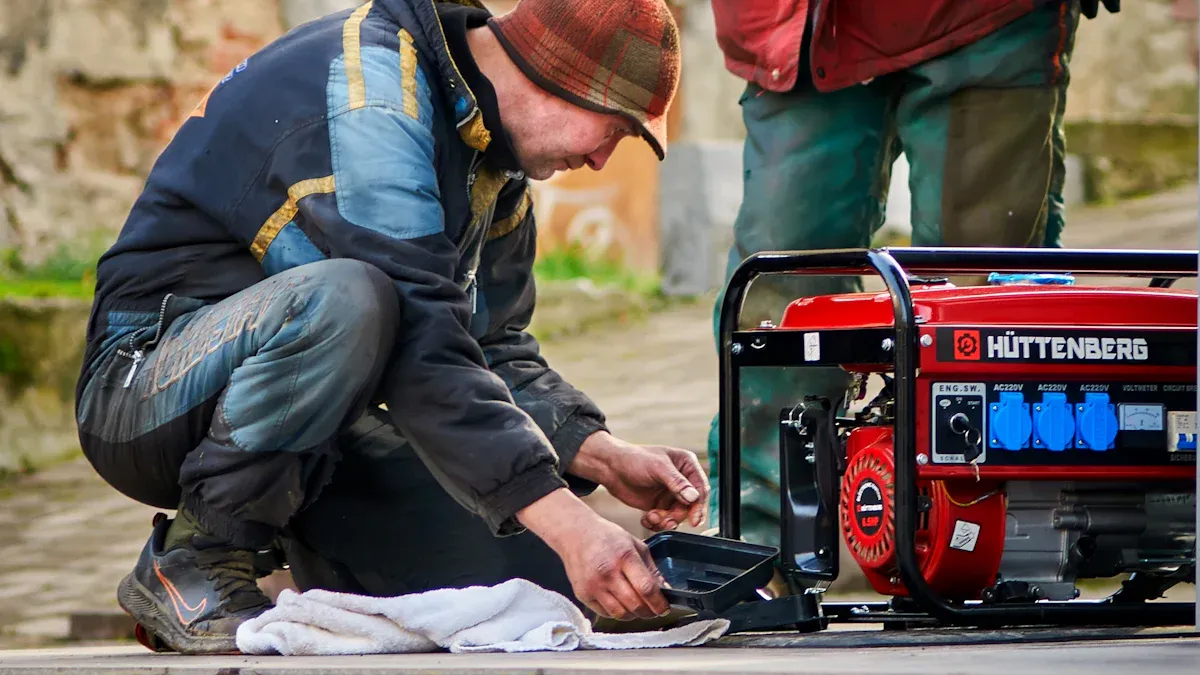
Commercial businesses often turn to portable generators for flexible and immediate backup power. Leading models such as the Winco WL16000HE-03/A and the Generac GP9500 Tri-Fuel have set industry standards for reliability and performance. The Winco WL16000HE-03/A offers a rugged frame and electric start, making it suitable for demanding job sites. The Generac GP9500 Tri-Fuel stands out with its ability to run on gasoline, propane, or natural gas, providing versatility during fuel shortages. Honda’s EB Series and Champion’s Inverter Series also deliver dependable solutions for businesses that require mobility and quick deployment. Each of these models addresses the need for rapid response during unexpected outages.
Use Cases & Benefits
Portable generators play a vital role in maintaining business continuity during emergencies. Facility managers deploy these units to keep essential systems running, protect sensitive equipment, and ensure safety for staff and customers. The following table summarizes the primary benefits of using portable generators in commercial settings:
| Benefit | Description |
|---|---|
| Keeps core systems working | Ensures essential operations continue during power outages. |
| Prevents data loss | Maintains power to servers and routers, preventing interruptions in data flow. |
| Maintains safety lighting | Provides emergency lighting for staff and customers, enhancing safety during outages. |
| Protects digital equipment | Safeguards against unstable power surges that can damage sensitive devices. |
| Supports communication lines | Keeps phones and communication devices operational, ensuring connectivity. |
| Builds reliability with clients and partners | Enhances business reputation by maintaining operations during emergencies. |
Many businesses use portable generators to power point-of-sale systems, refrigeration units, and security systems. Construction companies rely on these units for tools and lighting at remote sites. Retailers and restaurants use them to avoid service interruptions and maintain customer trust. The best commercial portable generator provides peace of mind by ensuring that critical operations continue without disruption.
Limitations
While portable generators offer significant advantages, commercial buyers should consider several limitations before making a purchase:
- Movability: Assess whether the generator needs to serve multiple locations or remain at a single site.
- Fuel type: Review available fuel options, such as gasoline, diesel, or propane, to match business requirements.
- Noise level: Check local noise ordinances and select a generator that minimizes disturbance.
- Cost: Weigh the investment against potential revenue loss during outages.
- Runtime: Determine the necessary operating duration, as some portable generators have limited continuous runtime.
Facility managers should evaluate these factors to select the most suitable model for their operations. Proper planning ensures that portable generators deliver reliable backup power when businesses need it most.
LETON POWER: Industrial & Commercial Solutions
Product Range Overview
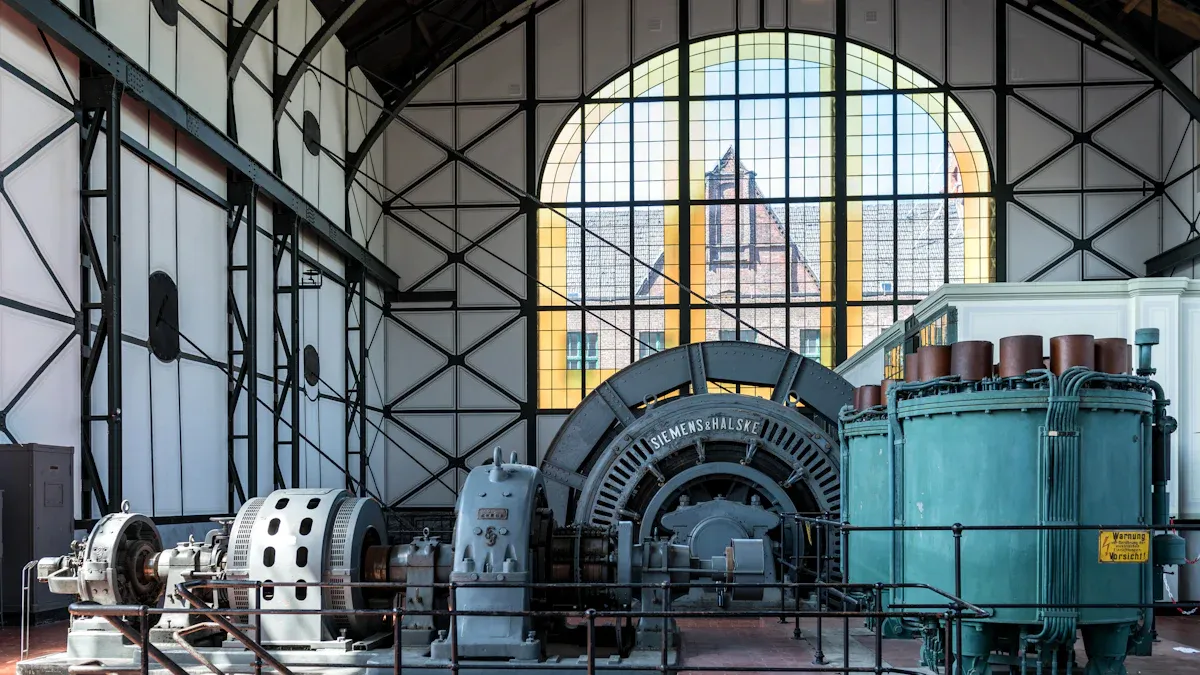
LETON POWER stands as a leading Chinese manufacturer of diesel generator sets, serving commercial and industrial clients worldwide. The company offers a comprehensive product portfolio designed to meet diverse operational needs. LETON POWER’s generator sets range from compact air-cooled models to high-capacity water-cooled systems. Clients can select from silent, mobile, and stationary units, each engineered for specific environments.
LETON POWER primarily equips its generators with Cummins and Perkins engines, recognized globally for reliability and performance. The company also integrates engines from other renowned brands, including Weichai, Isuzu, and Kubota. This approach ensures that every generator delivers consistent power and meets international standards. LETON POWER’s factory in China maintains strict quality control, providing affordable solutions without compromising on durability or efficiency.
Note: LETON POWER supports customization for unique project requirements. Clients can specify engine brands, power ratings, and enclosure types to match their operational needs.
| Model Type | Power Range | Engine Brands | Key Features |
|---|---|---|---|
| Water-Cooled Diesel | 10-4000 kVA | Cummins, Perkins, etc. | Robust cooling, high output |
| Silent Diesel | 10-4000 kVA | Multiple options | Low noise, soundproof housing |
| Mobile Trailer Diesel | 2-4000 kVA | Various | Portable, flexible deployment |
| Air-Cooled Diesel | 3-30 kVA | Kubota, Isuzu, etc. | Compact, efficient |
| Light Tower Generators | 5-150 kVA | Multiple | Integrated lighting, mobility |
Innovation & Efficiency
LETON POWER invests in research and development to enhance generator performance and efficiency. The company adopts advanced cooling systems and sound attenuation technologies to reduce operational noise and improve reliability. LETON POWER’s engineering team optimizes fuel consumption, helping businesses lower operating costs and minimize environmental impact.
The factory utilizes modern manufacturing processes and rigorous testing protocols. Every generator undergoes load bank testing to verify output and stability. LETON POWER’s commitment to innovation ensures that each unit meets the demands of mission-critical applications.
- Advanced cooling systems maintain stable operation in extreme conditions.
- Soundproof enclosures support use in noise-sensitive environments.
- Efficient fuel management reduces emissions and operating expenses.
- Custom control panels enable remote monitoring and diagnostics.
Industry Applications
LETON POWER’s diesel generators serve a wide range of industries. Commercial businesses rely on these solutions for emergency backup, prime power, and continuous operation. The company tailors products for sectors such as manufacturing, healthcare, telecommunications, and construction.
Facility managers deploy LETON POWER generators in hospitals, data centers, and remote job sites. Silent models support environments where noise reduction is essential, while mobile units provide flexible power for temporary events and field operations. LETON POWER’s expertise in customization allows clients to address specific challenges and maintain operational continuity.
LETON POWER’s global reach and technical support network ensure reliable service in over 160 countries. Businesses seeking affordable, high-quality emergency generators commercial users trust often choose LETON POWER for its proven track record and commitment to excellence.
Customer Support & Warranty
LETON POWER demonstrates a strong commitment to customer satisfaction through its comprehensive support and warranty programs. The company maintains a global service network that spans over 160 countries. This network ensures that commercial clients receive prompt assistance and technical expertise whenever they need it.
LETON POWER’s customer support team consists of experienced engineers and service professionals. They provide guidance during installation, commissioning, and routine maintenance. Clients benefit from direct access to technical advice, troubleshooting, and spare parts supply. LETON POWER’s support extends beyond the initial purchase, helping businesses maximize uptime and operational reliability.
Note: LETON POWER offers multilingual support to accommodate clients in diverse regions. This approach streamlines communication and ensures that technical issues are resolved efficiently.
The warranty policy reflects LETON POWER’s confidence in its products. Every diesel generator set comes with a standard warranty that covers major components, including the engine, alternator, and control system. The warranty period typically ranges from 12 to 36 months, depending on the model and application. LETON POWER honors warranty claims through authorized service centers and certified technicians. This process guarantees that repairs and replacements meet factory standards.
Key aspects of LETON POWER’s customer support and warranty include:
- Global Service Network: LETON POWER operates service centers and distribution hubs in strategic locations. Clients receive on-site support, remote diagnostics, and emergency response services.
- Technical Training: The company provides training programs for facility managers and maintenance staff. These programs cover generator operation, preventive maintenance, and safety protocols.
- Spare Parts Availability: LETON POWER stocks genuine spare parts for all generator models. Fast delivery minimizes downtime and ensures continuous operation.
- Warranty Coverage: The warranty includes protection against manufacturing defects and component failures. Extended warranty options are available for mission-critical applications.
- After-Sales Support: LETON POWER maintains ongoing relationships with clients. Regular follow-ups and performance reviews help businesses optimize generator usage.
LETON POWER’s customer-centric approach builds trust and long-term partnerships. Facility managers rely on the company’s expertise to keep emergency generators commercial operations running smoothly. The combination of robust warranty coverage and responsive support positions LETON POWER as a preferred provider in the global power solutions market.
Choosing Emergency Generators Commercial Buyers Need
Power Sizing
Selecting the correct power size is essential for reliable backup. Commercial buyers should assess their facility’s total power demand before choosing a generator. Several methods help determine the right size:
| Method | Description |
|---|---|
| Real-Time Measurement | Use a clamp-on ammeter to measure total amps, then calculate required kilowatts. |
| Historical Full Load Capacity | Review past utility bills to find peak demand and add 25% for reserve capacity. |
| Square Footage Measurement | Calculate power needs based on square footage, using specific wattage per square foot for different applications. |
| Sizing Calculator | Utilize online calculators to estimate power requirements accurately. |
Facility managers should also consider whether the generator will operate automatically during outages. Determining if the site requires single-phase or three-phase power is important. Noise rating and fuel source also influence the final selection. Accurate power sizing prevents overloads and ensures that emergency generators commercial buyers select will support all critical systems.
Fuel Types
Fuel choice impacts generator performance, cost, and maintenance. Each fuel type offers unique advantages and limitations:
| Fuel Type | Pros | Cons |
|---|---|---|
| Diesel | Fuel efficient, durable, low maintenance, widely available, safe storage | Higher initial cost, higher emissions, noise levels in older models |
| Petrol | Lower upfront cost, easy start-up, widely available | Higher fuel consumption, shorter lifespan, flammability risk |
| Natural Gas | Eco-friendly, lower fuel costs, reliable supply | Limited portability, higher installation costs, supply disruptions |
| Propane | Long shelf life, cleaner emissions, versatile storage | Higher fuel consumption, less common infrastructure, setup cost |
| Hydrogen | Eco-friendly, quiet, renewable potential | High costs, limited infrastructure, storage challenges |
| Biodiesel | Renewable, lower emissions, compatible with diesel engines | Higher fuel cost, potential gelling in cold, limited availability |
Diesel remains popular for its efficiency and durability. Petrol generators offer lower upfront costs but require more frequent refueling. Natural gas and propane provide cleaner alternatives, with natural gas favored for continuous standby power. Hydrogen and biodiesel represent emerging options for businesses prioritizing sustainability.
Portability vs. Stationary
Commercial buyers must decide between portable and stationary generators based on operational needs. Portable generators offer flexibility for temporary or remote sites. They suit businesses with lower power demands or those needing backup at multiple locations. Stationary generators provide continuous, reliable power for larger facilities and critical infrastructure.
- Power demand: Stationary units handle higher loads, while portable models suit smaller applications.
- Usage frequency: Portable generators excel in short-term or occasional use. Stationary systems support long-term, consistent operation.
- Site constraints: Portable units require minimal installation. Stationary generators need dedicated space and proper ventilation.
- Budget: Portable generators usually cost less upfront. Stationary systems involve higher installation costs but deliver long-term value.
Facility managers should match generator type to their business’s operational profile. This approach ensures reliable performance and maximizes return on investment.
Noise & Emissions
Commercial buyers must evaluate both noise and emissions when selecting emergency generators. Regulatory bodies enforce strict standards to protect public health and the environment. Generators must comply with local, state, and federal regulations, including limits on combustion emissions and noise ordinances. Environmental requirements often dictate the allowable levels of pollutants, influencing generator design and fuel choices. Backup power for essential safety systems must meet National Electrical Code (NEC) standards.
The following table summarizes key factors affecting generator selection:
| Factor | Description |
|---|---|
| Emissions Standards | Stricter standards require generators to meet specific pollutant limits, influencing design. |
| Generator Size | Regulations may dictate the size of generators based on emissions and operational requirements. |
| Fuel Type | Compliance with emissions regulations can limit the types of fuel that can be used in generators. |
| Noise Ordinances | Local noise regulations affect the placement and selection of generators to minimize disturbances. |
| Permitting Requirements | Multiple layers of permitting must be satisfied, impacting project timelines and costs. |
| Compliance Monitoring | Ongoing compliance requires tracking of runtime and emissions, influencing operational strategies. |
Facility managers should consider generator placement to minimize noise impact on neighboring businesses and residences. Silent and sound-attenuated models help meet noise restrictions. Diesel and natural gas generators often offer lower emissions, supporting compliance with environmental standards.
Maintenance & Support
Routine maintenance ensures reliable operation of emergency generators commercial buyers depend on. Annual load bank testing verifies that the generator can operate under full load. Facility managers should replace batteries every two to three years to prevent starting issues. Maintenance of the automatic transfer switch (ATS) guarantees proper function during outages.
A comprehensive annual checklist should include oil changes, filter replacements, and electrical system inspections. Certified technicians must perform these tasks to ensure compliance with regulations and proper handling. Qualified personnel help prevent costly failures during emergencies and extend the lifespan of the equipment.
- Annual load bank testing
- Regular battery replacement
- ATS maintenance
- Oil and filter changes
- Electrical system inspections
Strong manufacturer support and access to genuine spare parts further enhance reliability. Training programs for staff and remote diagnostics services can help businesses maintain operational continuity.
Cost Considerations
Cost plays a significant role in the selection of commercial generators. Buyers must evaluate initial purchase costs, installation expenses, fuel type and consumption, maintenance and repair costs, and operational costs during power failures. The total cost depends on generator size, fuel source, brand, features, and location.
Diesel generators often have higher upfront costs but offer durability and efficiency. Natural gas generators may provide lower operational costs if a connection is available. Installation expenses can vary based on site requirements and permitting. Maintenance and repair costs should be factored into the long-term budget. Operational costs during outages include fuel consumption and potential downtime.
Tip: Facility managers should compare total ownership costs, not just purchase price, to make informed decisions.
- Initial purchase costs
- Installation expenses
- Fuel type and consumption
- Maintenance and repair costs
- Operational costs during power failures
Careful budgeting and cost analysis help businesses select emergency generators commercial users can rely on for both performance and value.
Trends in Best Commercial Generators 2026
Smart Tech & Remote Start
Manufacturers continue to advance the best commercial generators by integrating smart technology and remote start capabilities. These features improve operational efficiency and simplify management for facility teams. Modern generators now offer remote monitoring, allowing users to check status, fuel levels, and maintenance needs from a smartphone or computer. Alerts notify managers about mechanical issues, fuel shortages, or even fuel theft. Technicians can diagnose problems and adjust settings without visiting the site, saving time and reducing downtime. Scheduled maintenance and fuel refills become easier with automated reminders.
| Feature | Description |
|---|---|
| Combined Heat and Power (CHP) | Captures waste heat to provide hot water or building heat, boosting energy efficiency up to 90%. |
| Hybrid Systems | Combines a generator with battery storage or solar panels for flexible power sourcing. |
| Remote Monitoring | Enables checking of generator status, fuel levels, and maintenance needs via smartphone or computer. |
Facility managers value these advancements because they reduce operational risks and improve response times during emergencies. The best commercial generators now support hybrid systems, combining battery storage or solar panels for flexible power sourcing. CHP technology further increases energy efficiency by capturing waste heat for building use.
Tip: Remote start and monitoring features help businesses maintain uptime and reduce service costs.
Dual-Fuel & Tri-Fuel Options
The market for dual-fuel and tri-fuel generators is expanding rapidly. These systems allow businesses to switch between fuels such as diesel, natural gas, and propane, ensuring continuous operation during supply disruptions. The dual-fuel temporary power generator market is projected to grow at a compound annual growth rate of over 6% from 2025 to 2033. Market size reached $679 million in 2021 and is expected to surpass $1.4 billion by 2033. The segment for generators under 80 kW is experiencing notable growth, reflecting increased demand from small and medium-sized enterprises.
- Dual-fuel and tri-fuel generators offer flexibility during fuel shortages.
- Businesses can optimize costs by selecting the most economical fuel source.
- These systems support sustainability goals by enabling cleaner fuel options.
- Facility managers gain peace of mind knowing backup power remains available regardless of fuel supply challenges.
Manufacturers continue to innovate, making fuel switching seamless and reliable. This trend ensures that commercial facilities can adapt to changing energy landscapes and regulatory requirements.
Green Power & Sustainability
Sustainability remains a top priority for commercial generator manufacturers. Companies invest in technologies that reduce emissions and improve fuel efficiency. Hybrid systems, which combine generators with battery storage or solar panels, help businesses lower their carbon footprint. Combined Heat and Power (CHP) units capture waste heat, providing hot water or building heat and boosting overall energy efficiency up to 90%.
Facility managers seek generators that comply with stricter environmental regulations. Many models now feature advanced emission controls and support renewable fuels. These innovations help businesses meet sustainability targets while maintaining reliable backup power.
Note: Green power solutions not only benefit the environment but also enhance brand reputation and support long-term cost savings.
Regulatory Updates
Regulatory changes continue to shape the landscape for commercial emergency generators. Governments and industry bodies now enforce stricter standards on emissions, noise, and fuel efficiency. These updates impact how manufacturers design, test, and market the best commercial generators for business use.
Environmental agencies in the United States and Europe have introduced tighter emission limits for diesel and gas-powered generators. The Environmental Protection Agency (EPA) in the U.S. requires compliance with Tier 4 Final standards, which demand significant reductions in nitrogen oxides (NOx), particulate matter, and hydrocarbons. European regulations, such as Stage V, set similar benchmarks for cleaner operation. These rules encourage manufacturers to adopt advanced after-treatment systems, including diesel particulate filters and selective catalytic reduction.
Noise regulations also influence generator placement and design. Many urban areas enforce decibel limits to protect public health and reduce disturbances. Manufacturers respond by developing sound-attenuated enclosures and quieter engine technologies. Facility managers must consider these requirements when installing backup power systems, especially in hospitals, schools, and residential-adjacent businesses.
Sustainability trends further drive regulatory updates. Authorities now promote the use of renewable fuels and hybrid systems. Some regions offer incentives for generators that integrate solar panels, battery storage, or alternative fuels like biodiesel. Companies such as Caterpillar and Cummins invest in hybrid and electric solutions, while Generac integrates solar power with backup systems. These innovations help businesses meet both regulatory and sustainability goals.
Permitting processes have become more complex. Facility managers must secure approvals from multiple agencies, including fire departments, environmental authorities, and local governments. Documentation often includes emissions data, noise studies, and fuel storage plans. Regular inspections ensure ongoing compliance, and non-compliance can result in fines or operational shutdowns.
The market for the best commercial generators continues to evolve as regulations change. Manufacturers invest in research and development to stay ahead of new requirements. Facility managers benefit from these advancements, gaining access to cleaner, quieter, and more efficient backup power solutions. Staying informed about regulatory updates helps businesses maintain compliance and protect their operations during emergencies.
Tip: Facility managers should consult with generator suppliers and local authorities early in the planning process. This approach ensures that new installations meet all regulatory requirements and avoid costly delays.
Commercial businesses in 2026 rely on emergency generators from trusted brands like Generac, Kohler, Cummins, and LETON POWER. Reliability and efficiency remain essential for maintaining operations during outages. Facility managers should compare models, consult with suppliers, and select generators that match their specific needs. LETON POWER demonstrates a strong commitment to quality and global support, helping businesses achieve uninterrupted power and peace of mind.
FAQ
What size generator does a commercial business need?
Facility managers should calculate total wattage for essential equipment. They must add a safety margin of 25%. Consulting with a generator specialist ensures accurate sizing for reliable backup power.
How often should emergency generators receive maintenance?
Manufacturers recommend monthly visual inspections and annual load bank testing. Regular oil changes, filter replacements, and battery checks help maintain optimal performance and extend generator lifespan.
Which fuel type is best for commercial generators?
Diesel remains popular for durability and efficiency. Natural gas offers cleaner emissions. Businesses should select fuel based on availability, cost, and local regulations.
Can portable generators support large commercial facilities?
Portable generators suit small businesses or temporary sites. Large facilities require stationary units with higher output. Facility managers should match generator type to operational needs.
How long can a commercial generator run continuously?
Most commercial generators operate for 24 to 72 hours with proper fuel supply and maintenance. Extended runtime depends on fuel tank capacity and generator design.
What safety features should commercial generators include?
Modern generators feature automatic shutdowns, overload protection, and carbon monoxide detection. These safeguards protect employees and equipment during emergencies.
Are silent generators suitable for noise-sensitive environments?
Silent generators use soundproof enclosures and advanced mufflers. They minimize operational noise, making them ideal for hospitals, schools, and urban businesses.
Does LETON POWER offer global support for its generators?
LETON POWER provides technical assistance, spare parts, and warranty services in over 160 countries. Their global network ensures prompt support for commercial clients.

