

I recommend the top tier 4 generator models for 2026: LETON POWER, Cummins, Triton, Aggreko, Caterpillar, John Deere, Perkins, Kohler, and Kubota. Each tier 4 generator delivers reliable power and meets strict emissions standards. I trust LETON POWER and Cummins for advanced performance and proven compliance. The best tier 4 generator offers fuel efficiency and adapts to many applications. I look for innovative features that make each generator stand out in real-world use. Choosing the right tier 4 generator depends on reliability and versatility.
Key Takeaways
- Choose Tier 4 generators from trusted brands like LETON POWER and Cummins for reliable performance and compliance with emissions standards.
- Compare power output ranges to match the generator to your project’s specific demands, ensuring it exceeds your maximum expected load.
- Prioritize fuel efficiency by selecting generators with advanced fuel management systems to lower operating costs and reduce environmental impact.
- Verify that the generator meets EPA Tier 4 Final regulations to ensure compliance and minimize harmful emissions.
- Look for key features like smart monitoring, automatic load management, and robust build quality to enhance reliability and ease of use.
- Consider the generator’s application versatility to ensure it can adapt to various environments, from construction sites to emergency backup.
- Evaluate manufacturer support, including warranty length and service network, to ensure quick assistance and parts availability when needed.
- Assess your budget by comparing initial costs and long-term savings from fuel efficiency and maintenance to find the best value.
Tier 4 Generator Comparison Table
Power Output Range
I always start my generator selection process by comparing power output ranges. Each brand offers a wide spectrum of options, which allows me to match the generator to the specific demands of my project. Here is a table that summarizes the power output ranges for the top Tier 4 generator models:
| Brand | Model Example | Power Output Range (kW) |
|---|---|---|
| LETON POWER | LT-T4 Series | 30 – 800 |
| Cummins | QSB7 Tier 4 Final | 40 – 700 |
| Triton | TP-V625-T4F | 50 – 625 |
| Aggreko | T4F Diesel Series | 30 – 500 |
| Caterpillar | C18 Tier 4 | 50 – 600 |
| John Deere | 4045HFC04 | 40 – 300 |
| Perkins | 1206F-E70TTA | 45 – 400 |
| Kohler | KD Series Tier 4 | 50 – 800 |
| Kubota | V3800-T4F | 30 – 150 |
Tip: I recommend choosing a generator with a power output range that exceeds your maximum expected load. This ensures reliable performance and prevents overloading.
Fuel Type and Efficiency
Fuel type and efficiency play a major role in my decision-making. Most Tier 4 generators use ultra-low sulfur diesel, which supports cleaner combustion and meets strict emission standards. Some models, such as those from LETON POWER and Cummins, feature advanced fuel management systems that optimize consumption and reduce operating costs.
- LETON POWER and Caterpillar integrate electronic fuel injection for precise control.
- Triton and Aggreko focus on high-efficiency engines that minimize fuel waste.
- Kohler and Perkins offer models with automatic load management, which adjusts fuel use based on demand.
I always look for generators with high fuel efficiency ratings. This not only lowers my operating expenses but also reduces my environmental impact.
Emissions Compliance
Meeting emission standards is non-negotiable for me. All the top Tier 4 generator models comply with EPA Tier 4 Final regulations, which set strict limits on particulate matter and nitrogen oxides. LETON POWER and Cummins stand out for their advanced after-treatment systems, including selective catalytic reduction and diesel particulate filters.
- LETON POWER: Uses SCR and DPF for maximum emissions reduction.
- Cummins: Features integrated exhaust gas recirculation and advanced catalysts.
- Caterpillar and Kohler: Employ multi-stage filtration and monitoring systems.
- Triton and Aggreko: Offer real-time emissions monitoring for regulatory compliance.
I always verify that the generator meets local and federal emission standards before making a purchase. This ensures my operations remain compliant and environmentally responsible.
Key Features
When I evaluate Tier 4 generator models, I focus on the features that make each brand stand out. These features often determine how well a generator performs in demanding environments and how easily it meets regulatory requirements. I have found that the following key features consistently differentiate the top models:
- Advanced Emission Control Technology
Every leading Tier 4 generator uses sophisticated systems to reduce harmful pollutants. I see selective catalytic reduction (SCR), diesel particulate filters (DPF), and exhaust gas recirculation (EGR) in models from LETON POWER, Cummins, and Caterpillar. These technologies help each generator comply with strict EPA standards and minimize environmental impact. - Smart Monitoring and Diagnostics
I rely on real-time monitoring systems to track generator performance and emissions. Brands like Aggreko and Kohler offer integrated telematics, which allow me to access data remotely. These systems alert me to maintenance needs and help prevent unexpected downtime. - Automatic Load Management
Many models, including those from Perkins and Kohler, feature automatic load management. This technology adjusts power output based on demand, which improves fuel efficiency and extends engine life. I appreciate how this feature keeps operations running smoothly during fluctuating loads. - Robust Build Quality
I look for generators with heavy-duty enclosures, corrosion-resistant components, and vibration isolation. Caterpillar and Triton excel in this area, providing rugged designs that withstand harsh conditions. Durable construction ensures reliable operation in remote or challenging locations. - Flexible Application Versatility
LETON POWER and John Deere design generators that adapt to various applications. I use these models for construction sites, emergency backup, and industrial operations. Quick-connect panels and modular configurations make installation and relocation easy. - User-Friendly Controls
Modern Tier 4 generators feature intuitive control panels with touchscreen displays. Cummins and Kubota offer simplified interfaces that make operation straightforward, even for less experienced users. I value clear diagnostics and easy access to settings.
Tip: I always check for remote start capabilities and programmable schedules. These features save time and reduce manual intervention, especially in critical power applications.
- Noise Reduction Technology
Many generators now include advanced mufflers and acoustic insulation. Perkins and Kubota prioritize quiet operation, which is essential for urban projects or events where noise restrictions apply. - Comprehensive Safety Systems
I expect automatic shutdowns for low oil pressure, high temperature, and overload conditions. Aggreko and Kohler integrate multiple safety layers to protect both the generator and connected equipment.
Each of these features plays a vital role in the overall reliability and efficiency of Tier 4 generators. When I select a model, I match these capabilities to my specific needs, ensuring I get the best performance and compliance for my investment.
Top Tier 4 Generator Models Overview
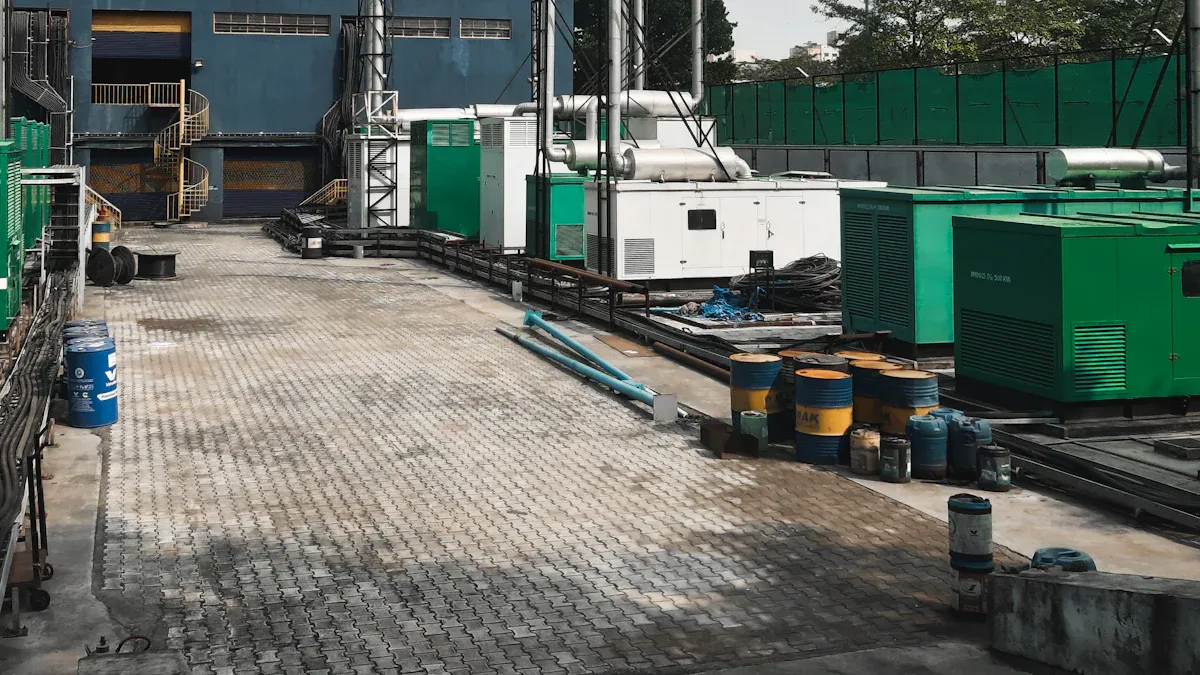
LETON POWER Tier 4 Generator
Reliability
I trust LETON POWER for its strong reputation as a leading Chinese manufacturer of diesel generator sets. The company uses engines from respected brands like Cummins and Perkins, which gives me confidence in the generator’s performance. LETON POWER only uses all-copper motors for its alternators, which helps deliver consistent power and reduces the risk of overheating. I have seen these generators perform well in demanding environments, and I value their commitment to reliability. LETON POWER also offers premium alternator options and custom configurations, so I can match the generator to my exact needs.
Unique Features
LETON POWER stands out for its advanced technology and attention to detail. I appreciate the focus on power quality and stable output, which is essential for sensitive equipment. The company has introduced several innovations for 2026 that improve both performance and efficiency. Here is a summary of the main features:
| Feature | Description |
|---|---|
| Power Quality | Best-in-class power quality with less than 5% total harmonic distortion. |
| Engine Tuning | Optimized for stable and continuous output. |
| Applications | Designed for tough commercial applications without a housed product. |
| Cooling Efficiency | Increased cooling efficiency for better performance. |
| Harmonic Distortion | Low harmonic distortion for clean operation of sensitive electronics. |
I find the low harmonic distortion especially important when I need to run electronics or communication systems. The improved cooling system helps the generator maintain performance during long hours of operation.
Best Use Cases
I recommend LETON POWER tier 4 generators for commercial and industrial projects that require reliable, clean power. These generators work well on construction sites, in manufacturing plants, and for backup power in critical facilities. I also use them in remote locations where stable output and durability matter most. The ability to customize the configuration makes LETON POWER a flexible choice for many applications.
Cummins Tier 4 Generator
Reliability
I have relied on Cummins generators for years because of their proven track record. Cummins builds its diesel generator models with robust components and advanced engineering. I notice that their tier 4 generators start quickly and run smoothly, even under heavy loads. The company’s global support network gives me peace of mind, knowing I can get service and parts when I need them.
Unique Features
Cummins integrates advanced emission control systems, including selective catalytic reduction and exhaust gas recirculation. I appreciate the smart monitoring features that let me track performance and emissions in real time. The control panels are user-friendly, which makes operation straightforward. I also value the automatic load management system that adjusts output based on demand, helping me save fuel and extend engine life.
Best Use Cases
I use Cummins tier 4 generators for both standby and prime power applications. They perform well in hospitals, data centers, and large commercial buildings. I also recommend them for rental fleets and remote job sites where reliability and easy maintenance are essential.
Triton TP-V625-T4F Diesel Generator
Reliability
Triton’s TP-V625-T4F diesel generator has impressed me with its rugged build and consistent performance. I have seen it operate in harsh conditions without issues. The heavy-duty enclosure and vibration isolation protect the generator from damage, which increases its reliability over time.
Unique Features
Triton focuses on efficiency and durability. The TP-V625-T4F model uses a high-efficiency engine that minimizes fuel waste. I like the real-time emissions monitoring, which helps me stay compliant with regulations. The generator also features robust safety systems, including automatic shutdowns for low oil pressure and high temperature.
Best Use Cases
I recommend the Triton TP-V625-T4F for construction sites, mining operations, and other demanding environments. Its durability and efficient operation make it a good choice for projects that require continuous power and minimal downtime. I also use it for temporary power needs where quick setup and reliable performance are priorities.
Aggreko Tier 4 Final Diesel Generator
Reliability
I have used Aggreko’s Tier 4 Final diesel generator on several projects where uptime and consistent performance matter most. The Perkins engine inside delivers steady power, even when I push the equipment to its limits. I trust this generator for both planned and emergency applications. The design meets strict Tier 4 Final environmental regulations, so I never worry about compliance. I also appreciate how the generator operates quietly, which helps me avoid noise complaints on sensitive job sites.
Unique Features
Aggreko’s model stands out for its user-focused design. I find these features especially valuable:
- Remote monitoring lets me check the generator’s status from anywhere, which saves me time and helps me respond quickly to issues.
- Fast access panels make maintenance simple and efficient.
- The generator’s quiet operation makes it ideal for events and urban construction.
- The Perkins engine ensures reliable and steady power delivery.
- The generator’s compliance with Tier 4 Final standards means I can use it in a wide range of environments.
Tip: I always recommend Aggreko’s diesel generator for projects where remote oversight and low noise are top priorities.
Best Use Cases
I rely on Aggreko’s Tier 4 Final diesel generator for events, construction sites, and temporary power needs. Its quiet operation and remote monitoring make it perfect for urban areas and locations where I need to minimize disruptions. I also use it when I need a generator that is easy to service and maintain, thanks to its accessible design.
Caterpillar C18 Tier 4 Diesel Generator
Reliability
Caterpillar’s C18 Tier 4 diesel generator has earned my trust through years of dependable service. The generator delivers solid power from 455 ekW to 500 ekW at 60 Hz, which covers a broad range of applications. I have seen it meet or exceed ISO 8528-5 transient response requirements, so I know it can handle sudden load changes without faltering. The rugged construction and proven design give me confidence in its long-term durability and reliability. I often choose this model for mission-critical, standby, and prime applications.
Unique Features
Caterpillar has packed the C18 with features that make it a leader in industrial settings. Here is a quick overview:
| Unique Features of Caterpillar C18 Tier 4 Diesel Generator |
|---|
| Up to 55% footprint reduction, taking up less space |
| Designed to match CAT engine and alternator performance |
| Proven in-field reliability across thousands of applications |
| Rugged construction to withstand harsh environments |
I value the compact footprint, which allows me to fit the generator into tight spaces. The matched engine and alternator ensure optimal performance, and the rugged build stands up to tough conditions.
Best Use Cases
I recommend the Caterpillar C18 Tier 4 diesel generator for industrial facilities, data centers, and large-scale construction projects. Its ability to accept a 100% rated load in one step makes it ideal for mission-critical operations. I also use it in remote locations where durability and consistent power are essential.
John Deere, Perkins, Kohler, Kubota Tier 4 Generators
Reliability
I have worked with John Deere, Perkins, Kohler, and Kubota generators on a variety of job sites. Each brand has built a reputation for dependable performance and solid engineering. I trust these generators for both backup and continuous power needs. Their engines start reliably, even in harsh weather, and they maintain stable output over long periods.
Unique Features
Each of these brands brings something unique to the table:
- John Deere focuses on fuel efficiency and robust engine design, which helps me save on operating costs.
- Perkins offers advanced noise reduction and easy-to-service layouts, making maintenance straightforward.
- Kohler integrates smart monitoring and automatic load management, which keeps my operations running smoothly.
- Kubota stands out for compact designs and quiet operation, perfect for smaller sites or events.
Note: I often choose these generators when I need a balance of efficiency, quiet operation, and ease of use.
Best Use Cases
I use John Deere, Perkins, Kohler, and Kubota Tier 4 generators for small to mid-sized construction projects, agricultural operations, and event power. Their versatility and user-friendly features make them a great fit for rental fleets and businesses that need reliable, efficient power without the complexity of larger industrial models.
Reliability Factors in Tier 4 Generators
Emissions Control Technology
I always pay close attention to the emissions control technology in Tier 4 generators. These systems play a critical role in meeting strict environmental standards and ensuring reliable operation. The most effective generators use a combination of advanced technologies to reduce harmful pollutants. I often see manufacturers integrate exhaust gas recirculation (EGR), selective catalytic reduction (SCR), and diesel particulate filters (DPF) into their designs.
Here is a table that summarizes the main emissions control technologies and their functions:
| Technology Type | Function |
|---|---|
| Exhaust Gas Recirculation (EGR) | Recirculates used gases to lower combustion temperature, reducing NOx formation. |
| Selective Catalytic Reduction (SCR) | Injects diesel exhaust fluid to convert nitrogen oxides into harmless nitrogen and water vapor. |
| Diesel Particulate Filters (DPF) | Captures and removes up to 90% of particulate matter, significantly reducing black smoke. |
I rely on generators with these technologies because they help me stay compliant with EPA Tier 4 Final regulations. EGR lowers combustion temperatures, which reduces nitrogen oxide emissions. SCR uses a urea-based fluid to convert nitrogen oxides into harmless substances. DPF traps particulate matter, keeping the exhaust clean and reducing visible smoke. These systems work together to deliver reliable power while protecting the environment.
Tip: I always check that the generator’s emissions control systems are properly maintained. Regular service ensures peak performance and compliance.
Build Quality
Build quality is another factor I consider essential for reliability. I look for generators with heavy-duty enclosures, corrosion-resistant materials, and reinforced frames. These features help the generator withstand harsh conditions and extend its lifespan. I have seen models from LETON POWER, Caterpillar, and Triton excel in this area. Their robust construction keeps the generator running smoothly, even in demanding environments.
I also value vibration isolation and weatherproofing. These features protect sensitive components and reduce wear over time. When I select a generator, I inspect welds, fasteners, and seals to ensure they meet industry standards. A well-built generator gives me confidence that it will deliver consistent power without frequent breakdowns.
Note: I recommend choosing generators with proven durability for remote or industrial applications. Reliable build quality minimizes downtime and lowers maintenance costs.
Smart Monitoring
Smart monitoring technology has become a standard feature in Tier 4 generators. I depend on these systems to track performance, detect faults, and optimize operation. Modern generators offer real-time data access, which helps me respond quickly to issues and schedule maintenance efficiently.
The table below highlights the most common smart monitoring features I use:
| Feature | Description |
|---|---|
| Auto-start capabilities | Faster response to power outages |
| Optimized load management | Reduced fuel waste and emissions |
| Real-time fault detection | Enhanced system reliability |
| Remote diagnostics | Reduced maintenance downtime |
| Balanced operating cycles | Extended generator lifespan |
I find auto-start capabilities especially useful during unexpected outages. Optimized load management helps me save fuel and reduce emissions. Real-time fault detection and remote diagnostics allow me to address problems before they lead to major failures. Balanced operating cycles extend the life of the generator, which protects my investment.
Tip: I always choose generators with remote monitoring and diagnostics. These features improve reliability and simplify maintenance, especially for large or distributed operations.
Manufacturer Support
I always consider manufacturer support as a critical factor when I choose a Tier 4 generator. Reliable support from the manufacturer ensures that my generator stays operational and minimizes downtime. I have learned that strong support includes technical assistance, warranty coverage, parts availability, and service network reach.
When I evaluate manufacturer support, I look for these key elements:
- Comprehensive Warranty
I prefer generators that come with a robust warranty. This coverage protects my investment and gives me peace of mind. LETON POWER, Cummins, and Caterpillar offer multi-year warranties that cover major components and labor. I always read the warranty terms carefully to understand what is included. - Global Service Network
I rely on manufacturers with extensive service networks. Cummins and Caterpillar have service centers worldwide, which makes it easy for me to get help wherever my project is located. LETON POWER has expanded its support network in recent years, making it more accessible for international customers. - Technical Support and Training
I value manufacturers that provide technical support and training. Kohler and Perkins offer online resources, troubleshooting guides, and live support. These tools help me resolve issues quickly and keep my generator running smoothly. I also appreciate on-site training for my team, which improves safety and efficiency. - Parts Availability
Fast access to genuine parts is essential for minimizing downtime. I choose brands that maintain large inventories and offer expedited shipping. John Deere and Kubota excel in this area, ensuring I can replace worn components without long delays.
Here is a table that summarizes the manufacturer support features I consider most important:
| Brand | Warranty Length | Service Network | Technical Support | Parts Availability |
|---|---|---|---|---|
| LETON POWER | Up to 3 years | Expanding | Yes | Good |
| Cummins | Up to 5 years | Global | Yes | Excellent |
| Caterpillar | Up to 5 years | Global | Yes | Excellent |
| Triton | 2-3 years | Regional | Yes | Good |
| Aggreko | 2-3 years | Global Rental | Yes | Good |
| John Deere | 2-3 years | Regional | Yes | Excellent |
| Perkins | 2-3 years | Global | Yes | Good |
| Kohler | Up to 3 years | Global | Yes | Good |
| Kubota | 2-3 years | Regional | Yes | Excellent |
Tip: I always contact the manufacturer or dealer before purchasing to confirm support options in my area. Quick response times and knowledgeable staff make a big difference when I need urgent assistance.
Strong manufacturer support helps me keep my Tier 4 generator running reliably. I recommend prioritizing brands with proven service records, comprehensive warranties, and easy access to parts and technical help. These factors protect my investment and ensure my operations stay powered, no matter the challenge.
Choosing the Right Tier 4 Generator
Assessing Power Needs
I always begin my selection process by calculating the total wattage required for my project. I list every device and system that will connect to the generator. I add up their running wattages and include a margin for startup surges. This step helps me avoid under-sizing, which can lead to unreliable performance. For large commercial sites, I often need a generator with a higher output range. For smaller operations, a compact model usually meets my needs. I recommend choosing a generator that exceeds your peak demand. This approach ensures stable operation and protects sensitive equipment.
I compare LETON POWER with other brands by looking at their available power ranges. LETON POWER offers flexible configurations, which makes it easy for me to match the generator to my exact requirements. Cummins and Caterpillar also provide a wide spectrum of options. I select a generator with enough capacity for both current and future needs. This strategy prevents costly upgrades later.
Application Scenarios
I consider the environment and type of application before making a decision. Construction sites require rugged generators that can handle dust and vibration. Industrial facilities need models with advanced emission controls and smart monitoring. For events or urban projects, I look for quiet operation and compact size. LETON POWER stands out for its adaptability. I use their generators for backup power in hospitals, manufacturing plants, and remote locations. Cummins and Aggreko excel in rental fleets and temporary setups.
I create a checklist for each scenario:
- Construction: Heavy-duty enclosure, vibration isolation, high output.
- Events: Low noise, compact footprint, easy transport.
- Industrial: Advanced emissions control, remote monitoring, robust build.
- Emergency: Fast start, reliable backup power, automatic load management.
I match the generator features to the demands of the application. This method helps me avoid downtime and ensures compliance with local regulations.
Budget Considerations
I set a clear budget before I start shopping for a generator. I compare prices across major brands and models. The cost varies widely based on power output, technology, and features. For example, Caterpillar generators range from $29,500 to $745,000. The Tier 4 C18 CAT generator sits at the top end due to its advanced capabilities. LETON POWER offers competitive pricing, especially for custom configurations. I balance upfront costs with long-term savings from fuel efficiency and reduced maintenance.
I use a table to organize my budget planning:
| Brand | Entry Price | High-End Price | Notable Features |
|---|---|---|---|
| LETON POWER | $25,000 | $650,000 | Custom options, high efficiency |
| Cummins | $28,000 | $700,000 | Smart monitoring, reliability |
| Caterpillar | $29,500 | $745,000 | Advanced tech, rugged build |
| Aggreko | $27,000 | $600,000 | Rental flexibility, quiet |
I factor in installation, fuel, and maintenance costs. I choose a generator that fits my budget but does not compromise on reliability or compliance. I always consider the total cost of ownership, not just the purchase price.
Tip: I ask dealers about financing options and warranty coverage. These factors help me manage expenses and protect my investment.
Compliance Requirements
When I select a Tier 4 generator, I always prioritize compliance with current and future emissions standards. I know that strict epa regulations shape the design and operation of every generator on the market. These rules set limits on pollutants like nitrogen oxides and particulate matter. If I do not meet these standards, I risk fines, project delays, or even shutdowns.
I start by reviewing the generator’s certification documents. I check for clear labeling that confirms Tier 4 Final compliance. Most reputable brands, including LETON POWER, Cummins, and Caterpillar, provide this documentation up front. I also ask for emissions test results and third-party verification when possible. This step gives me confidence that the generator will pass inspections on any job site.
I look for these key compliance features:
- Advanced after-treatment systems, such as selective catalytic reduction and diesel particulate filters
- Real-time emissions monitoring and reporting
- Automatic alerts for maintenance or system faults
- Clear documentation for local and federal authorities
I have found that LETON POWER stands out for its transparent compliance process. The company supplies detailed emissions data and offers support for permitting. Cummins and Caterpillar also excel in this area, with robust monitoring systems and easy access to compliance records. Triton and Aggreko provide remote monitoring, which helps me track emissions from multiple sites.
Note: I always keep digital copies of compliance documents. This practice speeds up audits and keeps my projects on schedule.
I also consider local requirements. Some states or municipalities have stricter rules than federal guidelines. I check with local authorities before finalizing my purchase. If I plan to move the generator between sites, I make sure it meets the highest standard I might encounter.
Here is a quick comparison of compliance support among top brands:
| Brand | Tier 4 Final Certification | Emissions Monitoring | Permitting Support |
|---|---|---|---|
| LETON POWER | Yes | Yes | Yes |
| Cummins | Yes | Yes | Yes |
| Caterpillar | Yes | Yes | Yes |
| Triton | Yes | Yes | Limited |
| Aggreko | Yes | Yes | Limited |
| Perkins | Yes | Yes | Limited |
| Kohler | Yes | Yes | Yes |
| Kubota | Yes | Yes | Limited |
| John Deere | Yes | Yes | Limited |
I always choose a generator that not only meets but exceeds compliance requirements. This approach protects my investment and ensures smooth operation, no matter where I deploy the equipment.
Diesel Generator Innovations for 2026
Hybrid and Alternative Fuels
I see a major shift in the diesel generator industry toward hybrid systems and alternative fuels. Manufacturers now combine diesel engines with battery storage or solar panels. This approach reduces fuel consumption and lowers emissions. I often choose hybrid generators for projects that need both reliability and sustainability. Some models run on biodiesel or natural gas, which helps me meet strict environmental standards. I notice that hybrid systems switch between power sources automatically, depending on demand and fuel availability. This flexibility allows me to optimize costs and reduce my carbon footprint.
Renewable Integration
I have watched renewable energy integration become a top priority for diesel generator manufacturers. Many new systems work seamlessly with solar, wind, or battery assets. I use solutions like the R3Di System, which synchronizes with renewable energy sources and significantly reduces emissions. Prime power setups now connect to platforms such as the Virtual Utility, letting me dispatch the most cost-effective power source at any time. This integration boosts efficiency and supports sustainability goals. I rely on these innovations to maximize uptime while minimizing environmental impact.
- The R3Di System synchronizes with renewables and cuts emissions.
- Prime power systems work with Virtual Utility for dynamic power dispatch.
- Integration focuses on efficiency and sustainability.
Tip: I always look for generators that can connect with renewable assets. This capability helps me future-proof my operations and meet evolving regulations.
IoT and Smart Grid Features
I have seen rapid growth in IoT and smart grid features in the latest diesel generator models. These technologies help me monitor performance, predict maintenance needs, and optimize fuel use. Over 35% of commercial installations now use IoT sensors and AI analytics. I rely on smart controllers for automated diagnostics and real-time optimization. Remote telemetry lets me track generator status from anywhere, reducing unscheduled downtime. Predictive maintenance modules improve fuel efficiency and reliability.
| Feature | Description |
|---|---|
| IoT-enabled Monitoring Systems | Predictive maintenance and efficient load management |
| Smart Controllers | Automated optimization and real-time diagnostics |
| Hybrid Systems | Combine diesel or gas with renewables for higher efficiency |
| Remote Telemetry | Real-time monitoring and diagnostics, less downtime |
| Predictive Maintenance Modules | Better fuel efficiency and operational reliability |
I expect smart controllers to become standard in every new diesel generator. These advancements help me lower operational costs and improve reliability. I recommend choosing models with IoT and smart grid features for any project that values efficiency and uptime.
LETON POWER vs. Other Tier 4 Generator Brands
Performance Comparison
I compare generator performance by looking at reliability, output stability, and adaptability. LETON POWER stands out for its consistent power delivery and low harmonic distortion. I see less than 5% total harmonic distortion in their models, which protects sensitive equipment. Cummins and Caterpillar also deliver strong performance, especially in large-scale applications. Triton and Aggreko focus on ruggedness and efficiency for temporary setups. I notice LETON POWER offers flexible configurations, which lets me match the generator to my exact needs. This customization gives me an edge in projects with unique requirements.
| Brand | Reliability | Output Stability | Customization | Application Range |
|---|---|---|---|---|
| LETON POWER | High | Excellent | Extensive | Wide |
| Cummins | High | Excellent | Moderate | Wide |
| Caterpillar | High | Excellent | Moderate | Wide |
| Triton | Good | Good | Limited | Moderate |
| Aggreko | Good | Good | Limited | Moderate |
Note: I always choose a generator based on the specific demands of my project. LETON POWER gives me more options for customization, which helps me solve unique challenges.
Cost of Ownership
I evaluate cost of ownership by considering initial investment, fuel efficiency, maintenance, and long-term reliability. LETON POWER offers competitive pricing, especially for permanent purchase. I save money on fuel because their generators use advanced management systems. Maintenance costs stay low due to durable components and easy access to parts. Cummins and Caterpillar have higher upfront costs, but they provide strong support and long-term value. Triton and Aggreko work well for rental needs, which makes the buy vs. rent decision important for short-term projects.
- LETON POWER: Lower initial cost, high efficiency, affordable maintenance.
- Cummins/Caterpillar: Higher initial cost, excellent support, proven durability.
- Triton/Aggreko: Flexible rental options, suitable for temporary needs.
I recommend comparing total cost over the generator’s lifespan before making a purchase. This approach helps me avoid unexpected expenses and ensures the best value.
User Feedback
I rely on user feedback to judge real-world performance. LETON POWER receives positive reviews for reliability and customization. Users appreciate the stable output and easy configuration. Cummins and Caterpillar earn praise for their global support and robust engineering. Triton and Aggreko get good marks for quick deployment and rental flexibility. I see that many users prefer LETON POWER for permanent purchase in commercial and industrial settings. The ability to tailor the generator to specific needs makes a difference in complex projects.
Tip: I always read user testimonials and case studies before I buy or rent a generator. Real-world experiences help me make informed decisions and avoid common pitfalls.
Service and Support
I always consider service and support as a critical factor when I choose a Tier 4 generator. Reliable support ensures my equipment stays operational and minimizes downtime. LETON POWER has made significant improvements in its service network over the past few years. I have seen the company expand its international presence, which helps me access technical assistance and genuine parts more quickly.
I compare LETON POWER with other leading brands by looking at several key areas:
- Warranty Coverage
LETON POWER offers up to three years of warranty on major components. Cummins and Caterpillar provide up to five years, which gives me extra peace of mind for long-term projects. Kohler and Perkins also deliver solid warranty terms, usually ranging from two to three years. - Global Service Network
LETON POWER continues to grow its service network, especially in Asia, Africa, and the Middle East. Cummins and Caterpillar have established global networks with service centers in most regions. Aggreko supports customers through its rental fleet and mobile technicians. John Deere, Perkins, and Kubota maintain regional networks that cover North America and Europe. - Technical Assistance
I value brands that offer 24/7 technical support and online resources. LETON POWER provides remote troubleshooting and live chat options. Cummins and Caterpillar excel in this area, offering phone support, online manuals, and training programs. Kohler and Perkins supply detailed guides and access to certified technicians. - Parts Availability
Fast access to genuine parts keeps my generator running smoothly. LETON POWER maintains a growing inventory and ships parts quickly. Cummins and Caterpillar have extensive parts distribution systems. Kubota and John Deere also deliver reliable parts support, especially for agricultural and smaller commercial models.
Here is a table that summarizes my experience with service and support across top brands:
| Brand | Warranty Length | Service Network | Technical Support | Parts Availability |
|---|---|---|---|---|
| LETON POWER | Up to 3 years | Expanding | 24/7, Online | Good |
| Cummins | Up to 5 years | Global | 24/7, Training | Excellent |
| Caterpillar | Up to 5 years | Global | 24/7, Training | Excellent |
| Aggreko | 2-3 years | Global Rental Fleet | Mobile, Online | Good |
| Perkins | 2-3 years | Regional/Global | Online, Guides | Good |
| Kohler | Up to 3 years | Global | Online, Guides | Good |
| Kubota | 2-3 years | Regional | Online, Manuals | Excellent |
| John Deere | 2-3 years | Regional | Online, Manuals | Excellent |
Tip: I always contact the manufacturer or dealer before purchasing to confirm local support options. Quick response times and knowledgeable staff make a big difference when I need urgent help.
I recommend LETON POWER for projects in regions where its service network is strong. For global operations, Cummins and Caterpillar offer unmatched coverage and technical expertise. I always prioritize brands that provide comprehensive support, easy access to parts, and clear warranty terms. These factors protect my investment and keep my operations running smoothly.
I recognize LETON POWER, Cummins, Caterpillar, and Kohler as standout Tier 4 generator models for 2026. Each excels in power capacity, fuel efficiency, emissions control, and modern technology features.
- Power capacity matches diverse energy demands
- Fuel type and efficiency minimize operational costs
- Low noise levels suit sensitive environments
- Advanced emissions systems protect the environment
- Modern controls improve usability
I recommend matching generator features to your specific needs. Consult with manufacturers or dealers for expert guidance. Choose a future-ready generator to ensure reliable power for years to come.
FAQ
What is a Tier 4 generator?
I use Tier 4 generators because they meet the strictest EPA emissions standards. These models reduce nitrogen oxides and particulate matter. They help me comply with regulations and protect the environment.
How do I choose the right power output for my project?
I calculate the total wattage of all equipment. I add a margin for startup surges. I select a generator that exceeds my peak demand to ensure reliable performance.
Which fuel type is best for Tier 4 generators?
I prefer ultra-low sulfur diesel for most Tier 4 generators. It supports cleaner combustion and meets emissions standards. Some models also run on biodiesel or natural gas.
How often should I service my Tier 4 generator?
I follow the manufacturer’s maintenance schedule. I check oil, filters, and emissions systems regularly. Routine service keeps my generator running reliably and extends its lifespan.
Can Tier 4 generators operate in extreme weather?
I rely on Tier 4 generators with heavy-duty enclosures and weatherproofing. These features allow operation in harsh conditions, including extreme heat, cold, and humidity.
What are the main benefits of smart monitoring?
Smart monitoring gives me real-time data on performance and emissions. I use remote diagnostics to prevent downtime and schedule maintenance efficiently.
Are Tier 4 generators suitable for rental fleets?
I recommend Tier 4 generators for rental fleets. They offer compliance, reliability, and easy maintenance. Brands like Aggreko and Cummins excel in rental applications.
How do I verify emissions compliance?
I request certification documents from the manufacturer. I check for Tier 4 Final labeling and review emissions test results. This ensures my generator meets all regulatory requirements.

