
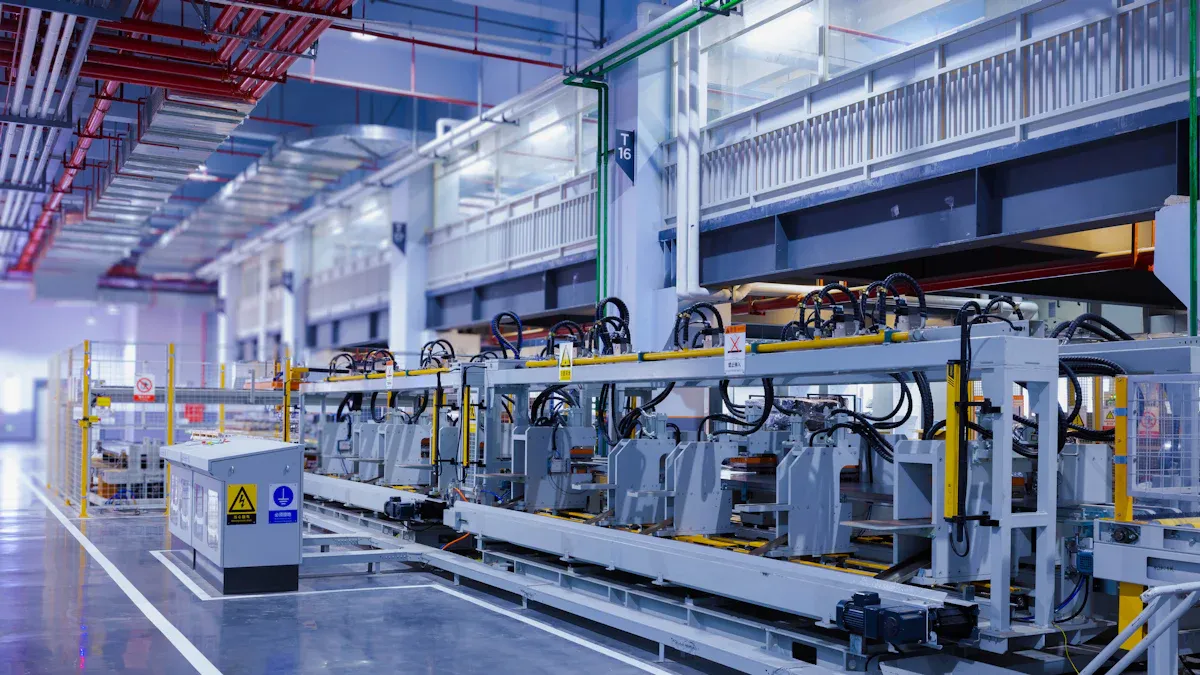
What is the most important factor when choosing an industrial generator for your manufacturing facility? I have seen how a single power outage can bring critical operations to a halt. Imagine the assembly line stopping, raw materials sitting idle, and delivery schedules thrown off track. Reliable power keeps everything moving.
More than 25% of manufacturing facilities experience power outages at least once a month. Batch manufacturing alone loses nearly $150,000 per facility every year from these disruptions.
I rely on backup power solutions because I know that uninterrupted electricity is essential for maintaining productivity and business continuity. LETON POWER stands out as a global leader in delivering reliable power to keep facilities running smoothly, especially when every second counts.
Key Takeaways
- Reliable power is crucial for manufacturing facilities to avoid costly downtime and maintain productivity.
- Choose generators based on reliability, durability, and certifications to ensure quality and safety.
- Consider fuel efficiency and long-term operating costs when selecting a generator to maximize savings.
- Look for automation features like remote monitoring to enhance generator performance and reduce maintenance issues.
- Plan for future growth by selecting scalable and modular generator systems that can adapt to changing power needs.
- Assess environmental factors, such as noise and emissions, to ensure compliance with local regulations.
- Evaluate supplier support and after-sales service to maintain generator reliability and performance over time.
- Conduct a thorough load analysis to accurately determine power requirements and avoid underestimating needs.
Selection Criteria for Industrial Generators

When I help clients choose the best generator for their manufacturing facility, I always start with a clear set of criteria. The right decision ensures reliable power generation, protects productivity, and supports long-term business growth. Here’s how I break down the most important factors.
Reliability and Build Quality
Durability in Manufacturing Environments
I have seen firsthand how harsh manufacturing environments can challenge equipment. Dust, vibration, temperature swings, and continuous operation all test the durability of industrial generators. The best generator must withstand these conditions without compromising performance or safety. I always look for robust enclosures, heavy-duty components, and advanced cooling systems. LETON POWER’s water-cooled and silent series, for example, are engineered for maximum durability and consistent power output, even in demanding settings.
Certifications matter, too. I check for internationally recognized standards that guarantee generator quality and safety. Here’s a quick reference:
| Certification Name | Issuing Organization | Key Standards | Relevance | Region of Acceptance |
|---|---|---|---|---|
| ISO 9001 | International Organization for Standardization | Quality Management Systems | Quality Assurance | Global |
| ISO 14001 | International Organization for Standardization | Environmental Management Systems | Sustainability | Global |
| ISO 45001 | International Organization for Standardization | Occupational Health and Safety | Workplace Safety | Global |
| UL Certification | Underwriters Laboratories | Product Safety | Consumer Safety | North America |
| EPA Certification | Environmental Protection Agency | Emissions Standards | Environmental Compliance | United States |
These certifications show a manufacturer’s commitment to quality, safety, and environmental responsibility. I never compromise on these standards when recommending standby generators for critical operations.
Manufacturer Reputation
Brand reputation plays a huge role in my decision-making process. I trust manufacturers with a proven track record for reliability, innovation, and after-sales support. LETON POWER, for instance, has delivered industrial generators to over 160 countries since 2001. Their expertise in power generation and commitment to generator quality give me confidence that their products will perform when it matters most.
Industry experts agree that the following factors are critical when selecting an industrial generator:
- Power needs
- Facility size
- Potential company expansion
- Environmental factors
- Fuel type
- Portability
- Brand reputation
- Budget considerations
I always advise clients to prioritize reliability and durability, as these directly impact uptime and operational efficiency.
Fuel Efficiency and Cost
Diesel vs. Other Fuels
Fuel efficiency is a top priority for me because it affects both operating costs and environmental impact. Diesel generators remain the best generator choice for many manufacturing facilities due to their superior fuel efficiency and robust power output. Here’s how different generator types compare:
| Generator Type | Fuel Efficiency Rating | Notes |
|---|---|---|
| Diesel Generators | ~40% | More fuel-efficient than natural gas units. |
| Natural Gas Generators | ~30% | Burns cleaner but less efficient. |
| Hybrid Generators | Optimized based on demand | Can improve fuel efficiency based on usage. |
I recommend diesel standby generators for facilities that demand high efficiency and reliable power generation. LETON POWER’s diesel generator sets are engineered for optimal fuel efficiency, making them a smart investment for long-term savings.
Long-Term Operating Costs
I always look beyond the initial purchase price. The best generator delivers value over its entire service life. I consider fuel consumption, maintenance intervals, parts availability, and service network strength. For example, a generator with higher fuel efficiency and lower maintenance needs will reduce total cost of ownership. LETON POWER’s global support network ensures rapid parts delivery and expert service, minimizing downtime and protecting your investment.
Automation and Smart Features
Remote Monitoring
Modern industrial generators now offer advanced automation and smart features. I rely on remote monitoring systems to keep track of generator performance in real time. These systems provide automated alerts, predictive maintenance insights, and operational data that help me address issues before they become costly problems.
- Automated alerts identify and resolve potential issues quickly.
- Predictive maintenance schedules reduce downtime and mechanical stress.
- Real-time monitoring extends the operational lifespan of standby generators.
- Technicians can diagnose and fix problems remotely, improving service efficiency.
With these features, I can ensure that power generation remains uninterrupted and efficient, even in complex manufacturing environments.
System Integration
I value seamless integration with facility management systems. The best generator should connect easily with building automation, energy management, and safety systems. This integration allows for centralized control, data-driven decision-making, and improved operational efficiency. LETON POWER’s industrial generators support advanced system integration, giving me the flexibility to optimize power output and efficiency across the entire facility.
Tip: Automation and smart features not only improve reliability but also boost productivity and safety by reducing manual intervention and error rates.
By focusing on these selection criteria—reliability, durability, efficiency, and smart features—I help clients choose the best generator for their manufacturing needs. This approach ensures continuous power generation, cost savings, and peace of mind.
Scalability and Flexibility
When I help clients plan for the future, I always emphasize the importance of scalability and flexibility in industrial generator systems. Manufacturing facilities rarely stay the same. Production lines expand, new equipment comes online, and power requirements shift. I have seen how a generator system that adapts to these changes can save time, money, and headaches.
Modular Options
I recommend modular generator systems for facilities that expect growth or fluctuating power needs. Modular systems allow me to add or remove generator units as demand changes. This approach gives me the flexibility to scale power output without replacing the entire system.
- Demand for flexibility and scalability in generator systems is increasing, with a preference for modular systems that can adapt to changing load requirements.
- Modular systems support future expansion in manufacturing by allowing for incremental upgrades and adjustments based on evolving operational needs.
- Enhanced focus on reliability and compliance with regulatory standards is driving the selection of scalable generator systems.
With modular options, I can match generator capacity to current needs and expand as the facility grows. LETON POWER offers a range of modular diesel generator sets that make it easy to upgrade or reconfigure power solutions as operations evolve.
Future Expansion
I always plan for the future when selecting a generator. Flexibility in power systems is crucial for managing variability and uncertainty, which is essential for facilities with changing power needs. The integration of smart technologies in power plants is vital for addressing load variations and ensuring a responsive energy supply. By choosing a scalable system, I ensure that the facility can handle new production lines, additional shifts, or unexpected surges in demand. This proactive approach protects productivity and supports long-term business growth.
Environmental Suitability
Environmental suitability plays a critical role in generator selection. I must consider both regulatory requirements and the unique conditions of each facility. The right generator minimizes environmental impact and ensures reliable operation, no matter the surroundings.
Noise and Emissions
Manufacturing facilities must comply with strict noise and emissions standards. I always look for generators that use advanced emission control technologies to meet or exceed these regulations.
Key Emission Control Technologies include:
- Selective Catalytic Reduction (SCR): Converts NOₓ into nitrogen and water.
- Diesel Particulate Filter (DPF): Traps soot and burns it off during regeneration.
- Diesel Oxidation Catalyst (DOC): Converts hydrocarbons into CO₂ and water.
- Exhaust Gas Recirculation (EGR): Lowers combustion temperatures to reduce NOₓ formation.
- Generators must comply with local and state air emissions regulations, which may require permits.
- Emergency generators can emit pollutants like carbon monoxide and sulfur dioxide, necessitating compliance with strict operating guidelines.
- Regular air quality reporting is often required, which can be facilitated by automated monitoring solutions.
- The EPA’s Tier rating system progressively reduces emissions from diesel engines.
- Each Tier level imposes stricter limits on NOₓ and PM emissions, driving innovation in generator technology.
- Modern Tier 4 Final diesel generators utilize advanced emission control technologies to meet these standards.
LETON POWER’s silent and water-cooled diesel generators feature sound-attenuated enclosures and advanced emission controls. These models help me meet regulatory requirements and maintain a safe, quiet work environment.
Climate Adaptability
I always assess the local climate before recommending a generator. Harsh environments affect thermal management and electrical insulation. Correct adaptation to local conditions enhances generator reliability.
- Generators in cold climates require cold-weather kits to ensure proper operation.
- In humid environments, moisture checks are essential to prevent corrosion.
- Extreme weather can lead to increased fuel consumption and operational costs.
- Detailed studies are necessary to redesign generator components for specific environmental conditions.
- Adaptations improve reliability and efficiency in harsh climates.
- Factors like thermal management and mechanical resistance must be considered in the design.
- Engine block heaters maintain optimal temperatures for oil and coolant.
- Fuel heaters prevent diesel gelling, ensuring consistent fuel flow.
LETON POWER engineers generator solutions with features like engine block heaters, fuel heaters, and corrosion-resistant enclosures. These adaptations ensure reliable performance in extreme cold, heat, or humidity. By selecting a generator designed for the local environment, I protect uptime and extend equipment life.
Comparing the Best Generator Models
When I evaluate industrial generator models for manufacturing facilities, I focus on reliable performance, efficiency, and long-term value. I have worked with many brands and seen how the right model can make a difference in power generation and operational continuity. Below, I compare LETON POWER’s diesel generator models with those from top generator manufacturers, highlighting strengths, ideal use cases, and product ranges.
LETON POWER Diesel Generators
LETON POWER has built a reputation for quality and innovation since 2001. I trust their industrial generators for robust power generation and reliable performance in demanding environments. LETON POWER’s models use Cummins and Perkins engines as their core power source, which ensures both reliability and efficiency. Their affordability and commitment to quality make them a preferred choice for many manufacturing facilities.
Water-Cooled Series
I recommend LETON POWER’s water-cooled series for facilities that require consistent power output and advanced cooling. These models deliver high efficiency and reliable performance, even in harsh conditions. The water-cooled design protects the generator from overheating and extends its service life.
Silent Series
Noise reduction is critical in many manufacturing environments. LETON POWER’s silent series features sound-attenuated enclosures and advanced emission controls. I have seen these models excel in noise-sensitive areas, providing reliable performance without disrupting operations.
Mobile Trailer Series
For facilities that need flexible power generation, I suggest LETON POWER’s mobile trailer series. These models offer portability and quick deployment, making them ideal for remote sites or temporary events. The robust trailer design ensures reliable performance wherever you need standby generators.
Air-Cooled Series
Smaller facilities benefit from LETON POWER’s air-cooled series. These compact models deliver efficient power generation and reliable performance for backup applications. The air-cooled design simplifies maintenance and reduces operating costs.
Light Tower Series
LETON POWER’s light tower series combines power generation with essential illumination. I use these models for construction sites and outdoor operations where both lighting and reliable performance are required.
LETON POWER’s commitment to high-efficiency and innovative designs has established them as a trusted partner in mission-critical applications.
| Model | Power Output | Fuel Efficiency | Control System | Design Features |
|---|---|---|---|---|
| LETON Power 30/33kW | 40/42 KVA | 15% lower consumption | IoT-enabled remote monitoring | IP55 protection, anti-corrosion coating |
| Good Engine 24KW | 24 kW | High fuel efficiency | Standard control | Compact design |
| Silent Diesel Generator 10kVA | 10 kVA | Standard efficiency | Standard control | Noise reduction features |
Top Generator Manufacturers
I have compared LETON POWER’s models with those from top generator manufacturers. Each brand offers unique strengths and product ranges suited for different industrial applications.
| Manufacturer | Key Features | Applications |
|---|---|---|
| Caterpillar Inc. | Heavy-duty engines, modular and scalable | Mining, healthcare, energy sectors |
| Cummins Inc. | Innovations in diesel and natural gas engines, hybrid generators | Hospitals, data centers, telecoms |
| Kohler-SDMO | Innovative, sustainable, multifunctional units | Various industrial applications |
| Generac | Wide range, advanced controls, long warranties | Commercial, industrial, residential |
| Perkins | Reliable diesel engines, global support network | Manufacturing, agriculture |
| Detroit Diesel | Durable construction, high-output models | Transportation, heavy industry |
I have found that Caterpillar and Cummins excel in heavy-duty and scalable solutions. Kohler-SDMO and Generac offer innovative controls and long-term support. Perkins and Detroit Diesel provide reliable performance and strong service networks. LETON POWER stands out for its affordability and use of trusted engine technology.
Performance Comparison
When I compare industrial generator models, I focus on key performance metrics. These metrics help me determine which model offers the best generator solution for each facility.
| Metric | Importance |
|---|---|
| kW | Indicates usable power output. |
| kVA | Crucial for sizing based on reactive power needs. |
| Power Factor (PF) | Higher PF means better efficiency. |
| Voltage Output | Ensures compatibility with equipment. |
| Frequency (Hz) | Must match equipment to avoid inefficiency. |
| Phase | Single-phase for small, three-phase for industrial. |
| Amperage (Amps) | Essential for preventing overload. |
| Fuel Consumption Rate | Impacts operational costs; lower consumption is more efficient. |
| Noise Level (dB) | Important for compliance, especially in noise-sensitive areas. |
I always check these metrics before recommending a model. LETON POWER’s models consistently deliver high efficiency, reliable performance, and quality output. Their standby generators meet strict noise and emissions standards, making them suitable for a wide range of manufacturing environments.
Reliability Metrics
I rely on reliability metrics to assess how well a generator will perform over time. LETON POWER’s industrial generators use proven engine technology and advanced control systems to ensure reliable performance. Top generator manufacturers like Caterpillar, Cummins, and Perkins also offer models with strong reliability records.
Efficiency and Cost
Efficiency plays a major role in my decision-making. LETON POWER’s models feature lower fuel consumption and optimized control systems. This reduces operating costs and improves long-term value. I compare efficiency across all top generator manufacturers to find the best generator for each application.
Warranty and Support
Warranty and support offerings can impact long-term ownership. I always review warranty durations and service requirements before making a recommendation.
| Manufacturer | Warranty Duration |
|---|---|
| Generac | 5-10 years (model dependent) |
| Kohler | 5-year standard, up to 10-year extended |
| Cummins | 5-year standard, 10-year extended available |
| Perkins | 5-year standard |
| Detroit Diesel | 5-year standard |
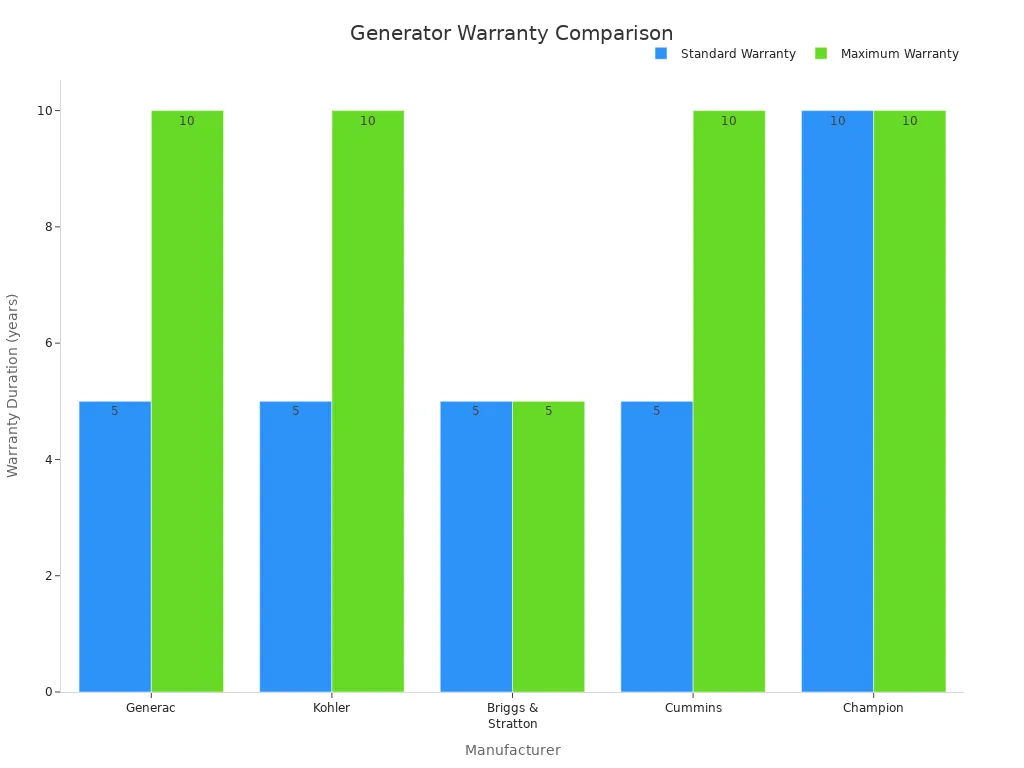
A good warranty should cover all parts without exclusions. Long-term ownership depends on warranty duration and manufacturer support. I always advise clients to keep regular service records to maintain warranty coverage.
I have found that LETON POWER’s global support network and commitment to quality make their industrial generators a reliable choice for manufacturing facilities. Their models provide the best generator solutions for both prime and standby power generation needs.
Step-by-Step Guide to Choosing an Industrial Generator
Selecting the right industrial generator for a manufacturing facility requires a structured approach. I always follow a clear process to ensure reliable power for critical operations and to support both current and future needs.
Assess Power Requirements
Load Calculation
I start by planning my approach and gathering all necessary information about the facility’s energy use. I define what data I need and how to collect it, making sure everyone involved understands the process. I select a modeling tool to create a baseline of energy consumption. This baseline helps me benchmark efficiency and compare options. I work with stakeholders to explore energy-saving measures and identify the best investments. Once I have a plan, I implement the chosen measures, prioritizing those that deliver immediate results for backup power and emergency power supply.
Planning for Growth
I never overlook future expansion. I estimate how production increases or new equipment will affect power needs. I make sure the generator system can scale up, so the facility remains protected as operations grow. This planning ensures backup power solutions stay effective as demands change.
Site and Installation
Space and Safety
I conduct a thorough site assessment. I choose a location that meets safety, accessibility, and noise regulations. I always install generators in well-ventilated areas to prevent carbon monoxide buildup. I use a licensed electrician for all electrical work and install a CO detector nearby. Routine maintenance is part of my plan to avoid malfunctions and extend the generator’s lifespan.
Regulatory Compliance
I ensure compliance with all relevant standards, such as NFPA 110, which governs emergency power systems. I keep detailed documentation, including installation records, testing results, and maintenance logs. For Level 1 installations, I check fire-resistance ratings and make sure unrelated equipment does not share the same room. Proper placement addresses ventilation, accessibility, and exhaust routing, which are essential for safe and efficient operation of industrial generators.
Supplier Evaluation
Requesting Quotes
I define my project requirements clearly before reaching out to suppliers. I include terms and conditions in my requests and use software tools to streamline the procurement process. This approach helps me compare options and select the best generator for emergency and backup power.
After-Sales Support
I evaluate suppliers using several criteria:
| Criteria | Description |
|---|---|
| Experience and Operational Maturity | I look for suppliers with over five years of experience. |
| Production Capacity and Scalability | I assess their ability to meet my order requirements. |
| Quality Assurance and Compliance | I request inspection reports and conduct audits. |
| Communication and Responsiveness | I value fast response times and clear communication. |
| Export Readiness and After-Sales Support | I ensure they can handle export documentation and provide ongoing support. |
Tip: Reliable after-sales support is essential for maintaining emergency power and minimizing downtime during critical operations.
By following this step-by-step guide, I ensure my facility receives reliable power, robust backup power, and effective emergency power for all critical operations.
Ensuring Reliable Power for Manufacturing
Total Cost of Ownership
When I evaluate industrial generator options for manufacturing, I always look beyond the initial purchase price. Reliable power depends on understanding the full financial picture. I calculate total cost of ownership by considering every expense that affects power generation over the life of the equipment.
- I estimate the cost per hour of downtime for my most critical process.
- I multiply that figure by the expected outage hours in a typical year for my region.
- I compare this number to the annualized ownership cost for the generator and automatic transfer switch (ATS).
- I add the risk reduction benefits from regular testing and maintenance.
I also break down the costs into specific categories:
- Acquisition price for new or used generator equipment.
- Freight charges based on weight, dimensions, and route permits.
- Rigging and craning to the pad, with site access verified.
- Fuel system installation or gas tie-in, including required clearances.
- ATS and controls integration with my electrician.
- Commissioning and witnessed load bank testing, with a written report.
- Preventative maintenance throughout the year.
- Parts and consumables over five to ten years.
- Fuel maintenance for diesel or storage planning for propane.
- Remote monitoring if required by my team or insurer.
- Resale value or redeployment flexibility at end of life.
Tip: I always factor in preventative maintenance and remote monitoring. These steps help me avoid unexpected downtime and protect my investment in reliable power.
Maintenance and Service
I prioritize regular maintenance to ensure consistent performance and reliability. Scheduled service keeps my generator running smoothly and prevents costly breakdowns. I work with trusted technicians who understand the demands of industrial power generation. Routine inspections, oil changes, and filter replacements extend the life of my equipment and support reliable power for every shift.
Spare Parts Availability
I always check the availability of spare parts before choosing a generator. Quick access to genuine parts reduces downtime and keeps my facility productive. I rely on suppliers with strong distribution networks and proven quality standards. When parts are easy to source, I can maintain high performance and avoid delays in power generation.
Reliability Over Time
Long-term reliability is essential for manufacturing operations. I assess several factors that influence how well my generator performs year after year.
| Factor | Description |
|---|---|
| Fuel Quality | High-quality fuel is essential. Contaminated fuel can clog systems and reduce efficiency. |
| Environmental Conditions | Ambient temperature, altitude, and humidity affect ignition, operation, and overall performance. |
| Maintenance Practices | Regular maintenance ensures optimal performance and prevents unexpected failures. |
| Generator Design | The structure and type of windings influence efficiency, voltage regulation, and durability. |
I monitor fuel quality and environmental conditions to maintain reliable power generation. I schedule maintenance and choose generator designs that support long-term durability and consistent performance.
Service Life
I always consider the expected service life of my generator. High-quality models deliver reliable power for many years with proper care. I track usage hours and follow manufacturer guidelines to maximize equipment lifespan. When I invest in robust power generation solutions, I protect my facility from unexpected outages and costly replacements.
Manufacturer Support
Strong manufacturer support gives me confidence in my power generation system. I look for companies with responsive service teams, comprehensive warranties, and global parts availability. Reliable support ensures my generator stays operational and delivers consistent performance. I value clear communication and fast response times when I need technical assistance or replacement parts.
Note: Reliable power is not just about equipment. It is about ongoing support, proactive maintenance, and a commitment to quality at every stage.
Common Mistakes in Generator Selection
Underestimating Power Needs
I often see facility managers underestimate the true power requirements of their manufacturing operations. This mistake can lead to significant operational challenges. When the generator does not match the facility’s load, the system struggles to deliver consistent power. I have witnessed how a low power factor increases electricity consumption, forcing the generator to work harder to achieve the same output. This drives up operational costs and puts unnecessary strain on the energy distribution system.
- Low power factor causes electrical systems to draw more current than necessary.
- Excess current leads to overheating and can shorten the lifespan of equipment.
- Premature failures disrupt production and increase maintenance expenses.
Improving the power factor reduces these stresses and enhances equipment reliability. I always recommend a thorough load analysis before selecting a generator. Accurate calculations ensure the generator can handle both current and future demands. This approach protects productivity and prevents costly downtime.
Tip: Always include a buffer for future expansion when calculating power needs. This ensures the generator remains effective as your facility grows.
Ignoring Environmental Factors
Environmental conditions play a critical role in generator performance. I have seen facilities overlook factors such as temperature, humidity, and air quality. These oversights can compromise reliability and safety. For example, generators operating in extreme heat require advanced cooling systems to prevent overheating. In humid environments, moisture can cause corrosion and electrical faults.
I assess the local climate and facility layout before recommending a generator. Proper adaptation to environmental factors extends equipment life and maintains consistent power output. I also consider noise and emissions regulations, which vary by region. Selecting a generator with sound-attenuated enclosures and advanced emission controls helps facilities comply with local standards.
Note: Ignoring environmental factors can lead to frequent breakdowns, increased maintenance costs, and regulatory penalties.
Overlooking Support Agreements
Support agreements are essential for long-term reliability. I have seen facilities neglect this aspect, only to face challenges when unexpected issues arise. Without a comprehensive support agreement, access to maintenance, spare parts, and technical assistance becomes uncertain. This increases the risk of prolonged downtime and lost productivity.
I always review the terms of support agreements before finalizing a generator purchase. Reliable suppliers offer clear service schedules, rapid parts delivery, and responsive technical support. These agreements ensure the generator receives regular maintenance and professional inspections.
Common operational mistakes that I encounter include:
- Ignoring regular maintenance
- Using contaminated or old fuel
- Overloading the generator
- Ignoring cooling system issues
- Skipping battery checks
- Poor lubrication practices
- Neglecting air filter maintenance
- Improper storage during inactivity
- Failing to train operators
- Delaying professional inspections
A strong support agreement addresses these risks and keeps the generator running efficiently. I advise facility managers to prioritize after-sales support and establish clear communication with their supplier.
Callout: Reliable support agreements protect your investment and ensure uninterrupted power for critical operations.
Neglecting Future Expansion
I often see facility managers focus only on current power needs when selecting an industrial generator. This approach can create serious challenges down the road. Manufacturing facilities rarely stay the same. Production lines expand, new equipment comes online, and business growth drives higher energy demands. If I ignore future expansion, I risk investing in a generator that quickly becomes inadequate.
I always advise clients to plan for growth from the start. I ask questions like:
- Will the facility add new machinery or production lines in the next five years?
- Are there plans to increase shift hours or workforce?
- Does the business expect to diversify operations or open new departments?
These questions help me estimate future power requirements. I use a simple table to map out projected growth:
| Year | Expected New Equipment | Estimated Power Increase (kW) | Notes |
|---|---|---|---|
| 2024 | CNC Machine | +50 | Automation upgrade |
| 2025 | Packaging Line | +30 | New product launch |
| 2026 | HVAC Expansion | +40 | Facility expansion |
Tip: I always include a buffer of 20–30% above current needs to account for unexpected growth or peak demand.
When I select a generator, I look for modular systems that allow easy upgrades. LETON POWER offers scalable solutions that make it simple to add capacity as operations expand. I prefer generators with flexible control systems and compatibility with future technologies. This approach protects my investment and ensures reliable power as the facility evolves.
I also consider the impact of expansion on installation and maintenance. Larger generators may require more space, enhanced ventilation, and upgraded safety measures. I work with my team to review site layouts and plan for future infrastructure needs. I schedule regular reviews of power consumption and update my generator strategy as the business grows.
Neglecting future expansion can lead to costly replacements, production delays, and lost revenue. I have seen facilities forced to halt operations while waiting for new equipment or upgrades. By planning ahead, I avoid these risks and support long-term business success.
Callout: Future-proofing your power solution is not just smart—it is essential for manufacturing growth. I always recommend choosing a generator that grows with your facility.
Why Choose LETON POWER for Industrial Generators
Proven Track Record
I always look for a manufacturer with a history of delivering reliable power to industrial clients. LETON POWER stands out as a Chinese factory that combines affordability with guaranteed quality. Since 2001, I have seen LETON POWER lead the industry in diesel generator innovation. Their power units utilize trusted Cummins and Perkins engines, which gives me confidence in both performance and longevity. LETON POWER’s reputation extends across the globe, with installations in more than 150 countries. Their commitment to reliable power is evident in every project.
| Evidence Description | Details |
|---|---|
| Extensive Experience | Leader in diesel generator innovation since 2001 |
| Global Reach | Power solutions in 150+ countries |
| Workforce and Expertise | 800 professionals, 100 specialized engineers |
| Commitment to Quality and Innovation | CE ISO, RoHS, UKCA, EPA certifications |
| Proven Track Record | 50,000+ installations in 80+ countries |
I trust LETON POWER because their team includes 50 German and Japanese engineers who drive innovation using Euro and Asian technologies. Over 100 in-house technicians maintain military-grade manufacturing standards. This expertise ensures every generator delivers reliable power, even in the most demanding environments.
Customer Success Stories
I have worked with clients who rely on LETON POWER for mission-critical operations. One manufacturing facility in Southeast Asia faced frequent outages that threatened production schedules. After installing LETON POWER’s water-cooled diesel generator, the facility experienced uninterrupted operations and reduced downtime. The plant manager told me, “We now have reliable power and peace of mind. Our output has increased, and maintenance costs have dropped.”
Another client in Africa needed a mobile trailer generator for remote construction sites. LETON POWER provided a solution that offered both portability and reliable power. The project manager shared, “LETON POWER’s generator kept our site running smoothly, even in harsh conditions. Their support team responded quickly whenever we needed assistance.”
Reliable power is not just a promise. It is the foundation of every successful manufacturing operation. I have seen LETON POWER deliver on this promise time and again.
Innovative Features
I choose LETON POWER because they offer advanced features that set their generators apart. Their models support IoT-enabled remote monitoring, which allows me to track performance and schedule maintenance proactively. Sound-attenuated enclosures minimize noise, making these generators ideal for sensitive environments. LETON POWER’s modular options let me scale power output as my facility grows, ensuring reliable power for future expansion.
- IoT-enabled control systems for real-time monitoring
- Modular designs for easy scalability
- Soundproof enclosures for noise-sensitive operations
- Corrosion-resistant coatings for harsh climates
LETON POWER’s focus on innovation, affordability, and quality makes them my preferred partner for industrial generator solutions. Their global support network and proven reliability give me confidence that my facility will always have reliable power.
I always recommend starting with a clear checklist when choosing an industrial generator for manufacturing facilities. Reliable power keeps production moving and protects against costly downtime. I focus on backup power solutions that offer efficiency, scalability, and long-term value. I use comparison guides to evaluate generator options and ensure backup power meets every need. For expert advice, I suggest contacting LETON POWER or trusted suppliers. Facility managers should review their current generator systems and plan for future backup power requirements.
FAQ
What size generator do I need for my manufacturing facility?
I calculate the total power requirements by listing all essential equipment and their wattage. I always add a 20–30% buffer for future expansion. This approach ensures the generator meets both current and future needs.
How often should I service my industrial generator?
I schedule maintenance every 250 to 500 hours of operation or at least twice a year. Regular oil changes, filter replacements, and inspections keep my generator running reliably and extend its lifespan.
Can I monitor my generator remotely?
Yes, I use IoT-enabled control systems for real-time monitoring. These systems send alerts, track performance, and help me schedule maintenance. Remote monitoring improves reliability and reduces downtime.
What is the difference between standby and prime generators?
Standby generators provide backup power during outages. Prime generators supply continuous power for extended periods. I choose standby units for emergency use and prime units for ongoing operations where grid power is unavailable.
How do I ensure my generator meets local emissions regulations?
I select models with advanced emission controls and check for certifications like EPA or CE. I always review local regulations before installation. LETON POWER’s generators help me comply with strict noise and emissions standards.
Are LETON POWER generators suitable for extreme climates?
Yes, I rely on LETON POWER’s climate-adapted features, such as engine block heaters and corrosion-resistant enclosures. These enhancements ensure reliable performance in both hot and cold environments.
What support does LETON POWER offer after installation?
LETON POWER provides global after-sales support, including spare parts, technical assistance, and maintenance services. I value their responsive service teams and comprehensive warranty coverage.

