
Power drives every operation inside a data center. I see firsthand that reliable power and efficient space management fuel revenue growth by enabling higher client capacity and reducing costs. When I optimize these resources, I unlock significant savings and improve profitability.
- Electricity accounts for 20-30% of total data center operating costs, so managing power and space directly impacts the bottom line.
I rely on advanced data center generator solutions to ensure uptime and deliver the performance clients demand. By focusing on efficiency, I position my business for stronger revenue and long-term growth.
Key Takeaways
- Optimizing power and space can significantly reduce operating costs, directly impacting profit margins.
- Electricity accounts for 20-30% of data center costs; effective power management can lead to competitive pricing and attract more clients.
- Utilizing different service models, like retail and wholesale colocation, maximizes client capacity and revenue potential.
- High-density racks and modular designs allow for efficient use of space, increasing client density without expanding physical footprints.
- Investing in advanced generator solutions ensures reliable power, preventing downtime and enhancing client trust.
- Implementing energy-efficient technologies and practices can lower utility bills and improve cash flow over time.
- Offering premium and managed services diversifies revenue streams and protects profit margins against rising costs.
- Regular energy audits and monitoring help identify inefficiencies, ensuring continuous improvement in power and space optimization.
Why Power and Space Drive Data Center Revenue
Cost Structure and Profit Margins
I see that power and space form the backbone of every data center development. When I plan a new data center model, I must consider the high cost of construction and ongoing operations. The construction of a hyperscale facility can exceed $1 billion. These costs shape the revenue structure and force me to focus on efficiency. Electricity alone can account for a large share of my expenses. If I manage power well, I can improve my effective gross revenue and boost profit margins.
I notice that the financial burden of electricity often shifts to technology firms. When I operate a retail colocation or wholesale colocation site, I must decide how to pass these costs to clients. If I optimize my power usage, I can offer competitive pricing and attract more retail and wholesale customers. This approach increases my revenue capacity and supports long-term data center development.
Note: The rising demand for electricity makes power management a top priority in data center development. I must secure reliable power sources to keep my facilities running and profitable.
Client Capacity and Service Models
I design my data center development strategy around client capacity. The more clients I can serve, the higher my revenue. I use different service models to maximize my space and power. Retail colocation lets me rent space to many small clients. Wholesale colocation targets larger clients who need more power and space. I also offer managed services and metered power options.
Here is a table that shows how these service models generate revenue:
| Service Model | Description | Revenue Generation Mechanism |
|---|---|---|
| Colocation | Renting space in a shared facility for servers and hardware. Pricing is based on space and usage. | Generates revenue through flexible pricing based on space and additional services like power and connectivity. |
| Metered Power | Clients are charged based on actual energy consumption, allowing for flexibility and scalability. | Encourages efficient energy use and aligns provider-client incentives, generating revenue based on usage. |
| Managed Services | Outsourcing IT management tasks to providers, with pricing based on subscription or usage. | Recurring fees for services create a steady revenue stream for providers, optimizing resource utilization. |
I focus on retail colocation and wholesale colocation because they allow me to fill my data center development with a mix of clients. This mix helps me balance risk and maximize revenue. I also see that retail colocation demand keeps rising as more businesses move to the cloud. By offering flexible retail and wholesale options, I can adapt to market changes and grow my data center model.
Competitive Edge Through Efficiency
I gain a competitive edge by optimizing power and space in every data center development. When I reduce operational costs, I can offer better prices to my retail and wholesale clients. I also improve my sustainability credentials, which attracts clients who value green operations. Efficient power and space usage leads to better performance and reliability.
Here are some advantages I achieve through efficiency:
- Speed to capacity: I can bring new retail colocation and wholesale colocation space online faster.
- Improved Power Usage Effectiveness (PUE): I use less energy for cooling and support, which lowers costs.
- Improved Power Compute Effectiveness (PCE): I deliver more computing power per watt.
- Improved Return on Invested Power (ROIP): I get more revenue from every unit of power I secure.
I see that U.S. vacancy rates for data centers are below 2%. This high demand for space means that every square foot counts. By focusing on retail colocation, wholesale colocation, and efficient data center development, I can fill my facilities and increase revenue. I also stay ahead of competitors who struggle with power shortages or inefficient layouts.
Data Center Generator Solutions for Power Optimization
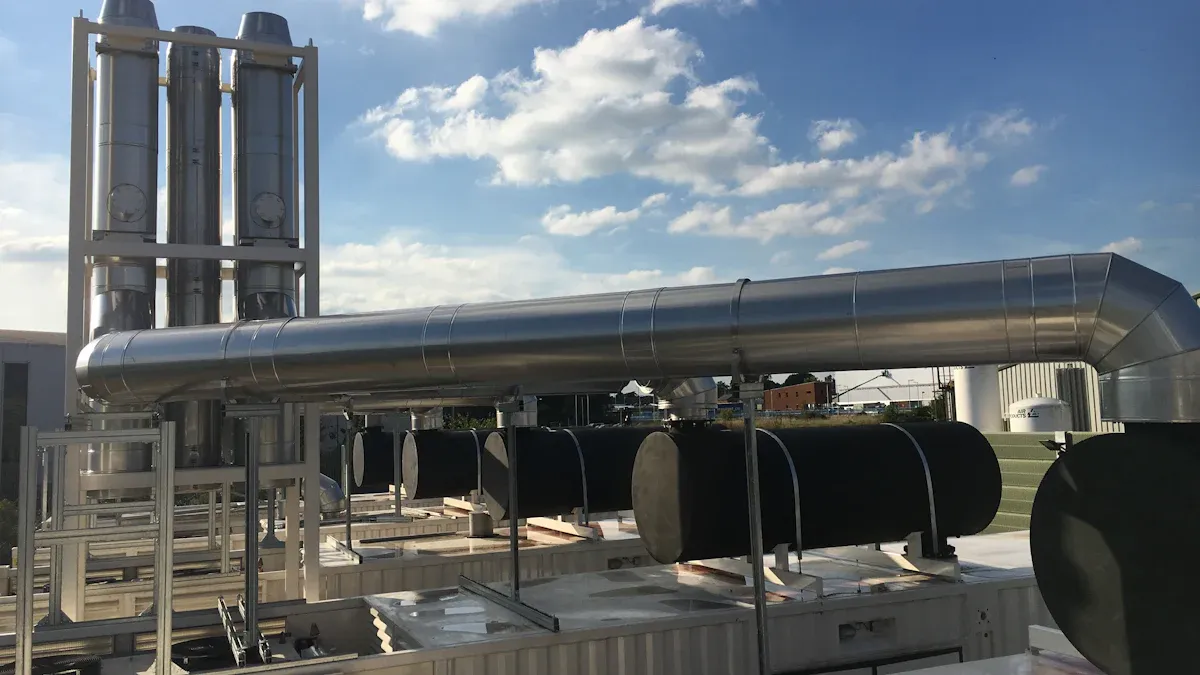
When I manage a data center, I know that power reliability and efficiency are non-negotiable. I rely on advanced data center generator solutions to keep my operations running smoothly, support zero downtime, and drive revenue growth. LETON POWER stands out as a leader in this field, offering a full suite of generator technologies that address the unique challenges of modern data centers.
High-Performance Generator Sets
Reliability and Uptime
I trust high-performance generator sets to deliver continuous power, even during unexpected outages. These systems form the backbone of my data center generator strategy. I have seen how reliable backup power prevents data loss and financial setbacks. Advanced features like remote monitoring help me lower maintenance costs and boost operational efficiency. I also appreciate the scalability of these generators, which lets me adapt quickly to changing power demands.
| Benefit/Feature | Description |
|---|---|
| Reliable Power Backup | Ensures continuous operation during outages, preventing data loss and financial losses. |
| Advanced Features | Includes remote monitoring, leading to lower maintenance costs and higher operational efficiency. |
| Environmental Impact | Natural gas generators reduce emissions significantly compared to diesel, promoting eco-friendliness. |
| Scalability | Allows for quick deployment to meet varying power demands of data centers. |
I choose LETON POWER’s data center generator sets because they are engineered for “always-on” performance. Their specialized alternators handle the nonlinear loads of my UPS systems and servers. Intelligent controls give me real-time event logging and remote access, which means I can respond to issues before they impact uptime.
Standards and Sustainability
I must meet strict industry standards to maintain my clients’ trust. LETON POWER’s generators comply with ISO 8528-G3, ensuring frequency and voltage stability. I also value their compatibility with sustainable fuels like HVO (Hydrotreated Vegetable Oil). This commitment to sustainability helps me reduce my environmental footprint and attract clients who prioritize green operations.
Modular and Containerized Power Systems
Space-Saving Designs
Space comes at a premium in every data center I operate. Modular and containerized power systems let me maximize usable floor area without sacrificing reliability. I can deploy these solutions in high-cube, fire-rated enclosures that stack efficiently. This approach allows me to pack more power into less space, which increases my client capacity and revenue potential.
| Aspect | Description |
|---|---|
| Cost-Effectiveness | Modular data centers reduce construction and operational expenses through pre-fabricated components and standardized designs. |
| Labor and Material Savings | Manufacturing in a controlled environment lowers costs associated with labor and materials. |
| Incremental Deployment | Allows for capacity to be deployed incrementally, avoiding over-provisioning and aligning investments with actual demand. |
| Operational Cost Savings | Streamlined maintenance and energy-efficient designs contribute to lower operational costs. |
Scalability
I need to scale my infrastructure as demand grows. Modular data center generator solutions from LETON POWER give me the flexibility to add capacity incrementally. I can deploy new modules rapidly, which reduces on-site construction time and gets my facility online faster. Minimal assembly means I can achieve operational readiness quickly, giving me a faster time-to-market and a competitive edge.
- Rapid deployment capability reduces on-site construction time.
- Minimal assembly required once modules are delivered, allowing for quick operational readiness.
- Faster time-to-market for businesses needing to establish new facilities.
Battery Energy Storage and Microgrids
Peak Load Management
I use battery energy storage systems (BESS) to manage peak loads and optimize my energy costs. These systems store excess energy and release it during periods of high demand. This approach helps me avoid expensive peak charges and maintain stable operations. LETON POWER integrates BESS with their data center generator solutions, giving me greater control over my power ecosystem.
Renewable Integration
I see the value in integrating renewables and microgrids into my power strategy. BESS enhances power reliability by providing services like frequency regulation, peak shaving, and energy arbitrage. These capabilities improve my operational reliability and support revenue growth. By combining renewables with advanced data center generator systems, I can reduce my carbon footprint and meet evolving regulatory requirements.
Tip: I always look for generator partners who offer remote monitoring and predictive maintenance. These features help me reduce operating costs and ensure my facility meets Uptime Institute Tier III & IV requirements.
I trust LETON POWER’s global expertise and advanced solutions to keep my data center running efficiently. Their modular, containerized, and BESS-integrated systems help me achieve zero downtime, scalability, and sustainability—all of which drive my revenue growth.
Space Optimization Strategies

High-Density Racks
I rely on high-density racks to maximize every square foot in my data center. These racks allow me to fit more servers into less space, which directly increases my client capacity and revenue potential. The market for high-density racks continues to grow as businesses demand more efficient storage solutions. I see this trend accelerating, driven by the need for higher performance and better space utilization.
Vertical Expansion
I use vertical expansion to stack equipment upward rather than outward. This approach helps me avoid the high costs of expanding my facility’s footprint. By building up, I can increase my power density and serve more clients without acquiring additional real estate. I also benefit from advanced cooling solutions, such as liquid immersion cooling and hot/cold aisle containment, which keep my equipment running efficiently even as density rises.
- High-density racks maximize space and enhance efficiency.
- Vertical expansion supports greater client density and higher revenue per square foot.
- Advanced cooling solutions, like liquid cooling, can reduce energy consumption by up to 95% compared to traditional air conditioning.
Cable Management
I prioritize organized cable management to maintain airflow and simplify maintenance. Proper cable routing prevents overheating and reduces downtime. I use structured cabling systems that support rapid changes and upgrades. This organization also improves safety and helps me identify issues quickly.
Tip: I conduct regular energy audits to identify inefficiencies and optimize my rack layouts.
Modular Data Center Design
Modular data center design gives me the flexibility to scale operations quickly and cost-effectively. I assemble standardized modules off-site, which reduces construction time and keeps costs predictable. This approach helps me avoid the financial unpredictability of traditional builds.
Rapid Deployment
I can deploy modular data center components rapidly, which means I bring new capacity online faster. This speed gives me a competitive edge in meeting client demand. Faster time-to-market translates to increased revenue opportunities.
- Modular designs curtail operational expenditures.
- Reduced construction time leads to quicker revenue generation.
- Standardized components improve operational efficiency.
Flexible Infrastructure
I value the flexibility that modular infrastructure provides. I can add or reconfigure modules as my needs change. This adaptability supports long-term growth and helps me respond to market shifts. Modular designs also enhance sustainability by reducing emissions associated with construction and minimizing material waste.
Virtualization and Cloud Tech
I leverage virtualization and cloud technology to consolidate servers and boost resource efficiency. Virtualization allows me to run multiple applications on a single physical server, which reduces my hardware needs and lowers energy consumption.
Server Consolidation
I consolidate underutilized machines onto fewer servers using virtualization. This strategy improves scalability and reduces my physical footprint. Virtual machines enable me to run multiple operating systems on one server, ensuring performance and isolation for each client.
| Benefit | Impact |
|---|---|
| Efficient resource use | Consolidates workloads, improves scalability, and reduces energy usage. |
| Reduced footprint | Fewer servers mean lower energy costs and less space required. |
| Enhanced performance | Resource multiplexing boosts operational efficiency. |
Resource Efficiency
I focus on maximizing computational output while minimizing energy input. Virtualization and cloud platforms help me achieve this goal by enabling dynamic allocation of resources. Fewer servers in use means lower cooling requirements and reduced operational costs. This efficiency supports higher client density and drives revenue growth.
Note: I use data center infrastructure management (DCIM) software and AI-driven tools to monitor and optimize resource allocation, further enhancing my space and power efficiency.
How Optimization Increases Revenue
Lower Operating Costs
I see that optimizing power and space in my data center directly improves my profit margins. When I manage energy use efficiently, I reduce my operating expenses and increase my cash flow. I focus on several strategies to keep costs low and maintain a steady flow of cash:
- I implement effective power management to cut energy consumption and lower operational costs.
- I monitor Power Usage Effectiveness (PUE) regularly, which helps me spot areas for improvement in energy efficiency.
- I invest in energy-efficient technologies and sustainable practices to reduce power consumption.
- I use advanced cooling systems, such as liquid cooling and free-air cooling, to decrease the energy needed for temperature regulation.
- I integrate renewable energy sources, like solar and wind, to further decrease energy expenses.
- I deploy high-density server racks to maximize computing power per square foot and optimize space usage.
- I use hot and cold aisle containment systems to improve cooling efficiency and allow for higher rack densities.
These actions help me keep my operating costs predictable and manageable. Lower costs mean I can offer more competitive pricing to my colocation clients, which attracts more business and increases my revenue. I also see a positive impact on my cash flow, as I spend less on utilities and maintenance.
Note: Every dollar I save on energy or space management goes straight to my bottom line, strengthening my cash flow and supporting long-term growth.
Higher Client Density
I know that maximizing client density is key to boosting revenue in my data center. By optimizing space and power, I can serve more clients within the same footprint. This approach increases my revenue per square foot and improves my overall cash flow.
- High-density server racks let me fit more client equipment into each rack, increasing my colocation capacity.
- Efficient cooling systems, such as hot and cold aisle containment, support higher rack densities without overheating.
- Modular designs allow me to scale up quickly and add new clients without major construction.
I focus on maximizing colocation utilization to cover my fixed overhead costs and ensure financial stability. Achieving high utilization rates within the first 18 months helps me absorb monthly fixed overhead and maintain a healthy cash flow. I also prioritize longer-term contracts, usually a minimum of 36 months, to stabilize revenue and support ongoing expenses.
Tip: I always aim for at least 70% utilization in my colocation space to keep my cash flow strong and my revenue targets on track.
Premium and Managed Services
I recognize that offering premium and managed services creates new revenue streams and protects my margins. These services go beyond basic colocation, allowing me to capture higher-value contracts and improve my cash flow.
| Strategy | Impact on Revenue Growth |
|---|---|
| Shift revenue mix towards Managed Services | Protects margins against rising labor costs and improves profitability |
| Restructure commissions to favor Managed Services | Enhances revenue quality by prioritizing higher-margin contracts |
| Improve PUE ratio | Increases profit margin on metered power revenue, supporting better operating margins |
I restructure my sales commissions to favor higher-margin managed services. This move improves the quality of my revenue and ensures a steady flow of cash. I also focus on improving my PUE ratio, which increases my profit margin on metered power revenue. By offering a mix of colocation, metered power, and managed services, I diversify my revenue streams and create a more resilient business model.
Callout: Managed services help me lock in longer-term contracts, which stabilizes my cash flow and supports future growth.
I see that optimizing power and space does more than just lower costs. It enables me to serve more clients, offer premium services, and create new sources of revenue. These strategies keep my cash flow healthy and position my data center for sustained success.
Real-World Examples and Case Studies
Leading Data Centers Using Generator Solutions
I have seen how global leaders in the data center industry rely on advanced generator solutions to maintain uptime and drive business growth. LETON POWER stands out as a prime example. With over 33 GW of installed capacity and a presence in more than 160 countries, LETON POWER supports hundreds of data centers, including large-scale colocation facilities. I trust their modular and containerized generator systems to deliver reliable power, even in the most demanding environments. Their solutions help me meet strict uptime requirements and scale my infrastructure quickly. I can serve more colocation clients without sacrificing reliability or efficiency. This operational scale gives me the confidence to expand my colocation offerings and pursue new revenue opportunities.
Revenue Growth from Efficiency Initiatives
I have implemented several efficiency initiatives in my data centers and witnessed measurable improvements in both performance and revenue. By optimizing power and space, I have increased my colocation capacity and improved my bottom line. The following table highlights the impact of these initiatives:
| Metric | Result |
|---|---|
| ARR Impact | Millions |
| Higher Win Rates | 57% |
| Hours Saved | 7,600 |
| Sales Volume Growth | 10% |
| Monthly Efficiency Boost | 35% |
I notice that these improvements translate directly into higher revenue and stronger client relationships. When I boost efficiency, I can offer more competitive colocation pricing and attract new clients. My sales volume grows, and I see a clear return on my investments in power and space optimization.
Best Practices and Lessons Learned
Through my experience managing colocation data centers, I have identified several best practices that consistently deliver results:
- I start efficient power delivery at the utility feed and extend it to every rack, using components rated at 97% efficiency or better.
- I use modern UPS systems that balance redundancy and efficiency.
- I track power usage from the facility level down to individual circuits with intelligent monitoring.
- I design the physical layout to minimize energy consumption.
- I install raised floors with deeper plenums to improve airflow.
- I choose modular construction for scalable power and cooling.
- I consider geography to take advantage of free cooling in cooler climates.
- I source electricity from renewable energy to reduce my carbon footprint.
- I implement waste heat recovery to repurpose exhaust heat for nearby buildings.
- I use AI and machine learning to optimize energy management in real time.
These practices help me maximize colocation capacity, reduce costs, and increase revenue. I have learned that a proactive approach to power and space optimization sets my data center apart in a competitive market.
Challenges and Considerations
Investment vs. Long-Term Gains
I recognize that optimizing power and space in my data center requires significant upfront investment. I must carefully evaluate the costs before committing to new infrastructure. When I plan a new facility, I consider several major expenses:
- Land purchase often accounts for 15% to 20% of my total budget.
- Building outfitting typically makes up 20% to 25% of development costs.
- Electrical systems represent the largest share, ranging from 40% to 45% of construction expenses.
- HVAC and cooling systems usually require 15% to 20% of my overall investment.
Annual operational costs can reach $10 million to $25 million, especially when factoring in power usage and cooling. I know that investing in energy-efficient technologies and advanced cooling solutions can reduce these ongoing expenses. Over time, these savings help me improve my profit margins and support sustainable growth. I always weigh the initial costs against the long-term revenue gains, understanding that efficiency investments pay off through lower utility bills and increased client capacity.
Tip: I prioritize upgrades that deliver measurable reductions in operational costs and carbon emissions.
Regulatory and Environmental Factors
I must navigate a complex regulatory landscape when optimizing my data center. Energy efficiency standards and environmental requirements shape my decisions. I use the following table to track key regulatory considerations:
| Requirement Type | Description |
|---|---|
| Energy Efficiency | I implement energy-saving practices to qualify for reduced utility rates. |
| Eco-Design | I comply with eco-design principles to ensure sustainable operations. |
| High-Performance Cooling | I adopt advanced cooling technologies to minimize energy consumption. |
I see that many companies now seek locations with access to renewable energy. This trend continues to grow as environmental impact becomes a top priority. I also face challenges with utility interconnection processes, which can cause multi-year delays. Uncertain upgrade requirements make planning difficult, and service terms may not always match the continuous power needs of my data center.
- I choose sites with renewable energy sources to support sustainability goals.
- I plan for possible delays and complications in utility connections.
- I review service agreements to ensure they meet my operational requirements.
Note: Staying ahead of regulatory changes helps me avoid costly disruptions and maintain compliance.
Risks of Over-Optimization
I understand that pushing power and space optimization too far can introduce new risks. Data centers consumed about 176 terawatt-hours of electricity in 2023, representing 4.4% of total U.S. consumption. This level of energy use led to approximately 105 million metric tons of carbon emissions. If I over-optimize without considering environmental impact, I risk contributing to further degradation.
Looking ahead, the projected electricity demand for data centers in 2030 could reach 130 gigawatts. This increase may drive greater reliance on fossil fuels and higher emissions. I balance my optimization strategies to avoid negative consequences for both my business and the environment.
- I monitor energy consumption to prevent excessive carbon emissions.
- I integrate renewable energy and efficient technologies to minimize my footprint.
- I avoid over-consolidation, which can compromise reliability and sustainability.
Callout: Responsible optimization ensures my data center remains profitable, reliable, and environmentally conscious.
I see a clear connection between power and space optimization and increased data center revenue. My experience shows that advanced generator solutions and modular design drive profitability by improving efficiency and reducing costs. The table below highlights how government incentives, advanced technologies, and regulatory compliance support this link:
| Evidence Type | Description |
|---|---|
| Government Incentives | Financial incentives such as tax credits and energy-efficiency grants are provided to data center operators adopting sustainable power solutions. |
| Advanced Technologies | The deployment of intelligent power management technologies, including AI and machine learning, enhances operational efficiency and meets growing digital demands. |
| Regulatory Compliance | Compliance with energy performance standards leads to competitive advantages and operational cost savings, which can boost revenue. |
To improve my strategy, I take these steps:
- I start with a comprehensive audit to set baseline performance metrics.
- I prioritize upgrades with the greatest impact.
- I foster a culture of efficiency across my organization.
I encourage every operator to evaluate their current practices and apply these strategies for long-term success.
FAQ
What is the main way I increase revenue in my data center?
I focus on optimizing power and space. This lets me serve more clients, reduce costs, and offer premium services. Efficiency drives my profit margins and supports business growth.
How do generator solutions help my data center stay profitable?
I use advanced generator systems to ensure zero downtime. Reliable power keeps my clients’ operations running. This reliability builds trust and helps me attract long-term contracts.
Why do I choose modular and containerized power systems?
I select modular and containerized solutions for rapid deployment and scalability. These systems let me add capacity as demand grows. I avoid costly overbuilding and keep my investments aligned with actual needs.
How does battery energy storage support my operations?
I rely on battery energy storage to manage peak loads and integrate renewables. This approach lowers my energy costs and improves sustainability. I also gain flexibility in meeting client requirements.
What are the benefits of high-density racks?
High-density racks let me maximize space. I fit more servers in less area, which increases my client capacity. This strategy boosts my revenue per square foot.
How do I balance efficiency with reliability?
I monitor my systems closely. I use intelligent controls and predictive maintenance. This balance ensures I do not sacrifice uptime for efficiency.
Can power and space optimization help me meet environmental goals?
Yes. I adopt sustainable fuels, integrate renewables, and use efficient cooling. These steps reduce my carbon footprint and help me comply with regulations.
What role does LETON POWER play in my data center strategy?
I trust LETON POWER for advanced generator solutions. Their expertise supports my uptime, scalability, and sustainability goals. I rely on their global presence and technical support for long-term success.

