

A practical guide to fuel aging, testing, and maintenance for data centers and telecom facilities
A standby generator can be fully serviced, pass its start test, and still struggle when an outage arrives. One possible reason is easy to overlook: the fuel has spent months in storage, and its condition has changed.
For data centers and telecom facilities, fuel quality deserves the same attention as batteries, cooling systems, and transfer controls. A full tank tells you how much fuel is available. It does not tell you whether that fuel can reliably support the load.
So, how often should stored diesel be replaced?
There is no single replacement interval that suits every installation. Fuel type, storage conditions, manufacturer requirements, and test results should guide the decision.
Start with a planning window, then verify the fuel
Cummins describes six to twelve months as a typical diesel storage life, with a shorter period possible in unfavorable conditions. Treat that range as a planning guide, rather than an expiry date or a guarantee. Cummins: Diesel Fuel Contaminants
Storage recommendations also depend on the application. A generic estimate cannot replace the guidance for the actual engine, fuel, and installation.
For a critical facility, a sensible policy is to review fuel age and turnover well before the expected storage window ends. If the site uses six months as a review point, that should trigger a check of records, conditions, and sampling needs. It should not automatically mean disposing of an entire tank.
Equally, fuel that is only a few weeks old can already be unsuitable if it contains water or contamination. Age is one input to the decision; condition is what ultimately matters. 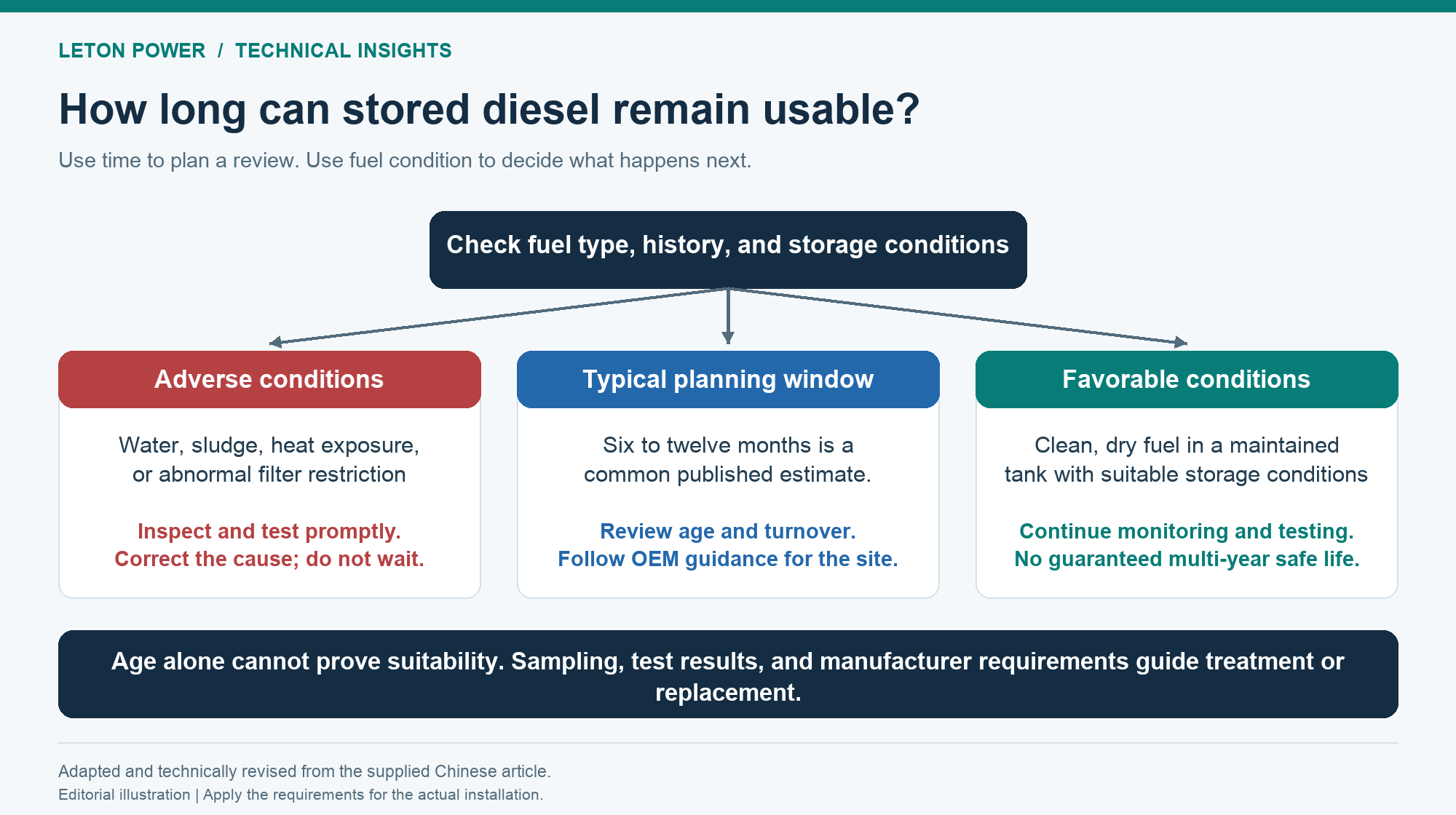 Figure 1. Review stored fuel against its condition and the applicable requirements. Favorable storage conditions do not establish a guaranteed safe life.
What changes inside the tank?
Stored diesel faces several different risks, and they often reinforce one another.
Oxidation changes the fuel chemically. Over time, reactions with oxygen can produce gums and insoluble material. These products can accumulate in the tank and fuel system, contributing to deposits and restricted flow.
Microbial contamination becomes a concern wherever water is present. Bacteria and fungi can grow in fuel systems, particularly around accumulated water and the fuel-water interface. Their growth and by-products can contribute to sludge, corrosion, and filter problems. ASTM D6469 is a guide to understanding, detecting, and controlling this contamination; it is not a diesel replacement timetable. ASTM D6469-24
Water and sediment may arrive with a delivery or enter through poorly maintained equipment. Condensation is another potential source of water. A clean-looking sample from the upper part of a tank may miss problems at the bottom, so the sampling plan matters.
Temperature affects both storage stability and fuel handling. Higher temperatures can accelerate aging. Cold conditions can cause wax formation and restrict flow if the fuel is unsuitable for the season. That cold-flow problem is distinct from chemical aging, even though both can prevent dependable operation.
Biodiesel content also needs attention. For example, Caterpillar’s guidance for its 3500 and C175 generator sets advises limiting biodiesel in standby applications to 5% because of oxidation stability concerns. That is guidance for those product families, not a universal approval limit for every generator. Confirm the permitted fuel blend for the installed engine. Caterpillar: Renewable Liquid Fuels FAQ
 Figure 2. Oxidation, microbial contamination, water and sediment, and temperature can affect fuel in different ways. Cold-flow restriction is not the same as fuel aging.
Fuel reserve and fuel shelf life answer different questions
An emergency power design may specify enough fuel for a defined operating duration. That requirement answers: How long must the facility run without replenishment?
Fuel-quality management answers another question: Will the stored fuel remain suitable when the system needs it?
Maintaining a large reserve creates an ongoing responsibility to inspect, sample, and manage it. A runtime requirement does not establish a storage life.
The same distinction applies to international guidance. For sites using NFPA 110, confirm the fuel-testing provisions in the edition adopted for the project. NFPA’s published committee revision text calls for fuel-quality testing at least annually and describes more frequent follow-up after remediation. That committee document supports the maintenance approach, but the adopted standard and manufacturer instructions govern the installation. NFPA 110 committee revision record, Section 8.3.7
Fuel specifications, fire protection rules, operating procedures, and microbial-control guidance each address a different part of the problem. None should be treated as interchangeable with a fixed replacement schedule.
 Figure 3. Reserve capacity, storage safety, fuel quality, and maintenance must work together. The references shown have different purposes and scopes.
Why a successful start test is only part of the evidence
Contaminated or degraded fuel can restrict filters, affect fuel delivery, or damage injection components. A generator might start successfully yet fail to sustain the required load.
That distinction matters in facilities where a UPS or battery system bridges the interval between utility failure and generator supply. The bridge has a finite duration determined by the actual system and load. If the generator fails to deliver stable power before that reserve is exhausted, critical equipment can lose supply.
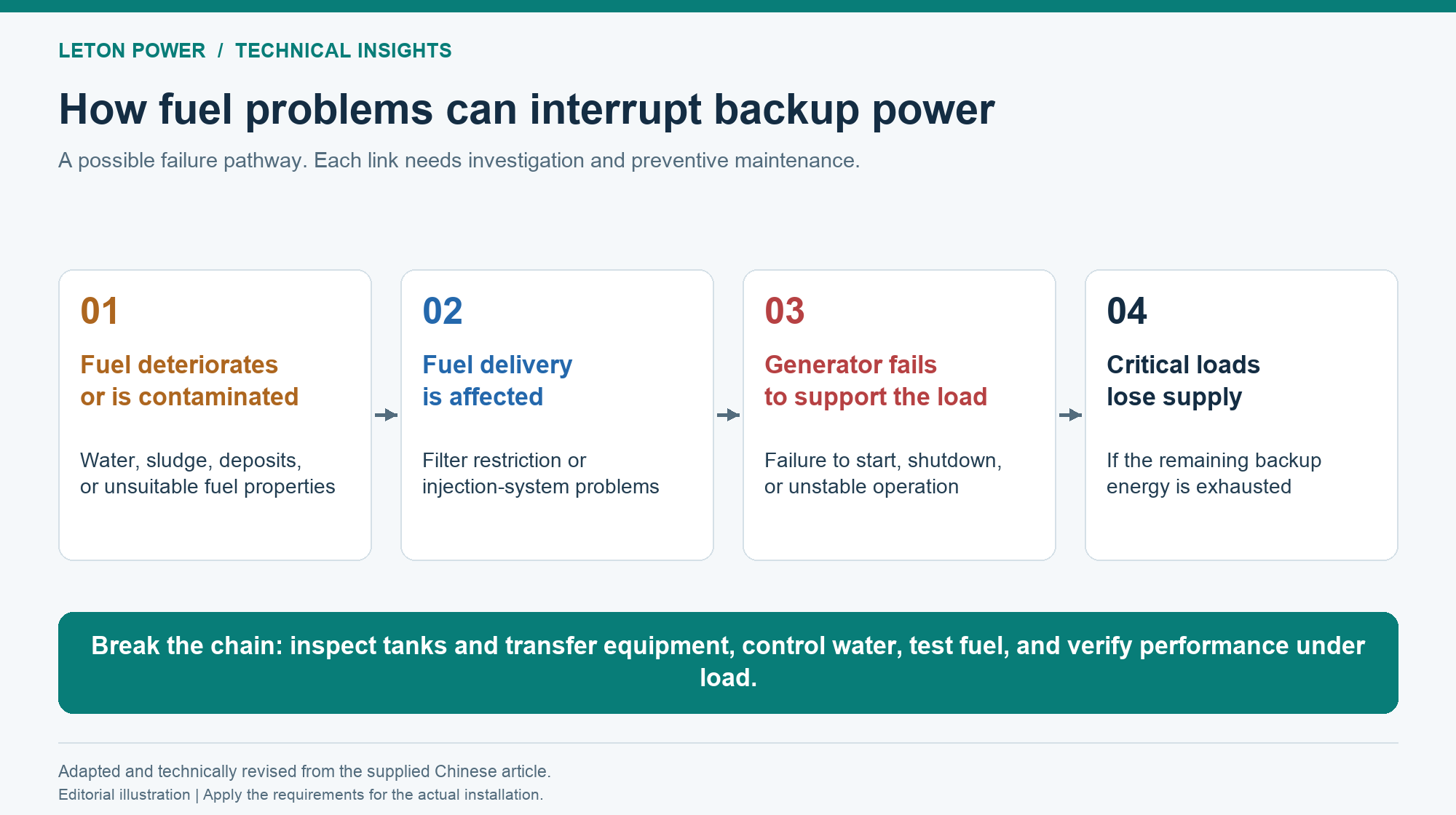 Figure 4. Fuel problems can contribute to a sequence of failures. This is a possible pathway, not an inevitable outcome or a diagnosis of every generator fault.
Regular exercising helps verify readiness, but brief no-load runs may consume too little fuel to meaningfully refresh a large reserve. They also do not demonstrate sustained performance under load. Extended low-load operation can create its own engine problems, including wet stacking on susceptible diesel engines. Follow the manufacturer’s exercise and load-testing instructions. Caterpillar: Wet Stacking
Build fuel management into the maintenance plan
An effective program connects delivery records, tank condition, laboratory results, and generator performance.
Keep a useful fuel history. Record deliveries, suppliers, fuel grades, blend information, quantities, and test results. Track turnover in both bulk storage and day tanks. Adding fresh fuel does not reset the age of everything already in the tank.
Control water and contamination. Inspect fill points, vents, seals, transfer piping, filters, and water separators. Remove accumulated water using the approved procedure. Tanks need correctly functioning vents; they should not be made airtight. Cummins identifies storage and transfer equipment as important contamination entry points and recommends maintaining those components. Cummins: Diesel Fuel Storage and Transfer
Use a representative sampling plan. Work with the laboratory and service team to choose sampling locations and methods that can detect both fuel deterioration and tank-bottom problems. Depending on the fuel and engine requirements, testing may include water and sediment, microbial contamination, stability, viscosity, or other specification parameters. Appearance alone is insufficient.
Link testing to corrective action. If results are unacceptable, identify the cause before choosing treatment, tank cleaning, filtration, or replacement. Removing suspended contamination is different from restoring chemically degraded fuel. Retest after the selected treatment to confirm that the fuel meets the required limits.
Use additives only with appropriate guidance. Stabilizers and biocides address specific problems. Their suitability, dose, and treatment procedure should be agreed with the fuel supplier and engine manufacturer. They cannot compensate for an unresolved water-ingress problem.
Test the complete supply path. Include fuel transfer, day-tank replenishment, alarms, controls, and load performance in the site’s maintenance program. A sound engine cannot make up for a failed transfer pump or an empty day tank.
The practical question for an operations review is therefore broader than “How old is the diesel?” Ask when it was last sampled, whether water has been found, how much fuel actually turns over, and whether corrective work has been verified.
For a standby system, fuel is part of the reliability chain. Managing it with the same discipline as the generator itself helps ensure that stored energy becomes usable power when it is needed.
LETON POWER | Keep the world powered.
Source article: “How Often Must Diesel Fuel in a Standby Generator Be Replaced?” by Tong Xiaodian, published by Telecom Power Professionals, September 8, 2026. Adapted for an international readership, with technical revisions and additional primary references.

