

I like the steady sound of a good generator. But voltage problems can ruin my day fast. A generator avr, or automatic voltage regulator, is like the brain of the system. It notices voltage changes and fixes them right away. This keeps things running smooth and safe. If voltage goes up and down, big problems can happen. I might see things like loss of synchronism or broken equipment. Look at this table to see what voltage problems can cause:
| Impact of Voltage Instability on Generators | Description |
|---|---|
| Loss of synchronism | Generators can lose synchronism if there are outages or if excitation current limits are passed. |
| Cascading outages | Voltage problems can make lines and parts shut off, which can cause big outages. |
| Equipment integrity | Equipment can get damaged because it is not working right. |
With a good AVR, my generator stays strong and my equipment stays safe.
Key Takeaways
- A generator AVR keeps voltage steady. This stops lights from flickering. It also protects your electronics.
- If voltage is not stable, it can cause big problems. Your equipment can get damaged. Power can go out.
- You should take care of your AVR often. This helps it work well. It also makes your generator last longer.
- Pick a good AVR like LETON POWER. It reacts quickly. It keeps voltage at the right level.
- Learn the signs when an AVR is not working. This helps you fix problems early.
- Digital AVRs are more stable than analog ones. They also react faster.
- Always be safe when using generators. Be careful with their parts.
- A good AVR helps your power system work better. It also keeps things safer.
Generator AVR Basics

What Is an Automatic Voltage Regulator
I remember opening a generator for the first time. There were wires everywhere and a metal smell in the air. I saw a small box inside. That box is called the automatic voltage regulator. This device acts like a referee for electricity. It keeps the voltage steady, even if the generator changes. When I plug in my tools, I want them to work right. The automatic voltage regulator gives them the right amount of power.
Let’s look at what is inside this smart device:
| Component | Description |
|---|---|
| Feedback Control System | Checks the output voltage and compares it to a set value to make an error signal. |
| Solid-State Devices | Modern AVRs use these to control the generator’s excitation. |
| Field Winding | Changes the excitation current to control the generator’s voltage. |
| Power Electronic Devices | Controls the current going to the field winding to keep the output steady. |
| Parallel Operation Circuits | Makes sure many generators work together when connected. |
I think of the automatic voltage regulator as the leader of a band. Every wire works together because the leader keeps everything in order.
Main Functions of a Generator AVR
The generator AVR does more than just sit in the generator. It works hard all the time. Here is what it does for me:
- Watches the generator’s output voltage all the time.
- Changes the excitation current to keep voltage steady.
- Protects my equipment from too much or too little voltage.
- Handles sudden changes in load so my lights do not flicker.
- Helps many generators work together without problems.
One time, I saw a generator without a working AVR. The lights flashed on and off, and my coffee machine made strange sounds. It was not good! The automatic voltage regulator keeps everything calm and working right.
Why Voltage Regulation Is Important
Good voltage regulation is very important. If the voltage changes too much, my electronics can get hurt. They might break, wear out fast, or cause safety problems. Here is what can happen if the generator voltage regulator does not work:
| Consequence | Description |
|---|---|
| Operational Inefficiencies | Equipment can wear out faster and not work well. |
| Safety Risks | Problems or failures can be dangerous. |
| Grid Stability Risks | Voltage swings can cause trouble for the whole electrical grid. |
I want my generator to last a long time. I want my gadgets to stay safe. That is why I trust the automatic voltage regulator. It keeps everything running smooth and steady. It is the hero that makes sure power is always reliable.
Role of Generator AVR in Performance
Protecting Equipment
One time, I plugged my gaming console into a generator without a voltage regulator. The screen started to flicker and I got worried. That day, I learned how important protection is. Now, I always use my generator AVR to keep my electronics safe. This small device guards my gadgets from voltage spikes and dips. It works like a shield for everything I plug in.
Here is how my generator AVR helps protect my equipment:
| Mechanism | Description |
|---|---|
| Voltage Stabilization | Keeps the voltage steady by checking and changing it when needed. |
| Surge and Spike Protection | Finds and stops sudden voltage surges and spikes so electronics do not get hurt. |
| Precision Control | Makes sure devices get the right amount of power so they last longer. |
| Minimizing Harmonic Distortion | Lowers harmonic distortion, which can cause problems for sensitive electronics. |
If the generator voltage jumps up and down, my devices might stop working right. I could lose data or even break my stuff for good. I do not want that to happen. My generator AVR keeps things smooth so I can play games, make coffee, and charge my phone without worry.
Ensuring Stable Output
I like it when my lights stay bright and my tools work well. That is because the voltage stays steady. My generator AVR works quietly in the background to keep the power just right. It checks the voltage all the time, compares it to the best level, and fixes it fast if needed. I think of it like a music conductor who keeps every instrument in tune.
Here is what happens:
- The AVR checks the voltage.
- It looks at the number and compares it to the set value.
- If something is wrong, it sends a signal to fix it.
This keeps the voltage steady, stops big swings, and helps the generator work better. I get cleaner power, better frequency, and balanced loads. My electronics last longer and do not surprise me with problems.
LETON POWER AVR Solutions
When I want the best, I pick LETON POWER AVR. These voltage regulators have great features that help my generator work its best:
- Voltage regulation accuracy up to ±0.5%. My devices get steady voltage every time.
- Fast response to changes. If I plug in something big, the voltage gets fixed in 0.5 to 1 second.
- Low total harmonic distortion (THD) under 5%. My power stays clean and smooth.
- Wide frequency range from 45 to 65Hz. The AVR works even if the generator speed changes.
- Full protection: overvoltage, undervoltage, overexcitation, low frequency, loss of excitation, and short circuit.
- Extra features like soft start, droop control for using more than one generator, and remote monitoring (like Modbus).
- Strong design with high IP ratings for dust and water. LETON POWER AVRs work in tough places.
- Good build with metal cases, strong terminals, and certified parts.
I trust LETON POWER to keep my generator working well. My equipment stays safe, my power stays steady, and I feel good every time I turn on the switch.
How Generator AVR Works
Voltage Sensing
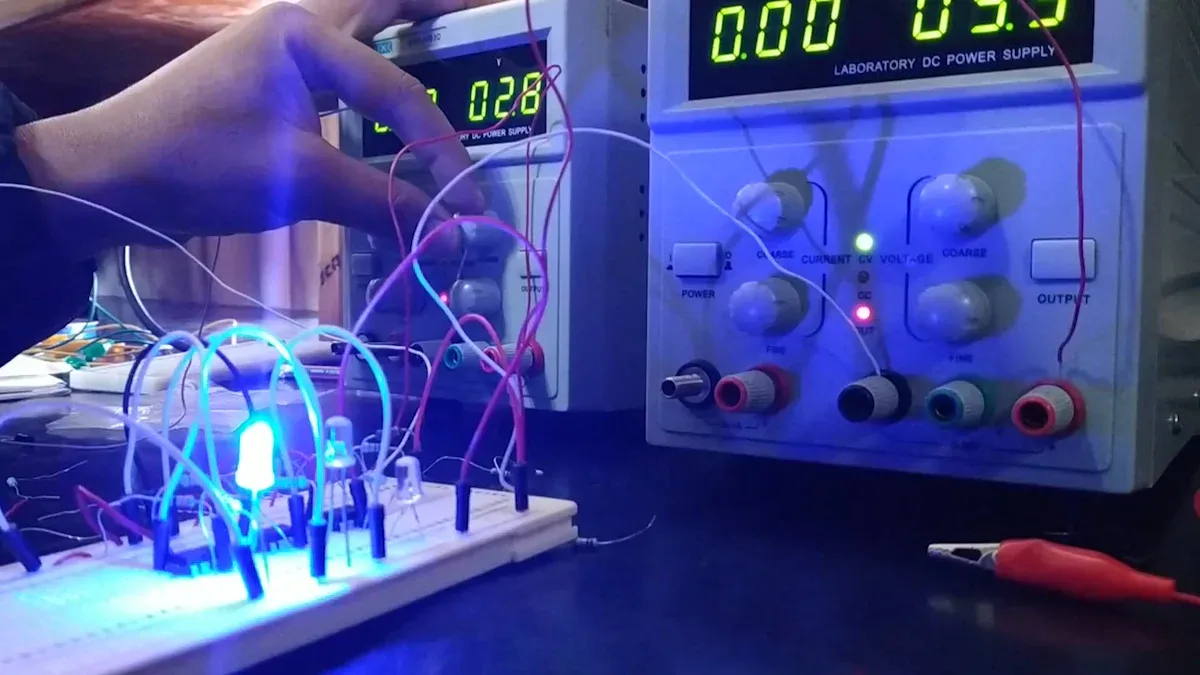
When I first peeked inside my generator, I saw a maze of wires. I wondered, “How does this thing know when the voltage changes?” The answer is simple: the generator AVR acts like a detective. It never sleeps. It checks the output voltage all the time using special sensing leads. I picture these leads as tiny scouts, always on patrol.
Here’s what happens step by step:
- The AVR keeps its eyes on the generator’s output voltage every second.
- It compares what it senses to the voltage I want.
- If something is off, it sounds the alarm and gets ready to fix it.
This process reminds me of a goalie in soccer. The goalie watches the ball, waits for a shot, and reacts fast to keep the score safe. My automatic voltage regulator does the same for my power.
Voltage Adjustment
Now, let’s talk about what happens when the AVR finds a problem. I imagine the AVR as a quick-thinking coach. When it spots a voltage drop or spike, it doesn’t panic. Instead, it sends a signal to adjust the generator’s field excitation. This signal is like a coach shouting instructions from the sidelines.
Here’s how the adjustment works:
- The AVR creates an error signal if the voltage is too high or too low.
- It amplifies this signal, making sure the message is loud and clear.
- The AVR then adjusts the excitation system, telling the generator to boost or cut back the magnetic field.
This adjustment happens in a flash. Modern AVRs use high-speed control loops. I’ve seen my generator recover from a big load change in less than a second. That’s faster than I can grab a snack!
Tip: Fast voltage adjustment means my lights don’t flicker and my electronics stay safe, even when I plug in something big like a power saw.
Excitation Control
Excitation control sounds fancy, but it’s really the heart of the operation. I think of it as the muscle behind the brains of the AVR. The AVR doesn’t just watch and shout orders—it actually controls the strength of the generator’s magnetic field. This field decides how much voltage the generator makes.
Here’s what the excitation system does for me:
- It regulates the voltage output, no matter how much load I add or remove.
- It keeps the voltage within safe limits, even if the weather gets hot or cold.
- It makes sure the generator doesn’t overwork or underperform.
The automatic voltage regulator adjusts the excitation system automatically. I don’t have to do anything. My generator just keeps humming along, delivering steady power. I love that I can trust my voltage regulator to handle everything, from a quiet evening to a wild backyard party.
Note: Without good excitation control, my generator could swing wildly in voltage. That’s a recipe for disaster!
Output Stabilization
When I think about output stabilization, I picture a superhero standing guard over my generator. The AVR wears the cape. It keeps the voltage steady, even when things get wild. I have seen my generator face sudden load changes—like when I turn on a big air conditioner or power up a saw. The lights might want to flicker, but the AVR says, “Not today!”
Here’s how my AVR keeps everything calm:
- Watches for trouble: The AVR checks the voltage every second. It never blinks.
- Acts fast: If the voltage jumps or drops, the AVR reacts in less than a second. My coffee maker never even notices.
- Smooths the waves: The AVR makes sure the voltage stays close to a perfect sine wave. No weird bumps or spikes.
Tip: A good AVR means my electronics live longer. I don’t worry about my TV or computer getting zapped.
I love numbers, so let’s look at what makes LETON POWER AVR special:
| Feature | LETON POWER AVR Performance |
|---|---|
| Voltage Regulation Accuracy | ±0.5% (super steady!) |
| Transient Response Time | 0.5–1 second (blazing fast) |
| Total Harmonic Distortion | Less than 5% (clean power) |
| Frequency Range | 45–65Hz (works with many generators) |
| Protection | Over/under voltage, overexcitation, low frequency, loss of excitation, short circuit |
| Extra Features | Soft start, droop control, remote monitoring (Modbus) |
| Durability | High IP rating, metal case, wide temp range |
I once ran my generator during a storm. The wind howled. The power tools buzzed. The AVR kept the voltage rock-solid. I felt like I had a secret weapon.
Here’s what I check when I want the best output stabilization:
- Accuracy: I want the voltage to stay close to perfect.
- Speed: The AVR must fix problems fast.
- Clean Power: Low THD means my gadgets stay happy.
- Protection: I need safety for my generator and my stuff.
- Toughness: The AVR should survive dust, water, and wild weather.
Note: LETON POWER AVRs use strong metal cases and top-brand parts. They pass tough tests like CE and UL. I trust them in any weather.
Output stabilization is not just a fancy word. It means peace of mind. My lights stay bright. My tools work right. My parties never go dark. That’s the magic of a great AVR.
AVR Location in Generators
Typical Placement
The first time I looked for the AVR, I felt like a detective. I used a flashlight and searched around wires and metal covers. The AVR can be in different places, depending on the generator’s size. It is almost like playing hide-and-seek!
Here is a table I made after looking for the AVR:
| Location Description | Type of Generator |
|---|---|
| Main control box | Larger stationary generators |
| Alternator’s terminal box | Medium-sized generators |
| Under the alternator’s rear cover | Smaller portable units |
Big generators usually keep the AVR inside the main control box. I open the box and see the AVR sitting there. Medium generators often put the AVR in the alternator’s terminal box. For my small portable generator, I found the AVR under the alternator’s rear cover. I had to take off some bolts to find it, but it was there like a hidden prize.
Tip: Always turn off the generator and unplug everything before you look for the AVR. Safety comes first!
How to Identify the AVR
Finding the AVR can feel like being a detective. I look for a small rectangle or square with wires attached. Sometimes, it has a label that says “AVR” or “Automatic Voltage Regulator.” Other times, I have to use clues.
Here is my checklist when I look for the AVR:
- Flickering lights or power that is not steady make me wonder.
- A burning smell, melted plastic, or burnt spots mean trouble.
- Discoloration, small cracks, or rust on the AVR’s case or ends catch my eye.
- Burn marks or black spots on the circuit board are a bad sign.
- Strange sounds, like a hum or buzz from the alternator, make me listen closely.
One time, I found an AVR with a melted corner and a weird smell. That told me to stop and call an expert. Sometimes, the AVR looks okay, but the generator acts strange. Then, I check for loose wires or signs of getting too hot.
Note: Good AVRs, like LETON POWER, have strong metal cases and clear labels. This makes them easy to find and trust, even in tough places.
Finding the AVR is like solving a puzzle. With some patience and these clues, I always find it. My generator works better when I know where the AVR is and what it looks like!
Types of Automatic Voltage Regulators
Analog AVR
I remember seeing an analog AVR for the first time. It looked old and had big dials and thick wires. The circuit board smelled like something new and exciting. Analog AVRs use parts like resistors and capacitors to control voltage. They check the output voltage and change the excitation current a little bit at a time.
These AVRs work well for simple jobs. I have used them on older generators and for easy tools. They keep my lights on and my coffee hot. Sometimes, the voltage is not as steady as I want. If I plug in something big, the lights might flicker for a moment. Analog AVRs can be slow to react and are not always perfect with voltage. But they are strong and work well for most things.
Tip: Analog AVRs are good for simple uses where perfect voltage is not needed.
Digital AVR
Digital AVRs look modern and cool. The first one I saw had a small screen and buttons that made sounds. Digital AVRs use microprocessors to watch the voltage and make fast choices. They measure the voltage, think about it, and fix it right away. When I use things like computers or sound systems, I pick a digital AVR.
These AVRs keep the voltage very steady, even if I turn on a big tool. They react so fast that my lights do not blink. Digital AVRs also have extra safety features, like sensors for heat and smart ways to find problems. I feel safe using my best gadgets with them.
Note: Digital AVRs are best when I need steady voltage and quick action, especially for sensitive electronics.
Key Differences
People ask me how analog and digital AVRs are different. Here is a table to show the main points:
| Feature | Analog AVR | Digital AVR |
|---|---|---|
| Voltage Regulation | Less stable, can spike | More stable, keeps voltage constant |
| Response Time | Slower to react | Super fast, instant adjustments |
| Accuracy | Not as precise | Very accurate |
| Overheating Protection | Basic | Advanced, uses thermistors |
| Best Use | General tools, basic loads | Sensitive gear, changing loads |
This is how I remember the differences:
- Analog AVRs are simple and strong.
- Digital AVRs are smart and fast.
Here is my checklist for picking one:
- Need steady voltage for special things? I choose digital.
- Just running lights or easy tools? Analog is fine.
- Want more safety and speed? Digital is the best.
Emoji Check: ⚡ Analog for basics, 🤖 Digital for brains!
LETON POWER AVR Range
I remember the first time I held a LETON POWER AVR in my hands. The metal case felt cool and solid. I thought, “This thing means business.” I love gadgets that look tough and work even tougher. LETON POWER AVRs always impress me with their features and reliability.
Let me walk you through what makes these AVRs stand out. I made a checklist for myself, and I want to share it with you:
- Super Accurate Voltage Regulation
I get voltage accuracy up to ±0.5%. My lights stay bright. My electronics stay safe. No more guessing games. - Lightning-Fast Response
When I plug in a big tool, the AVR reacts in less than a second. The voltage recovers in 0.5 to 1 second. I barely notice any flicker. - Clean Power Every Time
LETON POWER AVRs keep total harmonic distortion (THD) under 5%. My sensitive devices love this. My speakers sound clear. My computer runs smooth. - Wide Frequency Range
These AVRs handle anything from 45 to 65Hz. I can use them with many different generators. I never worry about compatibility. - Full Protection Suite
I sleep better knowing my AVR protects against overvoltage, undervoltage, and overexcitation. It also guards against low frequency, loss of excitation, and short circuits. That’s like having a superhero inside my generator. - Extra Features for Real Life
I enjoy soft start. My generator powers up gently. Droop control helps when I run more than one generator. Remote monitoring with Modbus makes me feel like a power plant boss. - Built to Survive Anything
LETON POWER AVRs come with high protection grades like IP20 or IP54. Dust and water don’t scare them. They work from -40°C to +85°C. I once used mine in a freezing garage and it didn’t even blink. - Strong Construction
The metal casing has great heat dissipation. The wiring terminals are clear and easy to use. I never get confused during installation. - Certified and Trusted
I see CE, UL, and RoHS marks on the case. That means these AVRs pass tough international tests. I trust them with my most valuable equipment. - Works with Big Brands
I use LETON POWER AVRs with Stamford, Leroy-Somer, and Marathon generators. They fit right in. No drama, just results.
Here’s a quick table I made for my friends who always ask why I choose LETON POWER:
| Feature | LETON POWER AVR Delivers |
|---|---|
| Voltage Accuracy | ±0.5% |
| Response Time | <0.5–1s |
| THD | <5% |
| Frequency Range | 45–65Hz |
| Protection Grade | IP20, IP54 |
| Temp Range | -40°C to +85°C |
| Certifications | CE, UL, RoHS |
| Compatibility | Stamford, Leroy-Somer, Marathon |
Tip: If you want peace of mind and steady power, LETON POWER AVRs are the way to go. I trust them every time I flip the switch.
I love knowing my generator has a LETON POWER AVR inside. It feels like having a secret weapon for electricity. My parties stay bright, my tools stay strong, and my gadgets stay safe. That’s why I always recommend LETON POWER to anyone who asks.
AVR Failure and Troubleshooting
Signs of AVR Failure
I remember the first time my generator started acting up. The lights flickered like a haunted house, and my coffee maker made a weird buzzing sound. I knew something was wrong with the AVR. Over the years, I’ve learned to spot the warning signs fast. Here’s my go-to checklist:
- Voltage Change: My lights flash or dim, and devices act strange. Unstable voltage is a big red flag.
- Humidity and Physical Damage: I check the AVR for moisture, rust, or cracks. Corrosion or water means trouble.
- Comparison Test: I swap in a new AVR. If the generator works fine, the old AVR was the problem.
- Ask the Pros: When I’m stumped, I call an expert. Sometimes, a second opinion saves the day.
- Preventive Maintenance: I clean and check my AVR regularly. This keeps surprises away.
Tip: If you see burnt spots, melted plastic, or smell something odd, stop and check the AVR right away!
Effects on Generator Performance
When my AVR fails, my generator throws a fit. I’ve seen all kinds of chaos:
- The voltage jumps too high or drops too low. My electronics start to complain.
- The power output gets weak. Sometimes, my tools barely run.
- The generator trips off when I plug in something big. That’s a sure sign the AVR can’t keep up.
- Overvoltage can happen. This can fry my gadgets if I don’t act fast.
- The engine speed goes up and down. The whole system feels out of control.
I always remember: a bad AVR means my generator can’t protect my stuff. I don’t want to risk my TV or computer, so I fix problems as soon as I spot them.
Troubleshooting Steps
I like to play detective when my generator acts up. Here’s how I track down the problem:
- I turn off the generator and unplug everything. Safety comes first!
- I look for obvious damage—burn marks, loose wires, or water on the AVR.
- I check the rotating rectifier, exciter winding, and carbon brushes (if my generator has them). Sometimes, these parts cause the same symptoms as a bad AVR.
- I inspect the PMG (permanent magnet generator) and the engine governor. If they’re not working right, the AVR can’t do its job.
- I test with a new AVR if I have one. If the generator works, I know the old AVR was the culprit.
- If I’m still stuck, I call a qualified electrician. Some problems need a pro’s touch.
Note: Regular maintenance keeps my AVR and generator happy. I always check for dust, moisture, and loose connections before trouble starts.
Safe Replacement Tips
I remember the first time I had to swap out an AVR. My hands shook a little. I felt like a secret agent defusing a bomb. One wrong move, and—zap! So, I learned to respect the process. Now, I follow a checklist every time. Let me share my best tips for safe AVR replacement.
My AVR Replacement Checklist
- Turn Off Everything
I always shut down the generator first. I unplug every cord. I double-check that no power sneaks through. Safety comes first—no exceptions! - Wait and Watch
I give the generator a few minutes to cool down. Hot parts can burn. I learned that the hard way—ouch! - Gather My Tools
I grab a screwdriver, a flashlight, and my phone for photos. I snap a picture of the wiring before I touch anything. That way, I remember where every wire goes. - Call in the Pros
If I feel unsure, I call a qualified electrician. Some jobs need expert hands. I never risk my safety to save a few bucks. - Check Other Parts First
Before I swap the AVR, I check the rotating rectifier, exciter winding, carbon brushes (if my generator has them), the PMG, and the engine governor. Sometimes, these parts cause the same problems as a bad AVR. - Remove the Old AVR Carefully
I loosen the screws and gently pull out the AVR. I avoid yanking wires. I treat every part like it’s made of glass. - Install the New AVR
I match the wires to my photo. I tighten the screws, but not too much. I make sure everything looks neat and tidy. - Test the Generator
I power up the generator and watch the voltage. If everything runs smooth, I celebrate with a happy dance.
Tip: Always disconnect all power before touching the AVR. Electricity does not forgive mistakes!
When to Call a Professional
Sometimes, I see burnt wires, melted plastic, or strange smells. That’s when I stop and call a pro. I never try to fix serious damage myself. A qualified electrician keeps me safe and my generator happy.
| Danger Sign | What I Do |
|---|---|
| Burnt smell | Call an electrician |
| Melted wires | Stop and get help |
| Sparks or smoke | Step away, call a pro |
| Unsure wiring | Ask for expert advice |
Note: I always choose a high-quality AVR, like LETON POWER, for peace of mind. Good parts make replacement easier and safer.
Replacing an AVR feels like a big job, but with the right steps, I stay safe and keep my generator running strong. Safety first—always!
Benefits of an AVR and Maintenance
Key Benefits for Generators
I love when my generator runs smooth and steady. The automatic voltage regulator makes that happen every time. I have seen the benefits of an AVR in action, and I never want to go back. Here’s what I notice:
- My power stays stable, even when I turn on big tools or lots of lights.
- Sensitive devices like my computer and TV stay safe from voltage spikes or drops.
- The generator lasts longer because the AVR reduces stress on its parts.
- I avoid costly repairs and downtime. No more surprise breakdowns!
- My equipment works better and lives longer. That means more fun and less worry.
Tip: The benefits of an AVR show up every day. I get peace of mind, and my wallet stays happy.
Maintenance Tips
I treat my generator AVR like a trusted friend. Regular care keeps it working its best. I follow a simple routine to make sure my voltage regulator stays in top shape:
- I turn off the generator and unplug everything before I start.
- I check for dust, dirt, or moisture around the AVR. A clean environment means fewer problems.
- I look for loose wires or signs of wear. Tight connections keep the power flowing right.
- I listen for strange sounds or buzzing. Odd noises can mean trouble.
- I test the output voltage now and then. If it jumps around, I know something needs attention.
Regular maintenance of the automatic voltage regulator keeps my generator reliable. I fix small issues before they become big headaches. That way, I avoid unexpected downtime and keep everything running strong.
Note: A little care goes a long way. My generator thanks me every time I flip the switch.
When to Call a Professional
Sometimes, I run into problems I can’t fix alone. That’s when I call in the experts. Here’s a quick table I use to decide when to get help:
| When to Consult a Technician | Description |
|---|---|
| Voltage Issues | The generator isn’t making the right voltage. Time for a pro to check it out. |
| Frequency Problems | The power frequency jumps or drops. I let a technician handle it. |
| Component Damage | I see broken parts, burnt spots, or melted wires. I call for expert help. |
If I ever feel unsure, I don’t take risks. I trust a qualified technician to keep me and my generator safe.
Alert: Electricity can be dangerous. When in doubt, let a professional handle the repairs!
The benefits of an AVR make my life easier, but good maintenance and smart decisions keep my generator running for years. I enjoy steady power, safe gadgets, and fewer worries every day.
I trust my generator’s AVR to keep my power steady and my gadgets safe. This little device does big things for me:
- Keeps voltage stable, so my lights never flicker.
- Protects my electronics from dangerous surges.
- Helps my generator last longer and work better.
When I spot trouble early and pick a quality AVR like LETON POWER—with fast response, high accuracy, and tough protection—I get peace of mind. That’s why I say: the AVR is the heart of my generator, and it truly matters.
FAQ
What does a generator AVR actually do?
My AVR keeps the voltage steady. It watches for changes and fixes them fast. I never worry about flickering lights or fried gadgets. It’s like having a superhero inside my generator!
How accurate is LETON POWER AVR?
I love the precision! LETON POWER AVR keeps voltage within ±0.5%. My electronics get just the right amount of power. No more guessing games or surprises.
Why does fast response time matter?
When I plug in a big tool, I want the voltage to recover quickly. LETON POWER AVR reacts in less than a second. My lights stay bright, and my party never stops!
What is THD and why should I care?
THD means Total Harmonic Distortion. Low THD (under 5%) keeps my power clean. My speakers sound clear, and my computer runs smooth. I always check for this feature!
Can the AVR handle different generator speeds?
Yes! LETON POWER AVR works from 45 to 65Hz. I use it with all kinds of generators. It never complains, even when the speed changes.
What protection features does LETON POWER AVR have?
My AVR guards against overvoltage, undervoltage, overexcitation, low frequency, loss of excitation, and short circuits. I feel safe every time I flip the switch.
What extra functions make LETON POWER AVR special?
I get soft start, droop control for running generators together, and remote monitoring with Modbus. These features make my life easier and my power smarter.
How tough is LETON POWER AVR?
I trust it in any weather! The metal case, high IP rating, and wide temperature range (-40°C to +85°C) mean it works in dusty garages and freezing nights. It’s built to last.

