

Have you ever thought about how to choose the best generator fuel tank for your needs? I first match the tank type and size to where my generator is, how I use it, and how long I want it to run. Figuring out the right fuel tank size means knowing how much fuel my generator uses and how long I need it to work. I look at usual situations like emergency backup, waiting time for fuel delivery, and having extra fuel. When I pick a tank, I think about how long my generator runs and how often I need to add more fuel.
Key Takeaways
- Find out how much fuel your generator uses. This helps you pick the right tank size. Pick from built-in, sub-base, or stand-alone tanks. Choose based on how much power you need and your space. Think about how long you want your generator to run. Make sure you have enough fuel for power outages. Always look at local rules and codes. This keeps your fuel tank safe and legal. Pick tank materials like steel, stainless steel, or polyethylene. Choose based on how strong they are and how easy they are to care for. Plan for safety by adding double walls and good vents to your tank. Check your fuel tank often for leaks or damage. This keeps it safe and working well. Talk to experts when you install your tank. This helps you follow the rules and set it up right.
Generator Fuel Tank Types
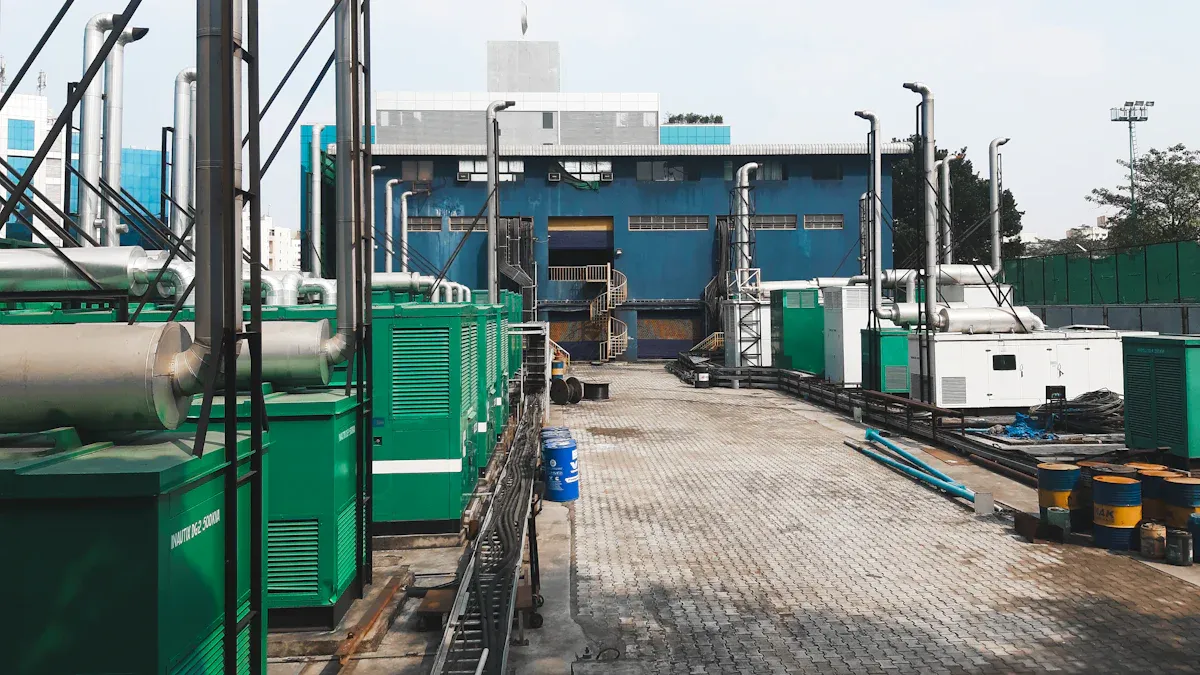
When I pick a generator fuel tank, I look at three main types. These are built-in, sub-base, and stand-alone tanks. Each type works best for different needs. I choose the tank based on where my generator is. I also think about how much fuel I need and how long I want it to run.
Built-In Tanks
Features
Built-in tanks are attached right to the generator. I see these tanks in portable generators and small standby units. They hold enough fuel for short use. The tank sits inside the generator frame. This makes it easy to move and refill.
Pros and Cons
Tip: Built-in tanks are easy to use but do not run long.
- Pros:
- Simple to use
- Small and easy to carry
- Quick to refill
- Cons:
- Not much fuel space
- Runs out faster
- Not good for long power loss
Best Uses
I use built-in tanks for camping or short power cuts. They are good when I need power for a little while.
Sub-Base Tanks
Features
Sub-base tanks sit under the generator, above the ground. These tanks hold less than 1,000 gallons of fuel. Many sub-base tanks have two walls and special valves to stop spills. They help keep the generator safe and steady.
Pros and Cons
Sub-base tanks are used most for standby generators.
- Pros:
- More fuel than built-in tanks
- Better spill control
- Makes the generator stable
- Cons:
- Heavy and hard to move
- Costs more than built-in tanks
- Needs expert to install
Best Uses
I suggest sub-base tanks for home or business backup generators. They give enough fuel for longer power cuts and keep the generator running for more time.
Stand-Alone Tanks
Features
Stand-alone tanks are not part of the generator. I put them above ground or underground, depending on space and safety. These tanks can hold a lot of fuel. Above-ground tanks need things to stop spills and protect from fire. Underground tanks cost more but last longer and handle bad weather.
Pros and Cons
Stand-alone tanks can be placed anywhere but need planning.
- Pros:
- Holds the most fuel
- Can go in many places
- Good for big generators
- Cons:
- Needs spill control tools
- Fire safety needed for above-ground tanks
- Underground tanks cost more to set up
Best Uses
I use stand-alone tanks for big generators or places that need power for days. They are best when I need lots of fuel and want the generator to run without stopping.
When I know about these generator fuel tank types, I can pick the best tank for my needs. This helps me have power during any outage.
Calculating Fuel Tank Capacity
Fuel Consumption Rate
When I pick a fuel tank, I first check how much fuel my generator uses. The fuel consumption rate changes with generator size and type. Bigger generators use more fuel, especially at higher loads. The rate does not go up evenly as the load increases. If my generator is too big, it burns more fuel for each kilowatt-hour. If it is too small and works at full power, it does not work as well.
I use this table to compare average fuel use for different generator types and loads:
| Generator Type | Load | Fuel Consumption (gal/hr) |
|---|---|---|
| 2,000 W Inverter | 25% | ~0.1 |
| 2,000 W Inverter | 50% | ~0.18 |
| 3,500-4,000 W Mid-size | 25% | ~0.2 |
| 3,500-4,000 W Mid-size | 50% | ~0.35-0.4 |
| 6,500-7,500 W Worksite | 25% | ~0.35-0.45 |
| 6,500-7,500 W Worksite | 50% | ~0.55-0.7 |
| Diesel Generator (5 kW) | 25% | 0.25 |
| Diesel Generator (10 kW) | 50% | 0.8 |
| Natural Gas Generator (7-10 kW) | 50% | 90-140 cfh |
I always look at the manufacturer’s manual for the exact fuel use. This helps me plan how much fuel I need and how big my fuel tank should be.
Desired Runtime
After I know the fuel use, I decide how long I want my generator to run before refueling. For backup power, I often plan for at least 24 to 48 hours of runtime. In places like hospitals, the minimum runtime can be 96 hours to cover important loads.
| Facility Type | Minimum Runtime Requirement |
|---|---|
| Hospitals | 96 hours of fuel for full essential load |
Industry rules help me set the runtime for emergency generators. I follow these rules to stay safe and avoid fines:
- Emergency diesel generators can run as long as needed in real emergencies.
- The EPA allows up to 100 hours each year for maintenance and testing.
- If I go over these limits, I risk heavy fines.
I always check local codes and rules before I choose my fuel tank size.
Sizing the Tank
To size the fuel tank, I use a simple formula. I add up the fuel needed for the lead time (the time until I can get more fuel) and the emergency stock (extra fuel for surprises). This gives me the minimum fuel tank size.
Tip: I always add a safety margin to my math to cover delays or higher fuel use.
Here is how I figure out the needed diesel tank size:
- Minimum Size = Lead Time Stock + Emergency Stock
- Needed Diesel Tank Size = (Fuel Consumption Rate × Desired Runtime × Safety Factor) / Fuel Density
For example, if my generator uses 20 liters per hour and I want it to run for 8 hours, I multiply by a safety factor (usually 1.15). Then I divide by the fuel density (0.85 kg/L for diesel):
Needed Diesel Tank Size = (20L/h × 8h × 1.15) / 0.85kg/L
Needed Diesel Tank Size = 184 / 0.85
Needed Diesel Tank Size ≈ 216.47 Liters
I always round up to make sure I have enough fuel. This way, I do not run out of fuel during long outages.
When I measure the tank size, I look at several things that affect installation and care:
| Key Factor | Impact on Installation and Maintenance |
|---|---|
| Foundation Stability | Must be stable and level to hold the tank’s weight; shifting can cause damage. |
| Proper Siting | Where I put the tank affects how easy it is to reach and any risks to the environment. |
| Piping Connections | Pipes must line up right to avoid stress on the tank; bad handling can make the tank fail early. |
| Inspection Requirements | Regular checks for erosion and settling are needed to keep the tank safe and stop leaks or problems. |
I always make sure the fuel tank sits on a strong base and is easy to reach for refueling and checking. This keeps my generator working safely and well.
Measuring Tank Dimensions
When I choose a fuel tank for my generator, I always measure the space where I plan to install it. I know that the right tank size keeps my generator running safely and makes refueling easy. I start by looking at the area around my generator. I check for enough room to move, refill, and inspect the tank.
I use these steps to measure tank dimensions:
- Measure the Available Space
I take a tape measure and check the length, width, and height of the spot where I want to put the tank. I make sure to leave space for pipes, vents, and access doors. - Check Local Codes
I read local building codes and fire safety rules. Some places need a certain distance between the generator, the tank, and any buildings. I follow these rules to keep my setup safe and legal. - Pick the Tank Shape
I choose a tank shape that fits my space. Horizontal tanks work well in wide, low areas. Vertical tanks fit in tight spots with more height. Rectangular tanks use space efficiently and are easy to install next to a generator. - Plan for Maintenance
I leave enough room around the tank for cleaning and checking for leaks. I make sure I can reach all sides of the tank. This helps me spot problems early and fix them before they get worse.
Tip: I always add extra space for future upgrades or a bigger generator.
Here is a table I use to compare common tank shapes and their best uses:
| Tank Shape | Best For | Space Needed |
|---|---|---|
| Horizontal | Large open areas | More floor space |
| Vertical | Small or narrow locations | More headroom |
| Rectangular | Next to generator or wall | Flexible placement |
I also check the weight of the full tank. I make sure the floor or base can hold the tank when it is full of fuel. I ask a professional if I am not sure about the load limits.
When I finish measuring, I double-check all numbers before I order the tank. I know that a good fit means my generator will work well and stay safe for years.
Fuel Tank Materials and Shapes
When I pick a fuel tank for my generator, I look at the material and the shape. These things change how long the tank lasts, how safe it is, and how easy it is to put in. I want my fuel to stay safe and ready when I need it.
Material Options
Steel
Steel is used a lot for generator fuel tanks. I choose steel when I want a strong and tough tank. Steel tanks protect well against bumps. Steel can rust if I do not take care of it. Many steel tanks follow UL 142 rules, so they have two walls and work well in big places.
Stainless Steel
Stainless steel does not rust as much as regular steel. I use stainless steel tanks when I want them to last longer and need less care. These tanks work well in wet or rough places. Stainless steel looks nice and clean. Hospitals and schools often need UL 2085 tanks, which are safe from fire and strong against hits.
Polyethylene
Polyethylene tanks bend easily and do not rust. I pick polyethylene when I want a light tank that holds many liquids. Polyethylene works well outside because it does not rust. These tanks are easy to move and set up. They come in many shapes and sizes, so I can use them for special setups.
Tip: I always check how tough the tank is before I pick the material. This helps me find the right tank for my needs.
Here is a table that compares fuel tank materials and how tough they are:
| Material | Durability Rating | Characteristics |
|---|---|---|
| Carbon Steel | Standard | Used a lot, strong, but can rust over time. |
| Aluminum | Over 20 years | Does not rust, light, and stays strong. |
| Polyethylene | Flexible | Does not rust, holds many liquids, and can be shaped. |
I like aluminum for boats because it does not rust and lasts as long as the boat. Aluminum tanks are strong and light. They follow safety rules and are good for the planet because aluminum can be recycled.
Tank Shapes
Horizontal
Horizontal tanks are good for wide spaces. I use them when I have lots of floor space. These tanks make it easy to fill and check. Horizontal tanks use space well and come in many sizes. They fit most generators and truck beds.
Vertical
Vertical tanks save space when I have more height than width. I pick vertical tanks for inside storage if the ceiling is high. These tanks need a strong base and enough room above. Vertical tanks help me store more fuel in small places.
Rectangular
Rectangular tanks fit next to a generator or along a wall. I pick this shape when I want to put the tank in different spots. Rectangular tanks use space well and look neat. Some people like other shapes for looks, but I care about how it works.
Here is a table that shows the good and bad things about tank shapes:
| Advantage/Disadvantage | Description |
|---|---|
| Efficient use of space | Holds more fuel in a small area. |
| Wide range of capacities | Comes in many sizes for different needs. |
| Compatibility | Fits most trucks and beds, so it works in many places. |
| Limited customization | May not fit special spots like wheel wells or covers. |
| Aesthetics | Some people think this shape does not look as nice as others. |
I always think about how to install the tank and how much space I have before I pick a shape. Tanks inside need enough height and a strong floor. Tanks outside have more choices but must handle weather. Tanks on the ground are easier to care for, but tanks up high need extra support and safety checks.
Note: I match the tank material and shape to where my generator is and how I store fuel. This helps me keep my system safe, strong, and easy to use.
Fuel Storage Safety and Compliance
Local Codes and Regulations
I always check local rules before I set up a generator fuel storage system. These rules help keep everything safe and legal. I look at local, state, and federal rules for each job. I also think about stopping spills and make sure the generator sits on a concrete pad. Gravel is not strong enough and does not protect well.
Here is a table that helps me remember the main rules from NFPA 110:
| Regulation | Requirement |
|---|---|
| NFPA 110 7.9.1.2 | Make sure the fuel is clean for the engine; put the tank in a safe spot for floods or earthquakes. |
| NFPA 110 7.9.1.3 | Tanks should be the right size so fuel does not get old; fix any fuel that gets dirty. |
| NFPA 110 7.9.2 | Put tanks where they can move fuel well; sometimes you need a day tank. |
| NFPA 110 7.9.3 | Use only approved flexible fuel lines; do not use galvanized lines because they can cause problems. |
| NFPA 110 7.9.4 | Day tanks must be lower than the engine’s fuel return to stop leaks. |
| NFPA 110 7.9.5 | Tanks inside buildings or on roofs cannot be bigger than 660 gallons. |
| NFPA 110 7.9.6 | Gaseous systems must connect to the building gas supply before the main shutoff valve. |
| NFPA 110 96-hour requirement | Health care places must have a plan for 96 hours of fuel, but do not always need to store it all onsite. |
I also look for special rules in different places. Some places want UL-142 or UL-2085 tanks. California and some other places need tanks that are better at stopping fires. The EPA’s SPCC Rule says how to stop and clean up spills. Cities often have even stricter fire rules.
Fire Safety
Fire safety is always very important when I plan a fuel storage system. I follow rules like UL-142, NFPA 30, and the International Building Code (IBC). These rules help keep people and buildings safe from fire.
Here is a table that shows the main fire safety rules:
| Standard | Description |
|---|---|
| UL-142 | Covers most tanks for flammable and burnable liquids, used for above-ground steel tanks. |
| NFPA 30 | Rules for storing and using flammable liquids. |
| IBC | Says diesel is a Class II burnable liquid and gives storage rules based on building type and area. |
I use many ways to stop fires and keep fuel storage safe:
- I put tanks in rooms with strong, fire-safe walls and roofs.
- I use fire-safe tanks above ground if needed.
- I make sure tanks have vents to stop pressure from building up.
- I add emergency vents for tanks with flammable liquids.
- I keep a fire extinguisher close to the generator.
- I suggest a fire system for big or important setups.
Tip: I always check vent pipes to make sure vapors go up and away from doors or windows.
Spill Prevention
Stopping spills is very important to protect nature and keep fuel storage safe. I use these good habits:
- I put generators in berms or on lined floors to stop spills from spreading.
- I use berms that are big enough to hold spills as backup.
- I check fuel lines, tanks, and berms often for leaks or damage.
- I teach workers to fuel safely and use spill mats when moving fuel.
- I keep spill kits and cleaning tools near the generator.
- I write down and practice what to do in an emergency.
Note: Checking often and good training help me find problems early and stop big cleanups.
By doing all these things, I keep my generator fuel storage safe, legal, and ready for any emergency.
Environmental Impact
I always think about the environment when I set up a generator fuel tank. Good fuel storage protects the land, water, and air around my site. I know that leaks or spills can harm plants, animals, and people. I want to share how I reduce the impact of fuel storage on the environment.
First, I choose tanks that meet strict standards. I look for double-wall tanks or tanks with built-in spill containment. These features help stop leaks from reaching the ground. I also use sensors and alarms to warn me if fuel escapes. I check my tanks often for rust, cracks, or other damage.
I keep my tanks away from streams, wells, and drains. This keeps fuel from getting into water if a spill happens. I use berms or barriers to catch any leaks. I also cover my tanks to keep rainwater out. Rain can mix with fuel and cause overflow or pollution.
Tip: I always keep a spill kit near my fuel storage area. Quick cleanup stops small leaks from becoming big problems.
I follow rules from the EPA and local agencies. These rules tell me how to store fuel safely and protect the environment. I keep records of inspections and repairs. This helps me show that I care about safety and nature.
Here is a table that shows how I reduce environmental risks:
| Practice | Benefit |
|---|---|
| Double-wall tanks | Stops leaks from spreading |
| Regular inspections | Finds problems early |
| Spill kits on site | Fast cleanup for small leaks |
| Safe tank location | Protects water and soil |
| Record keeping | Tracks safety and repairs |
I also plan for emergencies. I teach my team how to handle spills and report problems. I know that fast action can save the environment from harm.
I believe that good fuel storage protects my power system and the world around me. I always choose safe tanks, follow the rules, and stay ready for any problem.
Comparing Generator Fuel Tank Options
Feature Comparison Table
When I look at generator fuel tanks, I check cost, durability, and safety. I want my choice to fit my needs and keep my site safe. I use this table to see how common fuel types are different:
| Fuel Type | Cost Considerations | Durability Considerations | Safety Considerations |
|---|---|---|---|
| Natural Gas | Reliable supply, lower long-term costs | Long run time, not susceptible to shortages | Vulnerable during disasters |
| Propane | Requires periodic refills, storage costs | Can be stored on-site | Flammable, requires safe handling |
| Diesel | Higher upfront cost, but efficient | Known for longevity | Requires proper storage due to flammability |
| Gasoline | Lower upfront cost, widely available | Less efficient, shorter run times | Highly flammable, limited shelf life |
This table helps me match the right fuel type to my generator. I always think about how long I want my generator to run. I also check how easy it is to get more fuel.
Quick Checklist
I use a checklist when I pick a fuel tank for my generator. This keeps me organized and helps me remember important steps:
- I choose if I want an aboveground or underground tank.
- I check the tank’s size to make sure it fits my generator’s needs.
- I look at materials like steel, aluminum, or polyethylene to see which lasts longer and does not rust.
- I make sure the tank follows all safety rules from the EPA and OSHA.
- I look for extra things like fuel level sensors and locks to stop theft.
- I think about how much it will cost to keep the tank working well.
- I check if the tank design makes it easy and safe to store and refill fuel.
Tip: I always look at this checklist before I buy a new tank. It helps me pick the best one for my generator and keeps my fuel storage safe.
By using the table and checklist, I can compare my choices fast. I feel sure my generator will have the right fuel tank for safe and steady power.
Step-by-Step Selection Guide
Assess Power Needs
I always figure out how much power I need first. This helps me pick a tank that is not too big or too small. I follow these steps to make sure I choose right: First, I make a list of everything I want to use during a power outage. I include things like lights, fridges, computers, and special equipment. Next, I check how much power each item needs to start. Some things use more power to start than to run. I write down both numbers for each device. Then, I add up the running power for all my devices. I find the highest starting power and add it to the total. This tells me how much power my generator needs. When I know this, I can figure out how much fuel my generator will use. This makes it easier to pick the right fuel tank and helps me avoid losing power when I need it.
Match Tank Type
After I know my power needs, I match the generator and how I use it to the right fuel tank. I think about how I use my generator and what fuel works best for me.
Picking the right fuel is very important. It changes how easy it is to get fuel, how you store it, and how much it costs. The main fuels are Gasoline, Diesel, Natural Gas, and Propane. Each one needs different ways to store and deliver.
I also make sure the tank can give enough fuel for the generator, even when it is cold. If the tank is too small, the generator might not get enough fuel and could stop.
The tank must be big enough so the fuel can turn into vapor fast enough for the generator, even when it is cold. If the tank is too small, the engine might not get enough fuel.
I always check what the maker says and look at local rules before I pick a tank. This helps me avoid problems and keeps my generator working well.
Choose Capacity
Choosing the best size for my generator fuel tank takes planning. I look at some important things to help me decide. I use this table to help me:
| Criteria | Description |
|---|---|
| Business Needs | The tank size should match how much fuel the company uses. Big companies may need bigger tanks. |
| Available Space | The tank must fit in the space without causing problems for daily work. |
| Compliance with Regulations | Local rules may say what type and size of tank you can use. This helps you avoid trouble. |
| Budgetary Concerns | Cheaper tanks may look good, but the right size saves money over time. |
I always measure the space where I want to put the tank. I check local rules to make sure my choice is safe and legal. I think about my budget, but I never pick a tank that is unsafe or unreliable just because it costs less. By doing these steps, I find the best size for my generator and keep my power ready for emergencies.
Review Safety
I always make safety my top priority when I choose a generator fuel tank. I check every part of the setup to make sure it protects people, property, and the environment. I look for strong construction, proper venting, and secure installation. I also check for safety features like double walls and emergency shut-off valves.
I use this checklist to review safety:
- I confirm the tank meets local fire codes and building rules.
- I check for double-wall construction or built-in spill containment.
- I make sure the tank has proper vents to release pressure safely.
- I look for emergency shut-off valves and overfill alarms.
- I inspect the area for clear access to fire extinguishers.
- I check that the tank sits on a stable, non-combustible base.
- I review the site for good lighting and clear walkways.
Tip: I always keep a spill kit and first aid kit near the fuel storage area.
I also train anyone who works with the tank. I show them how to refuel safely and what to do in an emergency. I keep clear instructions posted near the tank. I believe that good training and regular checks prevent most accidents.
I keep records of all inspections and repairs. This helps me spot problems early and prove that I follow safety rules. I never skip these steps because safety protects everyone.
Consult Experts
I know that choosing the right generator fuel tank can feel overwhelming. I always reach out to experts when I have questions or face a complex setup. I talk to licensed electricians, fuel tank installers, and local code officials. They help me understand the rules and pick the best tank for my needs.
I ask these questions when I consult experts:
- What size and type of tank fits my generator and site?
- Are there special rules for my location or industry?
- How should I install the tank for the best safety and performance?
- What maintenance does my tank need each year?
- How can I upgrade my system in the future?
I also ask for a site visit. Experts can spot problems that I might miss. They check the space, the foundation, and the fuel lines. They help me avoid costly mistakes and keep my system safe.
Note: I always get advice from certified professionals. This gives me peace of mind and helps me meet all legal requirements.
I trust expert advice because it saves time and money. It also keeps my generator running when I need it most.
Popular Fuel Tank Brands and Models
LETON POWER Tanks
I look for brands that make reliable generator fuel tanks. LETON POWER is a top choice. This company is from China and leads in diesel generator sets. LETON POWER uses engines from trusted companies like Cummins, Perkins, Weichai, Isuzu, and Kubota. I like that they can make products fit different needs. Their tanks work for many places, like hospitals and construction sites.
LETON POWER has many generator options. I see water-cooled and air-cooled models. They have silent generators for quiet areas. They offer mobile units that are easy to move. They also make light tower generators for outdoor jobs. Their products meet high standards but are still affordable. I trust LETON POWER because they help customers in many countries. Their skill in industrial power helps me pick the right fuel tank for any job.
Tip: I ask LETON POWER about custom choices if my site has special needs.
Other Leading Brands
I know other brands also make good generator fuel tanks. Here are some well-known names I think about:
- Caterpillar: Makes strong tanks and generators that last.
- Generac: Has many fuel tanks for homes and businesses.
- Kohler: Known for backup power and safe fuel storage.
- MTU Onsite Energy: Focuses on big industrial generator systems.
- Cummins: Famous for tough engines and full generator setups.
Each brand has something special. I always check their products, support, and warranty before I choose.
Evaluating Quality
When I pick a generator fuel tank, I look for signs of quality. I use this table to compare important features:
| Feature | What I Check For |
|---|---|
| Material Strength | Thick steel or certified polyethylene |
| Certifications | UL, EPA, or local code compliance |
| Safety Features | Double walls, vents, spill containment |
| Warranty & Support | Long-term coverage and easy service |
| Customization Options | Fit for my generator and site needs |
I read reviews and ask for references. I check if the tank fits my generator and follows all safety rules. I also ask about support and spare parts after buying.
Note: I always check certifications. This keeps my fuel storage safe and legal.
I understand that picking the right generator fuel tank means finding the best type, material, and size for what I need. I look at tables and guides to help me choose. I always think about safety when storing fuel and follow local laws. I talk to experts before making a choice. I think you should check your fuel storage and ask a professional if you are unsure.
FAQ
How do I know what size fuel tank my generator needs?
I check my generator’s fuel consumption rate and multiply it by the hours I want it to run. I always add a safety margin. This method helps me avoid running out of fuel during an outage.
Can I use any type of fuel tank with my generator?
I match the tank type to my generator’s fuel and installation needs. I always check the manufacturer’s guidelines and local codes. Using the wrong tank can cause safety risks or damage.
How often should I inspect my generator fuel tank?
I inspect my tank at least once a month. I look for leaks, rust, or damage. I also check fuel levels and safety features. Regular checks keep my system safe and reliable.
What is the difference between single-wall and double-wall tanks?
Single-wall tanks have one layer. Double-wall tanks have two layers for extra protection. I choose double-wall tanks when I want better spill prevention and compliance with strict safety codes.
Do I need a professional to install my generator fuel tank?
I always hire a licensed professional for installation. Experts know local codes and safety rules. They make sure the tank sits on a stable base and connects properly to my generator.
How can I prevent fuel theft from my tank?
I use tanks with locking caps and install security cameras. I also keep the area well-lit. These steps help me protect my fuel from theft.
What should I do if I find a leak in my fuel tank?
I stop using the generator right away. I contain the leak with a spill kit. I call a professional to repair the tank. I report the leak if local rules require it.

