

I see many people have a hard time choosing generator fuel. When I look at choices, I see gasoline is the most popular. Diesel is becoming more common because it uses less fuel and runs longer. Liquefied petroleum gas is good because it burns cleaner. The fuel I pick changes how much I pay, how well it works, and how it affects nature. I think about power and the planet to make a good choice. Every generator fuel has its own good and bad points.
Key Takeaways
- Diesel generators work well and are strong. They are good for big jobs and can run for a long time.
- Gasoline generators are easy to find and cheap at first. They cost more to use and the fuel does not last long.
- Natural gas generators burn clean and save money over time. They need a steady supply from the utility company.
- Propane generators keep fuel fresh for a long time and make less pollution. They use more fuel and cost more to buy.
- Hydrogen generators do not make pollution, so they help the environment. They are hard to get and cost a lot.
- Biodiesel is renewable and helps lower pollution. Its quality changes and it is not easy to find everywhere.
- When picking generator fuel, think about how well it works, how much pollution it makes, the price, and what you need for power.
- Always check if fuel is easy to get near you and learn about local rules for the environment before you choose.
Diesel Generator Fuel Types

Advantages of Diesel Generators
Efficiency and Power
Diesel generators use less fuel than gasoline or natural gas. They give more power for each gallon of fuel. Experts say diesel engines are strong and efficient. Diesel fuel is stable and does not burn up fast. It uses less than half the fuel of natural gas for the same job. Diesel generators can run heavy machines for a long time. They do not stop often and can handle big jobs.
Here is a table comparing the average efficiency rating of different generator fuel types:
| Fuel Type | Average Efficiency Rating (%) |
|---|---|
| Diesel Generators | 35 to 45 |
| Gasoline Generators | Lower than Diesel |
| Natural Gas Generators | Comparable to Diesel |
Durability and Longevity
Diesel generators last longer than gasoline ones. They run cooler and do not break down as fast. Diesel engines do not need spark plugs, so they need less care. They are tough and can work in hard places. Many people pick diesel for steady power in factories.
Fuel Availability
Diesel fuel is easy to find in most places. I can get diesel at many gas stations or from suppliers. This makes diesel generators good for emergencies or far-away spots. LETON POWER, a company from China, sells diesel generators with engines from brands like Cummins, Perkins, Weichai, Isuzu, and Kubota. LETON POWER can make special products for different needs. They are known for good prices and quality.
Weaknesses
Emissions and Environment
Diesel generators make a lot of pollution. They let out bad gases that can hurt people’s lungs. These gases can cause health problems like asthma and cancer. Many people worry about how diesel hurts the air and the earth. I always think about these problems when I look at diesel generators.
Noise and Maintenance
Diesel generators are loud. The noise can bother people, especially in homes. Diesel engines need less care than gasoline ones, but they still need regular checks. I have to change the oil and filters and do other small jobs to keep them working well.
Cost Factors
Diesel fuel costs more than gasoline. Diesel generators also cost more to buy at first. But over time, diesel saves more money because it works better and lasts longer. Here is a table comparing cost efficiency and lifespan:
| Fuel Type | Cost Efficiency | Lifespan Comparison | Notes |
|---|---|---|---|
| Diesel | Superior | Longer | Economical for heavy-duty applications |
| Gasoline | Moderate | Shorter | Less efficient under steady loads |
| Natural Gas | Variable | Similar to gasoline | Cheaper where tariffs are low |
Natural gas generators cost less to run for each kilowatt-hour. This means they can make more money if they are connected to the power grid. But diesel generators cost less to buy, so they can be a better deal in the long run.
I always think about the first price and the savings over time when I pick diesel generators.
Gasoline Generator Fuel
Strengths
Easy Availability
I pick petrol generators because they are easy to find. Gasoline is sold at almost every gas station. Even small towns and far places have it. This helps me refuel fast in emergencies or blackouts. When I need power quickly, gasoline is there for my generator.
Lower Initial Cost
Petrol generators cost less when you buy them. Many people want a generator that does not cost too much. Gasoline models can start at $300, which is cheaper than diesel or propane. Here is a table with starting prices for different generators:
| Generator Type | Initial Cost Range |
|---|---|
| Gasoline Generators | Starts as low as $300 |
| Diesel Generators | Starts around $3,000 |
| Propane Generators | Starts around $4,000 |
This low price lets more people get petrol generators for homes or small shops.
Simple Operation
Petrol generators are easy for me to use. Most have simple buttons and clear steps. I can start them fast and do not need special lessons. This makes them good for people who want backup power without hard steps.
Weaknesses
Short Shelf Life
Gasoline does not last long in storage. Petrol generators can have problems if I use old fuel. Gasoline starts to go bad after a few months. This can make the engine not work right. I always add a fuel stabilizer if I store gasoline for over a month.
Storage and Safety
It is important to store gasoline safely. I use safe containers and keep them in open air, away from fire. Here are some safety tips I follow:
| Safety Tip | Description |
|---|---|
| Fire Hazard | Generators get hot and can start fires if placed near flammable objects. |
| Refueling | I never refuel while the generator is running or hot. I let it cool first. |
| Maintenance | I check for leaks or damaged wires before each use. |
- I never keep fuel inside my house. I store it outside in marked safety cans.
- I always turn off the generator and let it cool before adding fuel.
Higher Running Costs
Petrol generators cost more to use over time. Gasoline prices can change fast. These generators use more fuel each hour than some others. Here is a chart that shows the average hourly costs for gasoline, diesel, and natural gas generators:
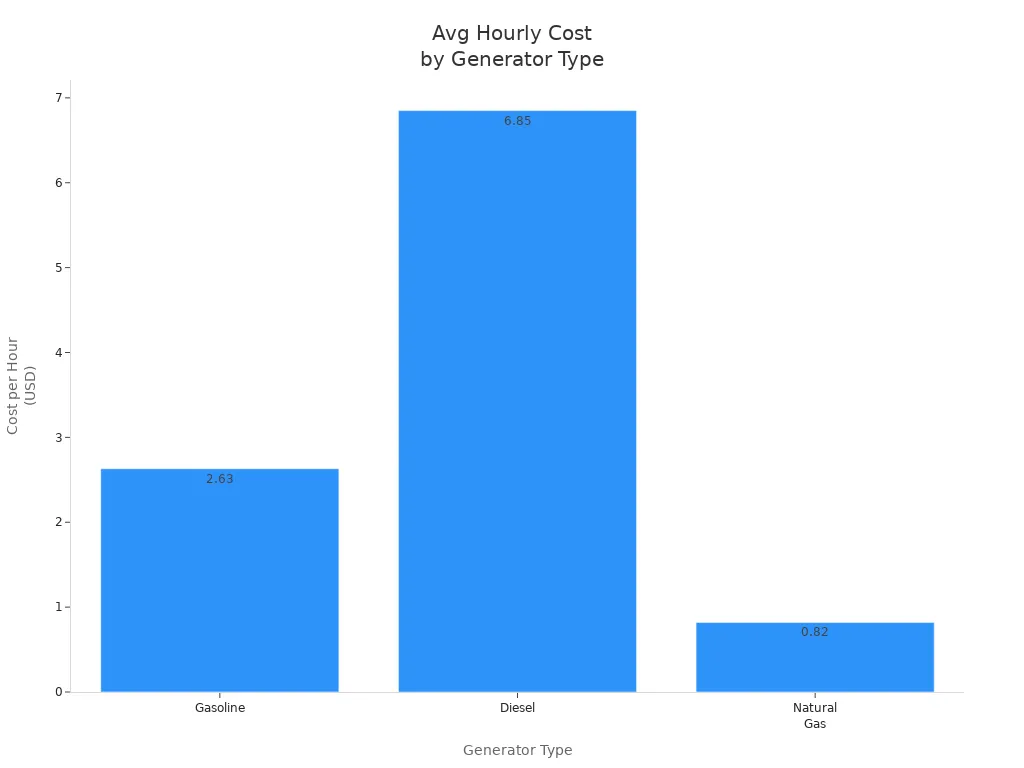
From what I see, petrol generators use about 0.75 gallons each hour. This costs about $2.63 every hour. If I run it all day, the cost goes up fast. Diesel and natural gas generators may cost less if I use them for a long time.
Tip: I always plan how much fuel I need and save money for higher costs if I use petrol generators for a long time.
I pick petrol generators when I want power that is simple, cheap, and easy to find. But I always think about gasoline’s short shelf life, the need for safe storage, and the higher costs before I decide.
Natural Gas Generator Fuel
Advantages of Natural Gas
Clean Combustion
When I pick natural gas generators, I see they burn fuel clean. Natural gas makes much less pollution than diesel or gasoline. It creates about 117 pounds of carbon dioxide for every million British thermal units burned. Diesel makes about 200 pounds. Coal or oil makes over 160 pounds. This big difference helps keep the air cleaner. Natural gas also gives off almost no sulfur dioxide or mercury. This means it is better for the environment and safer for my health.
Lower Emissions
I always try to lower pollution. Natural gas generators make 95% less nitrogen oxide than diesel generators. They also make 98% less non-methane hydrocarbons and 59% less carbon monoxide. Natural gas releases 50-60% less carbon dioxide than coal. It also makes 25-30% less than oil. These lower amounts of bad gases make natural gas a good choice for clean power.
- Natural gas generators emit:
- 95% less NOx than diesel
- 98% less NMHC than diesel
- 59% less CO than diesel
- Almost no SO2 or mercury
Quiet Operation
I like natural gas generators because they are quiet. The engines make less noise than diesel or gasoline ones. This helps me use them in homes, offices, and hospitals without bothering people. I can work or rest without loud sounds.
Cost-Effectiveness
Natural gas is cheap and works well for a long time. I see that natural gas prices do not change much in many places. When I connect a generator to the utility grid, I pay less for each kilowatt-hour. This makes natural gas generators a smart buy for businesses and homes. I save money over time and get steady power.
Disadvantages of Natural Gas
Infrastructure Dependency
One big problem with natural gas is it needs the utility supply. Natural gas generators must connect to the natural gas grid. If a disaster or outage stops the supply, my generator will not work. This makes natural gas less reliable in emergencies than portable diesel generators.
Lower Power Output
I see that natural gas generators sometimes give less power than diesel ones. For big jobs, I may need a bigger unit or more generators. This lower power can limit my choices when I need strong energy for large machines.
Installation Complexity
Setting up natural gas generators can be hard. I have to connect the generator to a gas line, which costs more at first. These generators are not easy to move because they stay connected to the utility. If I want to move my generator, it takes extra work and money.
| Feature | Natural Gas Generators | Diesel Generators |
|---|---|---|
| Emissions | Very Low | High |
| Noise Level | Quiet | Loud |
| Portability | Fixed | Portable |
| Setup Cost | Higher | Lower |
| Power Output | Moderate | High |
Tip: I always check my local utility grid and setup costs before I pick natural gas generators. I make sure the supply is steady and the setup fits my budget.
I find that natural gas has good points like clean burning, lower emissions, quiet running, and saving money. The bad points are it depends on the gas grid, gives less power, and is harder to install. I think about these things to see if natural gas generators are right for me.
Propane Generator Fuel
Strengths
Long Shelf Life
I think about how long fuel lasts when I pick one. Propane is special because it does not go bad over time. I can keep propane for many years and not worry. Gasoline gets old after a few months, but propane stays good. This makes propane great for backup power and long storage.
| Fuel Type | Shelf Life | Storage Notes |
|---|---|---|
| Propane | Indefinite | No degradation, safe for long-term |
| Gasoline | 3-6 months | Needs stabilizer, degrades quickly |
| Diesel | 6-12 months | Can degrade, needs additives |
Clean Burning
I like propane because it burns cleaner than gasoline or diesel. Propane makes less pollution, so it is better for the air and my health. When I use propane generators, I see less smoke and smell less odor. This clean burning is good for places with strict air rules.
| Generator Type | Emissions Level | Environmental Impact |
|---|---|---|
| Propane Generators | Low | Cleaner air |
| Gasoline Generators | High | More pollution |
| Diesel Generators | Moderate | Some pollution |
Flexible Storage
Propane is easy for me to store. I can keep it in tanks or small cylinders outside. Propane does not spill or disappear fast, so I feel safe. I can buy big tanks for backup or use small ones for portable generators. This helps me get ready for blackouts or emergencies.
Weaknesses
Higher Consumption
Propane generators use more fuel each hour than diesel or gasoline. One gallon of diesel gives about 33 kWh, but propane gives only 27 kWh. I need more propane to get the same power. Using more fuel means I pay more if I run my generator for a long time.
Upfront Cost
Propane generators cost more to buy at first. The price is higher than gasoline generators. If I need a big tank or special setup, I pay more to install it. These costs add up, so I always check prices before I buy.
Storage Requirements
I have to plan how to store propane. I need enough tanks or cylinders to keep my generator working during blackouts. Propane is not as easy to find as gasoline, so I make sure I have enough. Safe storage is important because propane is under pressure and needs strong tanks.
- Propane generators use more fuel than gasoline ones.
- I need enough propane stored for emergencies.
- Buying and running propane generators costs more than gasoline.
- Propane has less energy, so I get less power than gasoline.
- I must store propane tanks, and propane is harder to find than gasoline.
Tip: I always check local supply and storage before I pick propane. I weigh the long shelf life and clean burning against the higher costs and fuel use.
Hydrogen Generator Fuel
Strengths
Zero Emissions
I want to help stop pollution. Hydrogen generators are special because they do not make toxic gases. When I use hydrogen, the only thing that comes out is water vapor. There is no carbon dioxide or nitrogen oxides. No bad gases are made. Hydrogen is clean and safe. It does not pollute the air. Many new energy rules include hydrogen. This is because it helps keep the air clean. When I use a hydrogen generator, I know I am not making the air dirty.
Renewable Potential
Hydrogen can be made in ways that do not hurt nature. I can make hydrogen with electrolysis. This uses renewable energy or nuclear power. The process is safe for the earth. Electrolysis hydrogen generators help make energy without carbon. Technology is getting better. I think hydrogen will cost less soon. This will help people use hydrogen more. Hydrogen gives lots of energy. It has about 2.75 times more than most other fuels. I believe hydrogen will help store energy and keep the power grid strong.
Hydrogen generators help keep the power grid steady. They also help small energy systems. They can create new jobs in energy.
Quiet Use
Noise is important to me at home and work. Hydrogen generators are quiet. I can use them and not bother anyone. This makes hydrogen good for places like hospitals and schools.
Weaknesses
Limited Access
Getting hydrogen fuel is hard. I see that hydrogen is not easy to find. Gasoline and diesel are sold everywhere. Hydrogen stations are rare. Most are in big cities. This makes it tough to get hydrogen for backup power.
Storage and Safety
Hydrogen needs special storage. It leaks easily because its molecules are small. Metal tanks can get weak and break. I read about many problems with hydrogen from 2000 to 2020. Most problems happen because of bad design, broken seals, or equipment issues. These happen during making or storing hydrogen. I always check safety before using hydrogen generators.
- Hydrogen leaks fast because its molecules are tiny.
- Metal tanks can crack and break over time.
- Safety systems must be strong and work well.
High Cost
Hydrogen generators cost more than others. I look at prices to see if I can afford hydrogen. Here is a table with fuel costs:
| Fuel Type | Price Range | Efficiency (%) |
|---|---|---|
| Diesel | $700–$1,000/metric ton | 35–40 |
| Gasoline | ~$2.32/gallon | 35–40 |
| Hydrogen (Green) | $4–$6/kg | 50–60 |
| Hydrogen (Blue) | $1.5–$4/kg | 50–60 |
| Hydrogen (General) | $1.00–$1.80/kg (per gal.) | 50–60 |
Hydrogen fuel cells work better than diesel engines. They are about 50–60% efficient. Diesel engines are only 35–40% efficient. But hydrogen generators and fuel cost more at first. I think about the price and the good things before I pick hydrogen.
I think hydrogen generators are great for clean energy. But I always look at the problems with getting fuel, safety, and cost before I choose.
Biodiesel Generator Fuel
Strengths
Renewable Source
I pick biodiesel because it comes from things we can grow again. People make biodiesel from vegetable oils, animal fats, or used cooking oil. This means we can use old grease or crops to make new fuel. I like that biodiesel helps us use less fossil fuel. When I use biodiesel, I help keep a cycle going for many years. This makes biodiesel a good choice for people who want energy that lasts.
Lower Emissions
Biodiesel is better for the air than regular diesel. I see that biodiesel makes less greenhouse gas and other bad stuff. Groups say biodiesel can cut greenhouse gases by up to 86%. It also lowers tiny particles by 47% and cuts hydrocarbon emissions by up to 67%. These changes help stop smog and make the air safer.
Here is a table that shows how biodiesel (B20 blend) compares to regular diesel in emissions:
| Emission Type | Biodiesel (B20) | Conventional Diesel |
|---|---|---|
| Nitrogen Oxides (NOx) | +1.2% | Standard levels |
| Carbon Monoxide (CO) | -12.6% | Standard levels |
| Hydrocarbons | -11% | Standard levels |
| Particulate Matter | -18% | Standard levels |
| Air Toxics | -12–20% | Standard levels |
| Greenhouse Gas (GHG) | -56–96% | Standard levels |
I notice that biodiesel makes cleaner air. This helps meet strict rules and keeps nature safe.
Diesel Engine Compatibility
I like that biodiesel works in most diesel engines. I can use blends like B20 in my generator without big changes. This means I do not need to buy a new machine. Biodiesel generators give the same power and strength for daily use. I find this helpful for homes and businesses.
Weaknesses
Quality Variability
Biodiesel quality can change based on what it is made from. I have seen some batches work better than others. This can change how the engine runs and what comes out of it. Reports say hard ways of making biodiesel and no set rules can make fuel quality different. I always check where my biodiesel comes from before I buy it.
Cold Weather Issues
Biodiesel can have trouble in cold weather. It can get thick and block fuel lines and filters. I need to use special additives or mix biodiesel with regular diesel in winter. This extra step costs more money and takes more work. Cold weather problems make biodiesel less good in freezing places.
Limited Supply
Biodiesel is not as easy to find as gasoline or regular diesel. Making biodiesel costs from $0.53 to $11.13 per gallon, depending on what it is made from. It usually costs more than regular diesel by about 25 to 27 cents per liter. How much biodiesel there is depends on rules, technology, and how many people want it. Sometimes, I cannot find biodiesel in far-away places.
- High setup and running costs
- Not enough stations in some areas
- Takes a long time to save money with current tech
- Storage can be a problem
- Some engines may not have full warranty
Tip: I always check if I can get biodiesel nearby and look at my engine’s warranty before I switch.
Comparing Generator Fuel Types

Key Differences
When I look at generator fuels, I check four things. I look at efficiency, emissions, cost, and how each fuel works. Each fuel has good and bad sides. A table helps me see the differences better.
| Fuel Type | Efficiency | Emissions | Cost | Operational Characteristics |
|---|---|---|---|---|
| Diesel | High power output | Higher emissions | Moderate-High | Durable, best for heavy-duty use |
| Gasoline | Moderate | Higher than propane | Low upfront | Easy to use, widely available |
| Natural Gas | Up to 45% | Lower than diesel | Moderate | Clean burning, steady supply |
| Propane | Moderate | Cleaner than diesel | Higher | Quiet, flexible storage |
| Hydrogen | High (50–60%) | Zero emissions | High | Quiet, renewable, limited access |
| Biodiesel | Moderate-High | Lower than diesel | Higher | Renewable, works in diesel engines |
- Efficiency: Diesel and hydrogen give the most power for fuel. Natural gas also works well and can reach 45% efficiency.
- Emissions: Hydrogen makes no pollution at all. Biodiesel and natural gas make less pollution than diesel or gasoline. Propane is cleaner than diesel.
- Cost: Gasoline generators are cheaper to buy. Diesel and natural gas save money over time. Hydrogen and biodiesel cost more at first.
- Operational Characteristics: Diesel is best for big jobs and long hours. Gasoline is simple and easy to find. Natural gas gives clean power if you have a gas line. Propane stores well and is quiet. Hydrogen is quiet and clean but hard to get. Biodiesel is renewable and works in most diesel engines.
I always look at these main points before I pick a generator fuel. The best choice depends on what I need most, like power, price, clean air, or easy use.
Best Use Cases
I match each fuel to different needs and places. Here is how I pick which fuel is best for me:
- Diesel: I use diesel for tough jobs and long run times. It is good for factories, farms, and big building sites.
- Gasoline: I pick gasoline for small jobs or backup at home. Gasoline is easy to find and simple to use.
- Natural Gas: I choose natural gas for homes or businesses with a gas line. It is good for backup power and makes less pollution.
- Propane: I use propane when I want fuel that lasts for years. Propane is great for emergency kits, cabins, and places with strict air rules.
- Hydrogen: I pick hydrogen if I want no pollution and quiet use. Hydrogen is good for hospitals, labs, and places that need clean energy.
- Biodiesel: I use biodiesel when I want renewable energy and have a diesel generator. Biodiesel is good for green farms and eco-friendly businesses.
Tip: I always think about how much power I need, how easy it is to get fuel, and how much I want to spend. I also check local rules about emissions and storage.
Summary List:
- Diesel: Best for heavy-duty, long-term use.
- Gasoline: Good for quick, portable, and low-cost needs.
- Natural Gas: Great for clean, steady power with utility access.
- Propane: Ideal for long storage and clean burning.
- Hydrogen: Perfect for zero-emission, quiet environments.
- Biodiesel: Suits renewable energy goals and diesel engine owners.
I always pick the fuel that fits my needs. This helps me get the best value, performance, and safety from my generator.
Choosing the Right Generator Fuel
Usage and Power Needs
When I pick a generator fuel, I first think about how I will use my generator and how much power I need. If I want backup power for my house, I add up the wattage of all the things I want to run. For big jobs, like running large machines or helping a business, diesel generators are best for me. Diesel gives strong power and lasts a long time. But I have to refuel and store diesel safely.
Natural gas generators are good if I want clean power and live in a city with pipelines. They are quiet and cost less over time. If I want more choices, I look at dual-fuel generators. These let me switch between fuels if I need to.
Here are some important things to think about when picking generator fuel for your needs:
- Diesel generators: I use these for big power jobs and long hours. They are good for backup if I can get fuel easily.
- Natural gas generators: I pick these for steady power in cities. They connect to pipelines and make cleaner energy.
- Dual-fuel options: I choose these if I want to switch fuels. They help if one fuel runs out.
- Accurate sizing: I always figure out how much power I need and how long I will use it. This stops me from overloading the generator or wasting money on too much power.
If I only need backup for a short time or for small things, gasoline or propane generators work well. They are easy to use and set up fast. I always match the generator size and fuel type to what I really need. This helps me save money and avoid losing power.
Location and Availability
Where I live or work changes what fuel is best for me. In cities, natural gas is usually the cheapest and easiest to find. I can hook my generator to the gas line and get steady backup power. In far-away places, diesel or propane may be better because trucks can bring fuel to me. But sometimes diesel is hard to find, so I check with local suppliers before I decide.
I also think about how easy it is to store and get fuel. Propane lasts a long time and is safe in tanks, so it is good for cabins or emergency kits. Gasoline is easy to find almost everywhere, but it does not last long in storage. I always plan for emergencies and make sure I have enough fuel ready.
Here is a table that helps me compare location and fuel choices:
| Factor | Description |
|---|---|
| Shelf Life | How long I can keep fuel before it goes bad. Propane lasts the longest. |
| Safety | How safe it is to handle and store. Propane and natural gas are safer. |
| Storage | What kind of containers and care I need. Diesel and gasoline need special care. |
| Availability | How easy it is to get fuel near me. Natural gas is best in cities. |
| Delivery | If I can get fuel brought to me. Diesel and propane often have delivery. |
| Portability | How easy it is to move fuel and the generator. Gasoline and propane are easy to move. |
I always check local rules and suppliers before I pick a fuel. This helps me not run out of power during a blackout or emergency.
Budget Factors
Money is a big part of my choice. I look at how much the generator costs, the price of fuel, and how much it costs to run over time. Gasoline generators are cheaper to buy, but they use more fuel and cost more to run. Diesel generators cost more at first, but they save money later because they use less fuel and last longer.
Natural gas generators are cheap to run if I have a pipeline. Propane generators cost more to buy and use, but they last a long time and burn clean. Hydrogen and biodiesel generators cost the most, but they are better for the environment.
I always balance cost with other things like power needs, where I live, and how clean the fuel is. I make a list of what matters most and compare my choices before I buy. Here is a table that helps me look at budget factors:
| Factor | Description |
|---|---|
| Cost | Price to buy and fuel costs. I look for the best deal over time. |
| Sustainability | I think about the environment and pick cleaner fuels if I can afford them. |
| Portability | I check if I need to move my generator or fuel a lot. |
| Backup | I plan for extra costs if I need backup power for a long time. |
Tip: I always set a budget before I shop for a generator. I compare all costs, like fuel, care, and delivery, to find the best choice for my backup power.
I make sure my pick fits my budget and helps with my power needs, where I live, and my goal to protect the environment.
Environmental Impact
When I pick generator fuel, I always think about nature. Each fuel changes the air, water, or land in its own way. I want readers to know how their choices matter.
Diesel and Gasoline:
Diesel and gasoline generators make a lot of pollution. They send out carbon dioxide, nitrogen oxides, and small particles. These things can make smog and hurt people’s lungs. I see black smoke from diesel engines if they run for a long time. Gasoline engines also make bad fumes, but not as much as diesel. I use these fuels only when I need strong power or have no other choice.
Natural Gas and Propane:
Natural gas and propane burn cleaner than diesel or gasoline. I see less smoke and smell less odor when I use them. Natural gas makes much less carbon dioxide and almost no sulfur dioxide. Propane also lets out fewer toxins. These fuels help me make the air cleaner. I pick them when I want to protect nature and follow air rules.
Hydrogen:
Hydrogen generators are special because they make zero emissions. When I use hydrogen, only water vapor comes out. I do not worry about carbon dioxide or other bad gases. Hydrogen helps me reach clean energy goals. I know hydrogen is hard to find, but it is best for the planet.
Biodiesel:
Biodiesel comes from plants or used oils. I like that it is renewable and cuts greenhouse gases. When I use biodiesel, I see less smoke and fewer toxins. Biodiesel can lower emissions by up to 86%. I pick biodiesel when I want to help the earth and use less fossil fuel.
Tip: I always check local rules about emissions before I buy a generator. Some places have strict limits on pollution. Clean fuels like natural gas, propane, hydrogen, and biodiesel help me follow these rules.
Here is a table that shows the environmental impact of each fuel:
| Fuel Type | Emissions Level | Renewable | Air Quality Impact | Notes |
|---|---|---|---|---|
| Diesel | High | No | Poor | Best for heavy-duty use |
| Gasoline | High | No | Poor | Easy to find, more pollution |
| Natural Gas | Low | No | Good | Needs utility connection |
| Propane | Low | No | Good | Long shelf life, clean burn |
| Hydrogen | None | Yes | Excellent | Limited access, high cost |
| Biodiesel | Low | Yes | Good | Renewable, supply varies |
My Checklist for Choosing Cleaner Generator Fuel:
- I look for fuels with low emissions.
- I pick renewable fuels when I can.
- I check if the fuel helps me meet local air quality rules.
- I think about how easy it is to get and store clean fuel.
🌱 If I want to protect nature, I choose hydrogen or biodiesel. If I need steady power and clean air, I pick natural gas or propane. I use diesel or gasoline only when I need strong power and have no other choice.
I notice every generator fuel has good and bad sides. Diesel gives strong power and works for many hours. Gasoline is easy to buy and simple to use. Natural gas burns clean and saves money over time. Propane is easy to store and makes less pollution. Hydrogen does not make any emissions, but it is hard to get. Biodiesel helps with renewable energy, but it is not always easy to find.
I always pick fuel based on my needs, where I live, my budget, and how it affects nature. I think it is smart to ask experts before buying. Learning more helps me choose safe and reliable power.
FAQ
What types of generators work best for home backup power?
For small homes, I use portable generators. For bigger homes, I pick standby generators. Standby generators use natural gas or propane fuel. Portable ones often use gasoline or diesel fuel. I choose based on how much power I need and what fuel is easy to get.
How do I store generator fuel safely?
I keep fuel outside in safe containers. I never put fuel near fire or heat. I check containers for leaks often. I always follow local safety rules for storing fuel. Safe storage stops accidents and keeps my generator working well.
Can I use biodiesel in all generators?
Most diesel generators can use biodiesel fuel. Some need special filters or extra additives for biodiesel. I read my generator’s manual before changing fuel. Not every generator works with biodiesel, especially when it is cold.
Why do generators need regular maintenance?
Generators need oil changes and new filters. I also check the fuel system and clean air filters. I look at spark plugs to make sure they are good. Doing this helps my generator last longer and stay safe. I follow the manual’s schedule for best care.
What generator fuel lasts the longest in storage?
Propane fuel lasts the longest and does not go bad. Diesel fuel can last up to a year if I add special chemicals. Gasoline only lasts a few months. I use propane for emergencies when I need fuel to last a long time.
How do I choose the right generator fuel for my location?
I check what fuels are easy to get where I live. In cities, natural gas is simple to use. In the country, diesel or propane is better. I match my generator and fuel to where I am and how much power I need.
Are hydrogen generators safe to use?
Hydrogen generators are safe if I use the right safety systems. Hydrogen needs strong tanks and leak checks. I follow all safety rules for hydrogen fuel. I also check for new safety tips from the maker.
Can generators run on more than one fuel type?
Some generators can use two kinds of fuel. I can switch between gasoline and propane in these. Dual-fuel generators help if one fuel runs out. I read the manual to learn how to change fuels safely.

