

I trust Cat data center generator models for their reputation in delivering reliable power and sustaining uptime in critical environments. Caterpillar Inc. stands out with durable generators and a global presence, evolving their technology to support data centers worldwide. In fact, diesel generators account for 70.5% of the market share in this sector, showing strong preference for dependable solutions. LETON POWER, with its customizable diesel generator sets, offers flexible options tailored to unique facility requirements.
Key Takeaways
- Assess your facility’s total power needs by evaluating both average and peak loads to choose the right generator size.
- Consider redundancy models like N+1 or 2N to ensure reliability and continuous power during outages.
- Choose between diesel and natural gas generators based on efficiency, fuel costs, and environmental goals.
- Look for scalable generator systems that allow for easy expansion as your data center grows.
- Evaluate total cost of ownership, including maintenance and fuel, to find the best value for your generator investment.
- Utilize advanced control panels for real-time monitoring and management of your generator systems.
- Regularly test your generators under load conditions to ensure they perform reliably during emergencies.
- Consult with experts to customize generator solutions that meet your specific operational and layout needs.
Cat Data Center Generator Selection Criteria
Power Capacity
Load Assessment
When I select a cat data center generator, I start by evaluating the facility’s total power needs. I look at both the average load factor and the maximum required load. This step helps me determine the right generator size for reliable data center power. I also consider how many hours the generator will run each year and whether it will operate alone or in parallel with the utility. These factors influence the generator’s rating and operational limits.
Tip: Always calculate both the steady-state and peak loads to avoid under-sizing or over-sizing your generator set.
To clarify how facility tier impacts power requirements, I use the following table:
| Facility Tier | Power Requirement | Redundancy Model | Example Configuration |
|---|---|---|---|
| Tier I | N = 1,750kW | No redundancy | Single generator |
| Tier III | N+1 = 4,000kW | One additional unit | Three 2,000kW generators |
| Tier IV | 2N = 8,000kW | Two independent systems | Two sets of three 2,000kW generators |
Peak vs. Average Demand
I always compare the peak demand to the average demand. Peak demand drives the sizing of the generator, while average demand affects fuel efficiency and operational costs. For tier iv data centers, peak demand can be much higher due to mission-critical loads. I recommend choosing a fast response generator set that can handle sudden spikes in usage without compromising uptime.
Reliability Standards
Redundancy Levels
Reliability is essential for data center power. I follow industry standards like Uptime Institute’s Tier III and Tier IV, which require no limitations on consecutive hours of operation at full load. Cat data center generator models comply with ISO 8528-1, ensuring robust performance. I also check for compliance with emissions regulations, which may affect operating limits.
- Diesel-powered engines provide rapid deployment and strong supply chain support.
- Rich burn gas generators deliver market-leading load acceptance and high combustion efficiency.
- Natural gas turbines offer consistent power and help meet environmental standards.
LETON POWER offers custom generator sets with redundancy options, including N+1 and 2N configurations, to match different reliability needs.
Efficiency and Fuel Type
Diesel vs. Natural-Gas Generator Set
Efficiency and fuel type play a major role in operational costs. I notice that DC generators often run at higher loading conditions, which improves fuel economy compared to AC generators running at lower loads. For intermittent loads, DC generators can reduce fuel consumption and lower costs. Diesel generators remain popular for their reliability and fast response, while natural-gas units support full-site microgrid solutions and help reduce emissions.
When I compare Cat and LETON POWER models, I look for flexibility in fuel options and efficiency ratings. Both brands offer diesel and natural-gas generator sets, allowing me to choose the best fit for my data center’s sustainability goals.
Scalability
When I evaluate cat data center generator models, I focus on scalability. Data center power needs often change as facilities expand or upgrade. I look for generator systems that allow easy modular expansion. Cat generators offer flexible packaging and a wide range of bolt-on attachments. These features help me adapt the system to new requirements without major disruptions.
I rely on the EMCP 4.3 Control Panel for a user-friendly interface. This control panel simplifies monitoring and management, especially when adding new modules. Site-specific programming and expansion modules let me tailor the system for unique installations. I have seen successful modular expansions in large hospitals, manufacturing plants, and major data centers. These scalable solutions support growth in airports, college campuses, and utility companies.
Here is a summary of key scalability features in Cat data center generator models:
| Feature | Description |
|---|---|
| Control Panel | EMCP 4.3 for easy monitoring and management |
| Scalability | System adapts to a wide range of installation needs |
| Expansion Modules | Site-specific programming for tailored solutions |
| Attachments | Bolt-on options for system expansion |
| Packaging | Flexible options for installation |
I also consider LETON POWER when I need custom generator sets. LETON POWER provides scalable solutions with modular designs, making it easier to expand data center power as my facility grows.
Modular Expansion
I prefer modular expansion because it allows me to add generator units as my data center power requirements increase. This approach minimizes downtime and reduces installation costs. Modular systems work well for critical government installations and large commercial applications. I can deploy additional units quickly, ensuring continuous data center power during upgrades.
Cost Considerations
Cost plays a major role in my decision-making process. I compare upfront costs with lifetime expenses to find the best value. Cat data center generator models offer different fuel types, cooling systems, and electrical configurations. Each factor affects both initial investment and long-term operational costs.
Here are the main cost considerations I review:
| Cost Factor | Description |
|---|---|
| Engine Fuel Type and Efficiency | Diesel, natural gas, and propane impact initial and ongoing costs |
| Run Frequency and Duty Cycle | Higher usage increases build quality requirements and costs |
| Cooling System Type | Air-cooled systems cost less but may be less efficient; liquid-cooled systems offer reliability |
| Electrical Configuration | Custom setups ensure compatibility but may raise costs |
| Accessories and Optional Features | Add-ons like ATS and remote monitoring increase upfront investment |
I always weigh the benefits of advanced features against their costs. For example, remote monitoring and automatic transfer switches improve reliability but require a higher initial investment. LETON POWER offers affordable generator sets with customizable options, helping me balance cost and performance for my data center power needs.
Tip: I recommend calculating total cost of ownership, including maintenance, fuel, and upgrades, before selecting a generator model.
Cat Data Center Generator Model Comparison
Cat 3516C and 3516B Series
Features and Controls
When I evaluate the Cat 3516C and 3516B series, I notice their strong reputation for reliability and high power output. These models deliver between 1640 kW and 2250 kW at 60Hz, which meets the demands of most data center applications. I rely on their advanced control systems for seamless integration with facility management platforms. The EMCP control panels provide real-time monitoring, diagnostics, and remote management. I find these features essential for maintaining uptime and ensuring fast response generator set performance during emergencies.
- High power output supports mission-critical loads.
- Robust controls simplify generator management.
- Designed for continuous, standby, or prime use.
Data Center Use Cases
I often recommend the Cat 3516C and 3516B series for medium to large data centers. Their outstanding fuel efficiency and reliability make them ideal for facilities that require uninterrupted power. These generators excel in environments where a fast response generator set is crucial. I see them deployed in Tier III and Tier IV data centers, financial institutions, and healthcare facilities. Their ability to handle sudden load spikes ensures operational continuity.
Cat C175 Series
Durability and Efficiency
I trust the Cat C175 series for its durability and efficiency in large diesel generator sets. The four-stroke-cycle diesel engine provides reliable uptime, supporting up to 72 MW of backup emergency power capacity. I value the equipment’s ability to start quickly when power goes down, which is vital for data center applications.
The C175-16 diesel generator sets produce reliable power ranging from 2500 to 3365 ekW at 60 Hz. These models are certified for low fuel consumption and can accept 100% rated load in one step. I rely on this capability to ensure my data center remains operational during unexpected outages.
I choose the C175 series when I need solutions for large-scale facilities with mission-critical requirements. Their performance and efficiency help me optimize operational costs while maintaining high reliability.
Cat G3520H Natural-Gas Generator Set
Reliability and Emissions
I consider the Cat G3520H natural-gas generator set when my data center needs sustainable solutions. This model offers reliable power and helps reduce emissions, supporting environmental goals. I use it in hybrid systems where a fast response generator set is required alongside renewable energy sources. The G3520H integrates well with microgrid solutions, providing flexibility and consistent performance.
I recommend this generator for facilities that prioritize sustainability and need dependable backup power. Its advanced emissions controls and robust design make it suitable for modern data center applications.
LETON POWER Diesel Generator Sets
Engine Options (Cummins, Perkins, Weichai)
When I evaluate LETON POWER diesel generator sets for data center applications, I see a manufacturer that delivers both affordability and reliability. LETON POWER, based in China, has built a reputation for producing robust diesel generator sets that meet the demands of critical environments. I often recommend their products for facilities that require dependable backup power without exceeding budget constraints.
LETON POWER’s data center diesel generator sets primarily feature engines from Dongfeng Cummins and Weichai. These brands are well-known for their durability and consistent performance. I also notice that LETON POWER offers models equipped with Perkins, Isuzu, and Kubota engines. This variety allows me to select the best engine for each project, ensuring compatibility with site requirements and maintenance preferences.
I appreciate LETON POWER’s flexibility in engine selection. For large diesel generator sets, I often choose Cummins or Weichai engines because they provide the fast response generator set capability that data centers need during outages. The ability to customize engine options gives me confidence that LETON POWER can support a wide range of data center applications.
Customization and Value
Customization stands out as a key advantage when I work with LETON POWER. The company offers tailored solutions that address specific power, redundancy, and installation needs. I can request silent enclosures, mobile trailer configurations, or water-cooled systems depending on the site’s requirements. LETON POWER’s engineering team collaborates with me to design generator sets that fit unique layouts and operational constraints.
I value LETON POWER’s commitment to quality. Each generator set undergoes rigorous testing and certification, including CE, ISO, and RoHS standards. The warranty coverage—one year or 1,000 working hours for automatic standby generators—gives me peace of mind. LETON POWER diesel generator sets consistently deliver 100% efficiency when used as a power supply for data centers. This high level of efficiency supports reliable performance and operational continuity, which is essential for mission-critical facilities.
I find LETON POWER’s pricing structure attractive, especially for projects with tight budgets. The company’s ability to offer affordable solutions without compromising on reliability or customization makes it a strong contender in the market. I often recommend LETON POWER for data center applications that require both value and flexibility.
Model Comparison Table
Key Specs and Applications
To help you compare cat data center generator models with LETON POWER options, I created a table highlighting important specifications and application scenarios. This table provides a clear overview of what each generator set offers for data center applications.
| Specification | Details |
|---|---|
| Model NO. | DGS-WP20S |
| Type | Self-Starting Diesel Generator |
| Installation Method | Fixed |
| Stroke | Four Stroke |
| Cooling Method | Water Cooling |
| Output Type | AC Three Phase |
| Conditions of Use | Land Use |
| Usage | Common Units, Standby Unit, Emergency Crew |
| Silent Level | Super Silent Type Diesel Generator |
| Certification | CE/ISO/Ukca/RoHS |
| Warranty | 1 Year or 1000 working hours Limited Warranty for automatic standby generators |
| Application Scenarios | Designed for tough commercial applications and home use, providing stable output power for sudden outages. |
When I compare cat data center generator models and LETON POWER diesel generator sets, I focus on features like engine reliability, customization options, and efficiency. Both brands offer fast response generator set solutions for data center applications, but LETON POWER stands out for its ability to tailor products to specific needs and deliver consistent performance. I use this table to guide my selection process and ensure the generator set matches the facility’s operational requirements.
Cat Data Center Generator Models by Facility Size
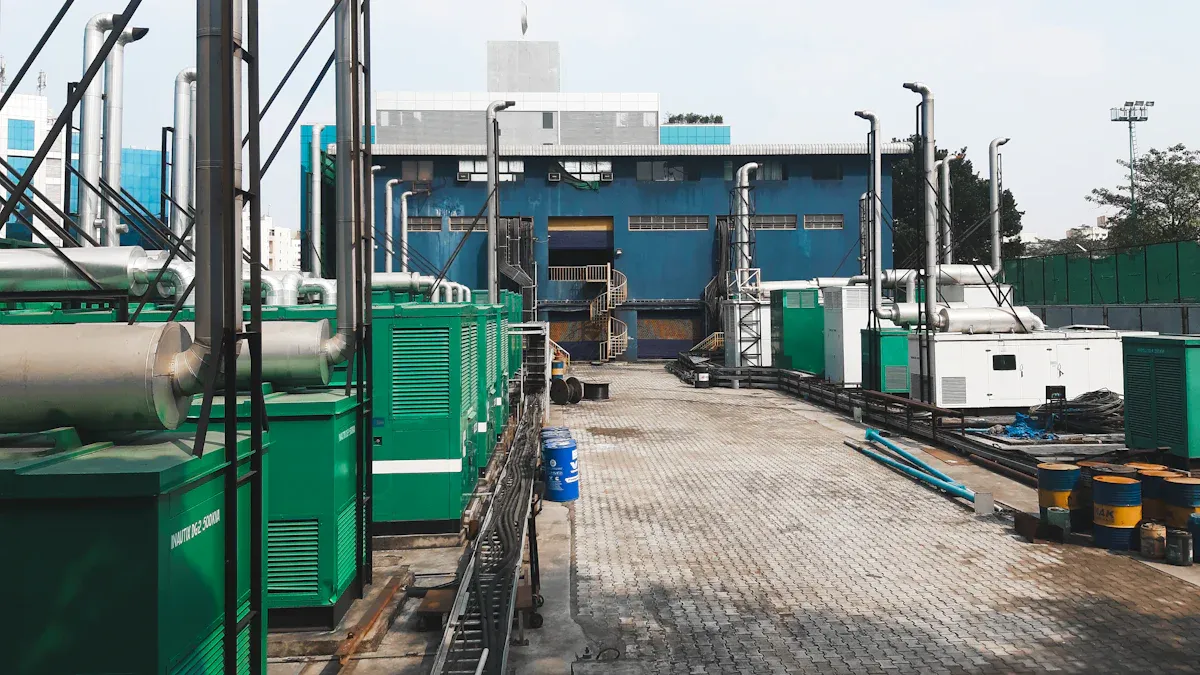
Small Data Centers
Recommended Models
When I work with small data centers, I focus on generator models that deliver reliable data center power without excessive capacity or cost. These facilities often require backup solutions that fit within limited space and budget constraints. I usually recommend the Cat C7.1 and Cat C9 series for these environments. These models provide dependable performance, compact footprints, and straightforward maintenance. Their power output ranges from 100 kW to 300 kW, which matches the needs of most small-scale operations.
For clients seeking flexibility, I also consider LETON POWER diesel generator sets in the 100–400 kVA range. These units, equipped with Cummins or Perkins engines, offer quiet operation and easy installation. I find them suitable for small server rooms, edge computing sites, and branch office data centers. Both Cat and LETON POWER models support emergency standby applications, ensuring critical systems remain online during outages.
Tip: Choose a generator with a silent enclosure if your data center operates in a noise-sensitive environment.
Medium Data Centers
Recommended Models
Medium data centers demand higher capacity and advanced features to maintain stable data center power. I often select Cat 3512C and Cat 3516B generator sets for these facilities. These models deliver robust performance, typically ranging from 1,250 kW to 2,250 kW. Their advanced controls and quick response capabilities help maintain uptime during power disturbances.
I rely on the following features when recommending Cat generators for medium data centers:
| Feature | Description |
|---|---|
| Transient Response | Ensures quick recovery from power disturbances. |
| Quick Start Capability | Allows for immediate power supply when needed. |
| Block Load Acceptance | Supports sudden increases in power demand without issues. |
| Noise Suppression | Reduces operational noise, important for data center environments. |
| Fuel Efficiency | Optimizes fuel usage, reducing operational costs. |
LETON POWER also offers diesel generator sets in the 500–1,500 kVA range, powered by Cummins or Weichai engines. These units provide scalable solutions for growing facilities. I appreciate their modular design, which allows for future expansion as data center needs evolve.
Large Data Centers
Recommended Models
Large data centers require generator models that deliver high-capacity data center power and support complex redundancy configurations. I typically recommend the Cat C175-16 and Cat C175-20 series for these environments. These models offer power outputs up to 3.15 MW, making them ideal for continuous and standby applications in enterprise-scale facilities.
The following table highlights key performance features of Cat generators for large data centers:
| Feature | Details |
|---|---|
| Power Output | Up to 3.15 MW |
| Application | Continuous and standby |
| Fuel Efficiency | High |
| Emissions Compliance | Tier 2 |
| Redundancy Configurations | N+1 or 2N |
| Monitoring | Real-time and remote management |
For clients who need tailored solutions, I also consider LETON POWER’s high-capacity diesel generator sets, which can be customized for parallel operation and advanced monitoring. These units support mission-critical operations and help maintain uninterrupted service during grid failures.
Note: Always evaluate your facility’s growth plans and redundancy needs before selecting a generator model for large data centers.
Mission-Critical Applications
High-Redundancy Solutions
When I design power systems for mission-critical data centers, I focus on redundancy and reliability above all else. These facilities cannot afford downtime, so I select generator models and configurations that meet the highest industry standards. I often recommend solutions that include parallel operation and robust failover mechanisms.
Here are the generator brands and features I trust for mission-critical applications:
- Caterpillar: I rely on their Series 3500 and C175 diesel standby generators, especially models rated at 1.5 MW and above. These units deliver consistent performance and integrate well with advanced control systems.
- Cummins: I look for dual starter batteries, block heaters, and a minimum of 12 hours of external fuel storage. These features ensure the generator starts every time and can run through extended outages.
- Kohler: Their generators meet ISO G3 standards and include Tier 4 certified models up to 4 MW, which I find suitable for large-scale deployments.
- Generac: I appreciate their focus on smart grid integration and EPA-compliant bi-fuel generators, which offer flexibility for evolving energy needs.
For redundancy, I always design systems where all generators start simultaneously after a power failure. I use parallel generator configurations to synchronize units and provide maximum initial capacity. Once utility power stabilizes, the system automatically shuts down the generators to conserve resources.
LETON POWER also offers high-redundancy solutions for mission-critical sites. Their diesel generator sets, powered by Cummins or Weichai engines, can be configured for N+1 or 2N redundancy. I work with their engineering team to customize control panels and monitoring systems, ensuring seamless integration with existing infrastructure.
Tip: Always test your redundancy system regularly to confirm that all generators start and synchronize as expected during an outage.
Backup and Hybrid Applications
Flexible Deployment
In my experience, data centers increasingly seek flexible backup power solutions that support both traditional and renewable energy sources. I see a growing trend toward hybrid systems, which combine diesel or natural gas generators with solar, wind, and advanced energy storage.
The table below summarizes key trends and deployment options for backup and hybrid applications:
| Deployment Trend | Description |
|---|---|
| Integration of Renewable Energy | I see more data centers using solar and wind, supported by improved energy storage, to boost efficiency and sustainability. |
| Natural Gas Generator Deployment | Operators invest in natural gas generators for cleaner backup power, especially in facilities supporting AI workloads. |
| Hybrid Power Systems | Hybrid setups combine generators with renewables and batteries, offering flexible, reliable power and reducing reliance on a single source. |
For backup-only applications, I often specify Cat C15 or G3520H natural gas generators. These models provide reliable standby power and can integrate with microgrid controls. LETON POWER also supplies diesel and natural gas generator sets that fit well in hybrid configurations. Their customizable options allow me to match generator capacity and features to the specific needs of each site.
I recommend hybrid systems for data centers aiming to reduce emissions and optimize energy costs. By combining LETON POWER or Cat generators with renewables and storage, I help clients achieve both reliability and sustainability.
Note: Evaluate your facility’s energy goals and local regulations before selecting a hybrid or backup generator solution.
Natural-Gas Generator Set Options for Data Centers
When I evaluate backup power for data centers, I see a growing demand for cleaner and more efficient solutions. Many operators now consider natural-gas generator set options to meet both sustainability goals and strict emissions standards. I want to share my experience with two leading choices: the Cat G3520H and LETON POWER’s natural-gas generator sets.
Cat G3520H Features
The Cat G3520H stands out in the industry for its advanced engineering and proven reliability. I often recommend this model to clients who need high power output and strict emissions compliance. The G3520H delivers up to 2,480 ekW at 1.0 power factor, making it suitable for large data centers and mission-critical applications.
I find the following features most valuable for data center operations:
| Feature | Description |
|---|---|
| Power Output | 2,480 ekW @ 1.0pf |
| Maximum Electrical Efficiency | 42.40% |
| Fuel Type | Natural Gas |
| NOx Emissions | 250 mg/Nm³ (at 5% O₂) |
| Island Mode Operation | Runs without external power for up to 200 hours per year |
| Heat Recovery | Supports energy savings and emission reductions |
| Acoustic Enclosure | Meets sound regulations for quiet operation |
| Emission Reductions | Reduces CO₂ by 23,300 tons, SO₂ by 466 tons, and NOx by 79 tons annually |
| CHP Capability | Designed for combined heat and power applications |
| Hydrogen Blend Capability | Operates with up to 25% hydrogen blend |
I appreciate the G3520H’s ability to reduce emissions significantly. For example, it cuts CO₂ emissions by 48% compared to coal-fired plants. It also lowers SO₂ and NOx emissions, helping data centers meet environmental regulations. The model’s heat recovery system improves overall efficiency, and the acoustic enclosure ensures compliance with noise standards.
Efficiency and Emissions
I always look for generator sets that balance performance with environmental responsibility. The Cat G3520H achieves a maximum electrical efficiency of 42.40%. It meets most global emissions requirements without after-treatment. The generator’s design supports combined heat and power (CHP) applications, which further boosts energy efficiency. I have seen this model operate reliably in both continuous and standby roles, making it a strong choice for modern data centers.
LETON POWER Natural-Gas Generator Sets
LETON POWER offers a flexible range of natural-gas generator sets for data centers. I value their ability to customize solutions based on site-specific needs. LETON POWER engineers work closely with me to design generator sets that match unique power, redundancy, and integration requirements.
Customization and Integration
I often choose LETON POWER when I need a generator set that fits a specific layout or operational constraint. Their team can provide silent enclosures, modular designs, and advanced control systems. These features make integration with existing data center infrastructure straightforward. LETON POWER supports parallel operation and remote monitoring, which helps me ensure seamless backup power during outages. Their focus on customization allows me to balance cost, efficiency, and reliability for each project.
Tip: I recommend discussing your facility’s future expansion plans with LETON POWER’s engineers. Custom solutions can scale as your data center grows, ensuring long-term value.
By comparing Cat and LETON POWER, I can select the best natural-gas generator set for each data center’s operational and sustainability goals.
Decision Guide for Cat Data Center Generator Selection
Choosing the right cat data center generator model requires a clear understanding of your facility’s needs. I always start with a structured approach to ensure I select the best generator for data center applications. Here is my step-by-step guide.
Needs Assessment Checklist
Before I make any recommendations, I ask myself a series of key questions. These questions help me evaluate the unique requirements of each site. I use the following checklist to guide my assessment:
| Step | Why It Matters |
|---|---|
| Noise and Vibration Considerations | Noise and vibration can disrupt sensitive areas. I coordinate generator placement early to minimize acoustical treatment costs. |
| Regular Testing Considerations | Generator testing can interfere with daily operations. I schedule tests during off-peak hours to avoid disruptions. |
| Fuel Management | Large fuel reserves can degrade over time. I ensure proper treatment and heated storage to prevent fuel gelling. |
| Compliance with NFPA Standards | I check NFPA 99 and NFPA 110 to confirm the generator meets minimum run time and classification requirements. |
| Commissioning Best Practices | I attend factory testing to verify performance and integration of paralleling gear. |
| Documentation Accessibility | I keep all documentation, including shop drawings and procedures, in accessible locations for quick reference. |
| Staff Training | I train facility staff to operate and connect generators safely and efficiently. |
Tip: I always review these steps with my team before finalizing any generator selection. This process helps me avoid costly mistakes and ensures long-term reliability.
Key Questions
When I assess a facility, I ask myself:
- What is the total power requirement for the site?
- Does the facility need redundancy, such as N+1 or 2N configurations?
- What are the local noise and emissions regulations?
- How often will the generator run, and for how long?
- Is there enough space for installation and future expansion?
- What type of fuel is most practical and cost-effective?
- Are staff trained to manage and maintain the generator system?
These questions help me match the right cat data center generator model or LETON POWER solution to each project.
Model Selection Flowchart
I use a simple flowchart to match requirements to generator models. This approach streamlines the decision process and ensures I consider all critical factors.
graph TD
    A[Start: Assess Power Needs] --> B{Redundancy Required?}
    B -- Yes --> C[Choose Parallel Generator Configuration]
    B -- No --> D[Single Generator Setup]
    C --> E{Fuel Type?}
    D --> E
    E -- Diesel --> F[Cat 3516C/3516B or LETON POWER Cummins/Weichai]
    E -- Natural Gas --> G[Cat G3520H or LETON POWER Natural-Gas]
    F --> H{Facility Size?}
    G --> H
    H -- Small/Medium --> I[100-1500 kVA Models]
    H -- Large --> J[2500-3150 kVA Models]
    I --> K[Review Noise/Testing/Fuel Management]
    J --> K
    K --> L[Finalize Selection]
Note: I always revisit the checklist and flowchart when facility requirements change or when planning for future expansion.
Matching Requirements
I match generator models to requirements by considering:
- Facility size and growth plans
- Redundancy and reliability needs
- Preferred fuel type and local regulations
- Budget constraints and total cost of ownership
- Integration with existing infrastructure
I compare Cat and LETON POWER models based on these criteria. For example, I select Cat C175 series for large, mission-critical sites and LETON POWER Cummins-powered sets for cost-effective, scalable solutions.
Expert Consultation
I rely on expert consultation to refine my choices and address complex configurations. Experienced engineers and manufacturers provide insights that help me avoid common pitfalls and optimize system performance.
| Factor to Consider | How I Use It |
|---|---|
| Type of Generator | I determine if a single or multiple generators are needed for redundancy. |
| Generator Type | I identify whether Prime, Standby, or Continuous operation fits the facility’s needs. |
| Size of Generator | I assess the correct size based on power requirements and future growth. |
| Fuel Source | I evaluate diesel, natural gas, or other options for cost and practicality. |
| Environmental Factors | I consider EPA regulations, noise ordinances, and climate-specific needs. |
| Custom Recommendations | I request tailored solutions from Cat or LETON POWER experts for unique site configurations. |
Tip: I always consult with Cat and LETON POWER engineers before making a final decision. Their expertise ensures my solution meets all technical and operational requirements.
Custom Recommendations
Custom recommendations from experts help me address challenges such as limited space, strict noise regulations, or complex redundancy needs. I work closely with manufacturers to design solutions that fit each facility’s layout and operational goals. For example, LETON POWER offers modular generator sets that adapt to changing power demands, while Cat provides advanced control systems for seamless integration.
I encourage facility owners to seek expert advice early in the planning process. This step ensures the selected cat data center generator model delivers reliable performance and supports future expansion.
Note: Expert consultation often reveals opportunities for cost savings and improved efficiency that I might overlook on my own.
By following this decision guide, I confidently select the best cat data center generator model or LETON POWER solution for any data center applications.
Cat Data Center Generator Case Studies
Successful Deployments
Small Facility Example
I recently worked with a small data center that needed reliable backup power for a server room supporting local government operations. The facility chose a Cat C9 diesel generator, which delivered consistent performance during several utility outages. The installation team completed the setup in less than two days. The generator’s compact footprint fit perfectly in the limited space available. I monitored the system during the first scheduled test and saw the generator reach full load within seconds. The EMCP control panel made it easy for staff to track performance and schedule maintenance.
LETON POWER also provided a solution for a small tech startup. The company selected a 200 kVA diesel generator powered by a Cummins engine. The LETON POWER team customized the enclosure for noise reduction, which helped maintain a quiet working environment. The startup reported zero downtime during a recent power grid failure. I visited the site and confirmed the generator’s seamless integration with their UPS system.
Large Enterprise Example
A global financial institution required a robust backup system for its primary data center. I recommended the Cat C175-20 series, which offered over 3 MW of standby power. The installation included parallel operation of multiple units to achieve N+1 redundancy. During a major storm, the generators provided uninterrupted power for 36 hours. Facility managers praised the real-time monitoring and remote diagnostics features. I reviewed the post-event data and saw that the system maintained stable voltage and frequency throughout the outage.
In another case, LETON POWER supplied a custom 2,000 kVA diesel generator set for a large e-commerce company in Asia. The generator featured a Weichai engine and advanced control systems. The LETON POWER engineering team worked closely with the client to design a modular setup for future expansion. After commissioning, the data center experienced a regional blackout. The generator started instantly and supported critical loads until utility power returned. I received positive feedback from the client about the reliability and scalability of the solution.
Best Practices
Common Pitfalls
I have learned several lessons from these deployments. I always advise clients to:
- Test generators regularly under full load conditions.
- Train staff to operate and maintain the system.
- Monitor fuel quality and storage conditions.
Note: I often see facilities overlook routine maintenance, which can lead to unexpected failures during emergencies.
I recommend documenting all installation and testing procedures. I encourage clients to work with experienced engineers for custom configurations. Both Cat and LETON POWER offer support and guidance throughout the project lifecycle. By following these best practices, I help data centers achieve reliable uptime and avoid common pitfalls.
I match Cat data center generator models to each facility’s size and needs, whether a single unit or a parallel system for expandability and maintenance. I always align generator features with operational goals, considering custom solutions from LETON POWER for added value. I recommend using decision tools and consulting with facility management advisors or accredited specialists to ensure reliable, efficient power for your data center.
FAQ
What factors should I consider when choosing a Cat data center generator model?
I always look at power capacity, redundancy, fuel type, scalability, and cost. I also check compliance with local regulations and the ability to integrate with existing infrastructure.
How do Cat and LETON POWER generators differ?
Cat offers a global reputation and advanced controls. LETON POWER provides customizable, cost-effective solutions with reliable engines like Cummins and Weichai. I select based on project needs and budget.
Can I use natural-gas generators for my data center?
Yes, I often recommend natural-gas generators like the Cat G3520H or LETON POWER’s models for facilities seeking lower emissions and sustainability. These units offer reliable backup power and support hybrid systems.
How often should I test my data center generator?
I test generators monthly under load conditions. Regular testing ensures reliable startup and identifies maintenance needs before emergencies occur.
What is N+1 redundancy in data center power systems?
N+1 means I install one extra generator beyond the minimum required. This setup ensures continuous power if one unit fails or needs maintenance.
Are LETON POWER generators certified for international use?
Yes, LETON POWER generator sets meet CE, ISO, and RoHS standards. I trust their products for global deployments and critical applications.
How do I estimate the right generator size for my facility?
I calculate both average and peak loads, then add a safety margin. I also consider future expansion plans to avoid outgrowing the generator.
Can I expand my generator system as my data center grows?
Absolutely. I choose modular generator systems from Cat or LETON POWER to add capacity easily. This approach supports seamless upgrades and minimizes downtime.

