
Top-performing models from LETON POWER, Caterpillar, Cummins, MTU, Perkins, Mitsubishi, Doosan, Kohler, WIBA, and Generac set the standard for industrial diesel generators in 2025. Industrial users demand equipment that delivers reliability and peak efficiency to support continuous operations. Selecting the right industrial diesel generators means evaluating advanced engineering, robust construction, and proven performance in real-world conditions.
Key Takeaways
- Choose a generator that matches your specific power needs. Assess all equipment and consider both running and starting loads.
- Prioritize fuel efficiency to reduce operational costs. Look for models with advanced engine technologies and electronic fuel management systems.
- Consider automation features like remote monitoring and automatic transfer switches. These enhance reliability and simplify operation.
- Evaluate the total cost of ownership, including fuel, maintenance, and potential downtime. A higher initial investment may lead to long-term savings.
- Select a generator that complies with local emissions standards. This ensures regulatory compliance and minimizes environmental impact.
- Research the support and warranty options offered by manufacturers. Strong after-sales support can reduce downtime and protect your investment.
- Look for brands with a proven track record in your industry. Reliable manufacturers provide tailored solutions and robust performance.
- Stay informed about market trends and technological advances. Innovations in hybrid systems and automation can improve efficiency and sustainability.
Leading Industrial Diesel Generator Brands
Caterpillar
Reliability
Caterpillar has built a reputation for delivering industrial diesel generators that excel in reliability and robust performance. The Caterpillar C175 series, for example, produces power outputs ranging from 2500 to 3365 ekW at 60 Hz. These models meet ISO 8528-5 transient response requirements, enabling them to handle critical loads with ease. Caterpillar generators can accept 100% rated load in a single step, which demonstrates their ability to perform under demanding conditions. Customers frequently report dependable operation during extreme weather events, and they appreciate the rapid response times from Caterpillar technicians for maintenance support.
Support Network
Caterpillar maintains a global support network that ensures prompt service and parts availability. The company’s extensive dealer network provides technical expertise and on-site assistance, minimizing downtime for industrial clients. Caterpillar’s commitment to after-sales support helps businesses manage maintenance schedules efficiently and control total cost of ownership. This comprehensive support structure reinforces Caterpillar’s position as a trusted partner for mission-critical power solutions.
Cummins
Efficiency
Cummins is recognized for its focus on efficiency and advanced engineering in industrial diesel generators. The company’s models incorporate high-performance engines and intelligent control systems that optimize fuel consumption. Cummins generators deliver consistent power output while minimizing emissions, making them suitable for industries with strict environmental standards. The emphasis on fuel efficiency helps businesses reduce operational expenses and meet sustainability goals.
Performance Range
Cummins offers a broad range of generator models to address various industrial applications. The product lineup covers power requirements from small-scale operations to large manufacturing plants. Cummins designs its generators for both prime and standby use, ensuring flexibility for different operational needs. The brand’s reputation for durability and adaptability makes it a preferred choice for industries seeking reliable and efficient power solutions.
MTU (Rolls-Royce)
Technology
MTU, a division of Rolls-Royce, leads the market with advanced generator technology. Their industrial diesel generators feature state-of-the-art digital control systems that enable precise monitoring and management. MTU integrates intelligent automation, allowing operators to adjust settings for optimal performance. These models support both prime and standby applications, making them suitable for critical infrastructure and large-scale manufacturing. MTU’s engineering team prioritizes fuel efficiency, which helps businesses reduce operational expenses and environmental impact. The brand’s commitment to innovation ensures that each generator delivers consistent power output, even in demanding industrial environments.
Durability
MTU generators are engineered for exceptional durability and long-term use. They perform reliably under continuous operation, minimizing downtime and maximizing efficiency. The following table highlights key features that contribute to MTU’s reputation for durability:
| Feature | Description |
|---|---|
| Exceptional Availability | Designed for continuous operation with minimal downtime, maximizing efficiency. |
| Extended Service Life | Long service intervals and simplified maintenance enhance reliability and reduce costs. |
Industrial users value MTU for its robust construction and simplified maintenance routines. These attributes translate into lower total cost of ownership and dependable performance over the lifespan of the equipment.
Perkins
Emissions
Perkins stands out for its focus on emissions control and environmental responsibility. The company designs its models to meet stringent global emissions standards, including EPA Tier 4 and EU Stage V. Perkins utilizes advanced fuel injection systems and aftertreatment technologies to minimize particulate matter and nitrogen oxide output. This approach supports industries that must comply with strict regulatory requirements. Perkins generators help businesses maintain operational continuity while reducing their environmental footprint.
Longevity
Perkins generators are known for their longevity and consistent performance. The brand uses high-quality materials and precision engineering to extend the service life of each model. Perkins offers comprehensive support and maintenance programs, which further enhance reliability. Many industrial facilities rely on Perkins for both primary and standby power, trusting the brand’s proven track record in challenging conditions. The combination of durability and low emissions makes Perkins a preferred choice for sustainable industrial operations.
Mitsubishi
Compact Design
Mitsubishi delivers industrial diesel generators that excel in compact design and space efficiency. Their models feature streamlined layouts, which simplify installation in facilities with limited space. Mitsubishi engineers prioritize ease of integration, allowing businesses to deploy generators quickly and efficiently. The compact footprint does not compromise performance, as each generator maintains high output and reliability.
Fuel Savings
Mitsubishi places a strong emphasis on fuel savings and operational efficiency. The company incorporates advanced combustion technology and electronic control systems to optimize fuel consumption. These features help reduce operating costs and support long-term sustainability goals. Mitsubishi’s commitment to innovation ensures that each model delivers reliable power while minimizing fuel usage. Industrial clients benefit from lower total cost of ownership and enhanced energy efficiency.
Doosan
Heavy-Duty Value
Doosan has established itself as a trusted provider of industrial diesel generators for demanding environments. The brand focuses on delivering models that withstand rigorous use in construction, mining, and manufacturing sectors. Doosan designs each generator with reinforced frames and high-capacity alternators, ensuring reliable operation during extended periods of heavy load. Industrial users appreciate the robust build quality and consistent performance, which supports both prime and standby applications. The company’s commitment to durability makes Doosan a preferred choice for businesses seeking dependable power solutions in challenging conditions.
Cost Efficiency
Doosan emphasizes cost efficiency throughout its product lineup. The brand integrates advanced fuel management systems to optimize fuel efficiency and reduce operational expenses. Maintenance routines are streamlined, allowing for quick servicing and minimal downtime. Doosan offers competitive pricing without compromising on quality, which appeals to organizations managing tight budgets. The combination of low operating cost and high reliability positions Doosan as a valuable partner for industrial clients who prioritize long-term savings and uninterrupted power supply.
Kohler, WIBA, Generac
Market Position
Kohler, WIBA, and Generac occupy distinct positions in the industrial diesel generator market. Each brand targets specific segments, offering tailored solutions for a variety of business needs. The following table summarizes their market position, power range, and key features:
| Brand | Market Position | Power Range | Key Features |
|---|---|---|---|
| Kohler | Large Commercial Use | 30 kW – 4 MW | Low-noise operation, energy efficiency |
| Generac | Small & Mid-Sized Businesses | 10 kW – 1 MW | Budget-friendly, easy installation |
| WIBA Generators | Industrial & Heavy-Duty Use | 50 kW – 3 MW | Fuel efficiency, smart automation, remote monitoring |
Kohler serves large commercial facilities that require reliable, quiet operation and high energy efficiency. Generac focuses on small and mid-sized businesses, offering models that are easy to install and maintain. WIBA Generators specializes in heavy-duty industrial applications, providing advanced features for remote monitoring and automation.
Unique Features
Kohler, WIBA, and Generac enhance reliability and efficiency through innovative design elements. Their models incorporate several unique features that address the needs of industrial users:
| Feature | Description |
|---|---|
| Corrosion-Resistant Enclosures | Protects against saltwater, acidic rain, and industrial pollutants, extending generator lifespan. |
| Heavy-Duty Alternators | Uses high-resistance copper wiring to prevent overheating and electrical failures. |
| Multi-Layered Cooling Systems | Maintains optimal temperature, enabling extended operation without risk of failure. |
| Reinforced Soundproofing | Reduces noise levels, ideal for hospitals and data centers. |
| Modular Power Expansion | Allows businesses to scale power output by adding generator units as needed. |
| Parallel Operation Capabilities | Enables multiple generators to work together, adjusting output based on demand. |
| Hybrid Energy Compatibility | Integrates with solar, wind, and battery storage for improved efficiency and sustainability. |
These features contribute to the overall performance and reliability of industrial diesel generators. Businesses benefit from enhanced fuel efficiency, reduced maintenance requirements, and flexible power management. Kohler, WIBA, and Generac continue to innovate, ensuring their models meet the evolving demands of industrial operations.
LETON POWER Overview
Global Reach
LETON POWER stands out as a leading Chinese manufacturer of diesel generator sets, serving clients in over 160 countries. The company delivers industrial diesel generators that meet the demands of diverse industries worldwide. LETON POWER primarily utilizes Cummins and Perkins engines in its models, while also offering options with Weichai, Isuzu, and Kubota engines. This flexibility allows LETON POWER to address a wide range of power requirements and regional preferences. Businesses value LETON POWER for its ability to provide affordable, quality products directly from its factory, as well as its capacity to meet unique customization needs for both standard and standby applications.
Innovation Focus
LETON POWER invests heavily in research and development to enhance generator performance and efficiency. The company integrates advanced control systems and automation features into its models, ensuring seamless operation and monitoring. LETON POWER’s engineering team focuses on optimizing fuel efficiency and reducing operational costs for industrial users. The brand’s commitment to innovation ensures that its generators remain competitive in global markets, supporting operational continuity for critical infrastructure and manufacturing facilities.
Industrial Diesel Generators: Key Specifications
Power Output
Industrial diesel generators deliver a wide range of power output options to meet the demands of different industries. Manufacturers design models with power ratings that start as low as 10 kW and scale up to several megawatts. This flexibility allows businesses to select a generator that matches their operational requirements, whether for continuous use or as a reliable standby solution.
| Brand | Power Range | Typical Applications |
|---|---|---|
| LETON POWER | 10 kW – 3,000 kW | Manufacturing, data centers, mining |
| Caterpillar | 30 kW – 4,000 kW | Hospitals, utilities, large plants |
| Cummins | 15 kW – 3,500 kW | Commercial, industrial, standby |
| MTU | 250 kW – 4,000 kW | Infrastructure, critical facilities |
| Perkins | 10 kW – 2,500 kW | Agriculture, telecom, backup power |
| Mitsubishi | 500 kW – 2,800 kW | Compact sites, marine, heavy-duty |
| Doosan | 50 kW – 2,500 kW | Construction, mining, heavy industry |
| Kohler | 30 kW – 4,000 kW | Commercial, healthcare, retail |
| WIBA | 50 kW – 3,000 kW | Industrial, remote operations |
| Generac | 10 kW – 1,000 kW | Small business, light industry |
Tip: Always assess the maximum and minimum load requirements before selecting a generator. Oversizing or undersizing can affect performance and cost.
Fuel Efficiency
Fuel efficiency remains a top priority for businesses seeking to control operational expenses and reduce environmental impact. Leading industrial diesel generators incorporate advanced engine technologies and electronic fuel management systems to optimize fuel consumption. Efficient models can deliver more power per liter of diesel, which translates to lower running costs and improved sustainability.
Key factors influencing fuel efficiency include:
- Engine Design: Modern engines use high-pressure fuel injection and turbocharging to maximize combustion.
- Load Management: Generators that operate closer to their optimal load range achieve better efficiency.
- Automation: Intelligent control systems adjust fuel delivery based on real-time demand.
| Model Example | Fuel Consumption (L/hr at 75% Load) | Efficiency Features |
|---|---|---|
| LETON POWER 1000 kW | 180 – 200 | Electronic fuel injection, auto load |
| Cummins QSK Series | 170 – 210 | Smart controls, variable speed |
| Caterpillar C175 | 190 – 220 | Advanced combustion, load sensing |
| Perkins 4000 Series | 160 – 200 | Low-emission, optimized injection |
Efficient fuel use not only reduces cost but also extends the lifespan of the generator by minimizing wear on engine components.
Automation Features
Modern industrial diesel generators offer a suite of automation features that enhance reliability and simplify operation. Automation ensures seamless power supply transitions and reduces the need for manual intervention, which is critical for facilities that require uninterrupted performance.
Common automation features include:
- Automatic Transfer Switch (ATS): Instantly switches the power source from the grid to the generator during outages.
- Remote Monitoring: Operators can track generator status, fuel levels, and maintenance needs from any location.
- Load Sharing and Synchronization: Multiple generators can work together, balancing loads and increasing overall efficiency.
- Self-Diagnostics: Built-in systems detect faults early and alert operators, reducing downtime.
Note: Automation features support both prime and standby applications, making them essential for industries that cannot afford power interruptions.
These key specifications—power output, fuel efficiency, and automation—form the foundation for evaluating and comparing industrial diesel generators. Businesses should prioritize these factors to ensure reliable, efficient, and cost-effective power supply for their operations.
Emissions Standards
Industrial diesel generators must comply with strict emissions standards to operate in global markets. Manufacturers design their equipment to meet or exceed regulations such as EPA Tier 4 Final in the United States and EU Stage V in Europe. These standards limit the release of nitrogen oxides (NOx), particulate matter (PM), hydrocarbons (HC), and carbon monoxide (CO).
Key approaches to meeting emissions standards include:
- Advanced Fuel Injection Systems: These systems deliver precise amounts of fuel, improving combustion and reducing harmful emissions.
- Aftertreatment Technologies: Many generators use diesel particulate filters (DPF), selective catalytic reduction (SCR), and oxidation catalysts to further lower emissions.
- Electronic Engine Controls: Automated controls monitor and adjust engine performance in real time, ensuring compliance with emissions limits.
| Brand | Emissions Compliance | Notable Features |
|---|---|---|
| LETON POWER | EPA Tier 4, EU Stage V | Customizable emissions packages |
| Caterpillar | EPA Tier 4, EU Stage V | Integrated SCR and DPF systems |
| Cummins | EPA Tier 4, EU Stage V | Advanced electronic controls, low NOx output |
| Perkins | EPA Tier 4, EU Stage V | Optimized fuel injection, low particulate matter |
| MTU | EPA Tier 4, EU Stage V | Modular aftertreatment, real-time monitoring |
| Mitsubishi | EPA Tier 3/4, EU Stage V | Compact aftertreatment, high fuel efficiency |
| Doosan | EPA Tier 3/4, EU Stage V | Efficient combustion, reduced CO emissions |
Tip: Always verify local emissions requirements before selecting a generator. Compliance ensures uninterrupted operation and avoids regulatory penalties.
Manufacturers continue to innovate, balancing emissions control with fuel efficiency. This approach helps businesses meet environmental goals without sacrificing performance.
Maintenance Needs
Routine maintenance plays a critical role in maximizing generator reliability and minimizing total cost. Industrial users should follow manufacturer-recommended schedules to ensure optimal performance, especially for standby applications.
Essential maintenance tasks include:
- Oil and Filter Changes: Regular replacement of engine oil and filters prevents wear and extends equipment life.
- Cooling System Checks: Inspect coolant levels and radiator condition to avoid overheating.
- Fuel System Inspection: Clean fuel filters and check for leaks to maintain fuel efficiency.
- Battery Testing: Ensure batteries remain charged and connections are secure for reliable startup.
- Control Panel Diagnostics: Run self-tests and monitor for error codes to catch issues early.
| Maintenance Task | Recommended Frequency | Impact on Performance |
|---|---|---|
| Oil & Filter Change | Every 250-500 hours | Reduces engine wear |
| Coolant System Check | Every 500 hours | Prevents overheating |
| Fuel System Inspection | Every 250 hours | Maintains fuel efficiency |
| Battery Test | Monthly | Ensures reliable standby operation |
| Control Panel Diagnostics | Monthly | Detects faults before failure |
Regular maintenance reduces downtime and extends the lifespan of industrial diesel generators. Proactive care also supports warranty compliance and lowers long-term operating costs.
Manufacturers like LETON POWER, Caterpillar, and Cummins design their models for easy access to service points. This feature simplifies maintenance routines and helps businesses control expenses. Automated monitoring systems further streamline maintenance by alerting operators to upcoming service needs.
Reliability and Efficiency in Industrial Diesel Generators
Operational Continuity
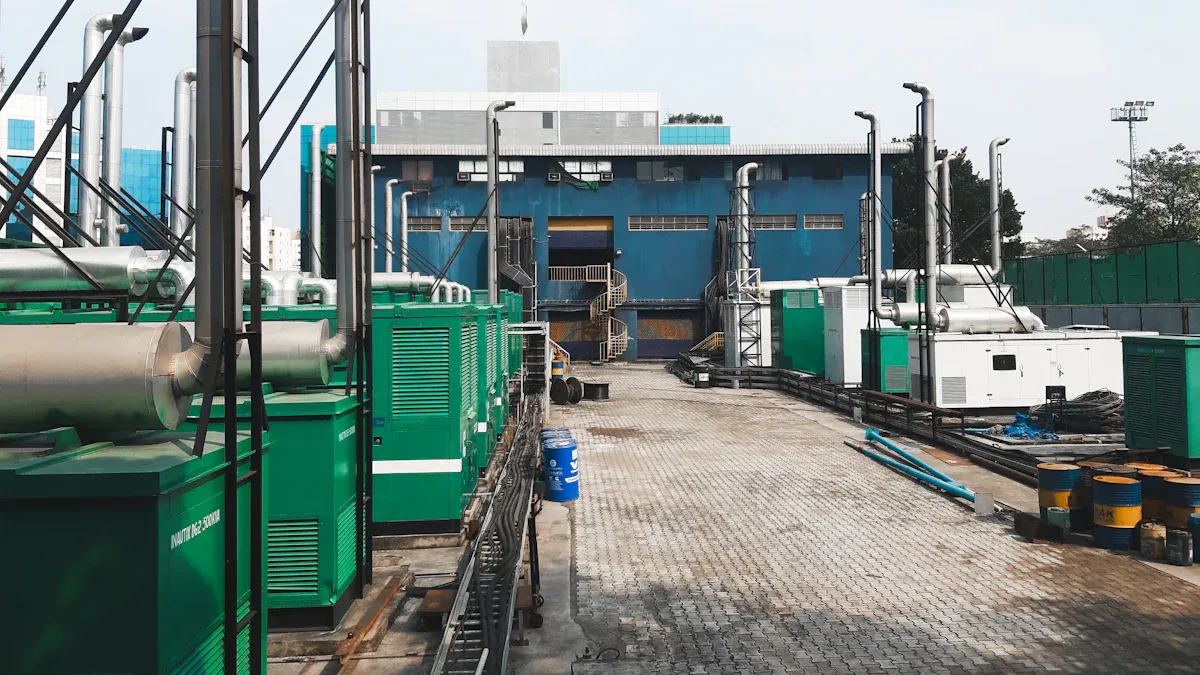
Industrial operations depend on uninterrupted power. Reliable diesel generators ensure that critical systems remain active during grid failures or planned outages. Facilities such as hospitals, data centers, and manufacturing plants require consistent energy to protect sensitive equipment and maintain productivity. Leading generator brands design their units with robust components and advanced automation. These features allow for rapid response to power interruptions and seamless transitions between grid and backup sources. Operators benefit from reduced downtime and improved safety, which supports business continuity in demanding environments.
Cost Management
High-efficiency industrial diesel generators help organizations control operational expenses. Companies implement several strategies to optimize energy use and reduce fuel consumption. The following table outlines common approaches and their impact on diesel usage:
| Strategy | Impact on Diesel Consumption | Notes |
|---|---|---|
| Energy Dispatch Strategies | Reduces diesel consumption and operating hours | Various strategies proposed for optimization |
| Energy Storage Technologies | Reduces reliance on diesel generators | Lithium-ion batteries significantly decrease usage |
| Demand Increase Management | Maintains low diesel consumption | Redox vanadium flow batteries manage demand spikes |
In addition to these strategies, businesses focus on:
- Reducing energy waste through regular system audits
- Utilizing renewable energy sources where possible
- Optimizing energy procurement to secure favorable rates
- Implementing demand control and response programs
These practices lower overall cost and extend the lifespan of generator assets. Automated monitoring systems also alert operators to maintenance needs, preventing unexpected repairs and further reducing expenses.
Environmental Impact
Modern industrial diesel generators address environmental concerns by meeting strict emissions standards. Manufacturers use advanced fuel injection systems and aftertreatment technologies to minimize pollutants such as nitrogen oxides and particulate matter. Many facilities integrate renewable energy and energy storage solutions to further decrease their carbon footprint. By adopting these innovations, companies demonstrate a commitment to sustainability while maintaining operational efficiency. Regulatory compliance not only protects the environment but also ensures continued access to global markets.
Model Highlights: What Sets Each Generator Apart
Caterpillar Advantages
Caterpillar stands as a benchmark in the industrial diesel generator market. The brand’s models deliver robust power and consistent performance in demanding environments. Many facilities rely on Caterpillar for mission-critical applications, such as hospitals and data centers. Operators appreciate the advanced control systems, which enable precise load management and rapid response during outages.
Key advantages include:
- High Load Acceptance: Caterpillar generators can handle full rated loads instantly, supporting operational continuity.
- Integrated Monitoring: Digital panels provide real-time data, simplifying maintenance and troubleshooting.
- Global Support: A vast dealer network ensures quick access to parts and technical expertise.
| Feature | Benefit |
|---|---|
| Full Load Acceptance | Immediate backup power |
| Advanced Controls | Optimized system management |
| Service Network | Reduced downtime |
Caterpillar’s focus on reliability and ease of service helps businesses control total cost and maintain productivity.
Cummins Features
Cummins offers a wide range of generator models tailored for industrial use. The company’s engineering team prioritizes fuel efficiency and emissions compliance. Cummins generators feature smart automation, which adjusts output based on demand and reduces energy waste.
Notable features include:
- Smart Controls: Automated systems optimize fuel consumption and monitor engine health.
- Flexible Configurations: Cummins provides solutions for both prime and standby power needs.
- Low Emissions: Advanced combustion technology meets strict environmental standards.
Cummins models excel in environments where efficiency and adaptability matter most. Operators benefit from reduced fuel expenses and simplified maintenance routines.
| Feature | Description |
|---|---|
| Automation | Real-time adjustment |
| Emissions Compliance | Meets global regulations |
| Modular Design | Scalable power solutions |
Cummins continues to innovate, delivering reliable generator options for diverse industries.
MTU Innovations
MTU, a Rolls-Royce brand, leads with cutting-edge technology and durability. The company integrates intelligent control systems that allow operators to monitor and manage generator performance remotely. MTU models support both prime and standby applications, making them suitable for critical infrastructure.
Innovative highlights include:
- Digital Automation: Operators can access diagnostics and performance data from any location.
- Extended Service Intervals: MTU designs generators for long-term use, reducing maintenance frequency.
- High Efficiency: Advanced engineering minimizes fuel consumption and environmental impact.
| Innovation | Impact |
|---|---|
| Remote Monitoring | Proactive maintenance |
| Long Service Life | Lower operating costs |
| Fuel Optimization | Enhanced efficiency |
MTU’s commitment to technology and reliability positions its generator models as top choices for businesses seeking dependable power and reduced operational cost.
Perkins Benefits
Perkins has earned a strong reputation for delivering reliable generator solutions to industrial users. The brand focuses on clean energy and long-term value. Perkins models meet strict global emissions standards, making them suitable for businesses that prioritize environmental responsibility. The company uses advanced fuel injection systems and aftertreatment technologies to reduce harmful emissions.
Industrial clients appreciate the longevity of Perkins generators. The manufacturer uses high-quality materials and precision engineering to extend the service life of each unit. Perkins offers comprehensive support programs, which help businesses maintain consistent operation and minimize downtime.
Key benefits of Perkins include:
- Compliance with EPA Tier 4 and EU Stage V emissions standards
- Advanced fuel systems for improved efficiency
- Long service intervals and simplified maintenance routines
- Strong global support network
Perkins generators deliver dependable performance in both primary and standby applications. Many industries rely on Perkins for backup power in critical situations.
Mitsubishi Durability
Mitsubishi stands out for its focus on durability and compact design. The company engineers its generators to withstand harsh environments and continuous operation. Mitsubishi models feature robust construction, which ensures reliable power delivery even in demanding industrial settings.
The compact footprint of Mitsubishi generators allows for easy installation in facilities with limited space. The brand integrates advanced combustion technology and electronic controls to optimize fuel use. These features help businesses achieve significant fuel savings over time.
A table below highlights Mitsubishi’s core strengths:
| Feature | Description |
|---|---|
| Rugged Construction | Withstands heavy use and tough sites |
| Compact Design | Fits in tight spaces |
| Fuel Efficiency | Reduces operating costs |
| Advanced Controls | Simplifies operation and monitoring |
Mitsubishi’s commitment to quality ensures that each generator provides reliable service for years. Industrial users value the low maintenance requirements and the ability to keep operations running smoothly.
Doosan Value
Doosan delivers value to industrial clients by combining heavy-duty engineering with cost efficiency. The brand designs its generators for use in construction, mining, and other demanding sectors. Doosan models feature reinforced frames and high-capacity alternators, which support reliable operation during extended periods of heavy load.
Doosan focuses on reducing total cost of ownership. The company integrates advanced fuel management systems to optimize consumption and lower expenses. Maintenance routines are straightforward, allowing for quick servicing and minimal downtime.
Key value points for Doosan include:
- Heavy-duty build for challenging environments
- Streamlined maintenance for reduced downtime
- Competitive pricing without sacrificing quality
- Efficient fuel management systems
Doosan generators offer a practical solution for businesses that need dependable power and want to control operational costs. The brand’s focus on reliability and efficiency makes it a preferred choice for many industrial applications.
Kohler, WIBA, Generac Distinctions
Kohler, WIBA, and Generac each deliver unique solutions for industrial clients seeking reliable power. Kohler focuses on large commercial installations. Their generator models feature low-noise operation and advanced energy management systems. Many hospitals and data centers select Kohler for its quiet running and robust build quality.
WIBA targets heavy-duty industrial environments. Their generators offer smart automation and remote monitoring capabilities. Operators can manage power systems from a central dashboard, which improves operational efficiency. WIBA integrates fuel-saving technologies and modular expansion options. Businesses benefit from flexible configurations that adapt to changing power needs.
Generac specializes in solutions for small and mid-sized businesses. Their generators are easy to install and maintain. Generac emphasizes budget-friendly pricing and straightforward operation. Many retail stores and light industrial facilities choose Generac for its reliability and simple controls.
Operators value Kohler for its quiet operation and high energy efficiency. WIBA stands out with advanced automation and remote management. Generac appeals to businesses seeking cost-effective and easy-to-use power solutions.
The following table highlights key distinctions among these brands:
| Brand | Target Market | Notable Features | Typical Use Cases |
|---|---|---|---|
| Kohler | Large commercial sites | Low-noise, energy management | Hospitals, data centers |
| WIBA | Heavy industry | Smart automation, remote control | Mining, manufacturing |
| Generac | Small/mid-sized firms | Easy installation, affordability | Retail, light industry |
Kohler, WIBA, and Generac continue to innovate. Their focus on reliability and efficiency ensures strong performance in diverse industrial settings.
LETON POWER Strengths
LETON POWER stands as a global leader in industrial generator manufacturing. The company serves clients in over 160 countries, offering solutions tailored to a wide range of industries. LETON POWER integrates advanced control systems and automation features, which simplify operation and monitoring for users.
The engineering team at LETON POWER prioritizes fuel efficiency and operational reliability. Their generators utilize high-quality engines from trusted brands such as Cummins and Perkins. LETON POWER also provides customization options, allowing businesses to select models that match specific power requirements and regional standards.
Key strengths of LETON POWER include:
- Global reach with support in more than 160 countries
- Flexible engine choices for diverse applications
- Advanced automation and remote monitoring capabilities
- Customizable solutions for both standard and standby use
- Factory-direct pricing and responsive customer service
LETON POWER delivers consistent performance and reliability. Industrial clients trust the brand for critical infrastructure, manufacturing, and data center operations.
LETON POWER’s commitment to innovation and customer satisfaction positions the company as a preferred partner for businesses seeking dependable power solutions. Their focus on efficiency and technology ensures that each generator meets the demands of modern industrial environments.
Choosing the Right Industrial Diesel Generator
Assessing Power Needs
Every industrial facility must determine its exact power requirements before selecting a generator. Engineers start by listing all equipment and systems that require backup or continuous power supply. They calculate the total wattage and consider both running and starting loads. Many industries use a safety margin of 10-20% above the calculated load to handle unexpected surges. Facilities with sensitive electronics or variable demand may need to factor in load fluctuations. Consulting with a qualified electrical engineer ensures accurate sizing and prevents issues such as overloading or inefficient operation.
Tip: Create a detailed inventory of all critical systems. Include HVAC, lighting, production lines, and emergency systems in the calculation.
Matching Features to Industry
Different industries have unique requirements for generator features. Data centers prioritize rapid automatic transfer switches and remote monitoring. Hospitals need models with low noise levels and advanced emissions controls. Construction sites often require portable units with rugged enclosures. Manufacturing plants may benefit from generators with load-sharing capabilities and modular expansion options.
The table below summarizes common industry needs and recommended features:
| Industry | Key Features Needed |
|---|---|
| Data Centers | Remote monitoring, fast ATS |
| Healthcare | Low noise, strict emissions |
| Construction | Portability, weatherproof housing |
| Manufacturing | Load sharing, modular expansion |
| Retail | Easy installation, compact design |
Selecting the right features ensures the generator integrates smoothly with existing systems and meets regulatory standards. Industry-specific customization can improve efficiency and reduce long-term costs.
Total Cost of Ownership
The initial purchase price represents only a portion of the total cost of owning a generator. Businesses must consider fuel consumption, routine maintenance, parts replacement, and potential downtime. High-efficiency models may cost more upfront but deliver savings through lower fuel use and reduced emissions penalties. Automated monitoring systems can help schedule maintenance and prevent costly breakdowns.
Warranty terms and after-sales support also impact total cost. Brands with strong service networks minimize downtime and ensure quick access to parts. Companies should request a detailed cost analysis from suppliers, including estimates for fuel, maintenance, and repairs over the expected lifespan.
Note: Investing in a reliable generator with comprehensive support can lower total expenses and protect critical operations.
Support and Warranty
Industrial operations rely on more than just the initial performance of a diesel generator. Reliable after-sales support and comprehensive warranty coverage play a crucial role in long-term operational success. Leading manufacturers design their service programs to minimize downtime and protect investments.
A strong warranty provides peace of mind. It covers major components such as the engine, alternator, and control systems. Most industrial diesel generator brands offer warranties ranging from one to five years, depending on the model and application. Some manufacturers allow customers to extend coverage for an additional fee. Extended warranties often include parts, labor, and travel costs for on-site repairs.
Support services ensure that generators remain operational during critical moments. Brands like Caterpillar, Cummins, and LETON POWER maintain global service networks. These networks provide rapid access to certified technicians, genuine parts, and technical expertise. Many companies offer 24/7 emergency response, which helps facilities recover quickly from unexpected failures.
The following table summarizes typical warranty and support features from top brands:
| Brand | Standard Warranty | Extended Warranty Options | Service Network Coverage |
|---|---|---|---|
| LETON POWER | 1-2 years or 1,000-2,000 hours | Available, up to 5 years | 160+ countries, factory-trained technicians |
| Caterpillar | 2 years or 2,000 hours | Up to 5 years | Global, 24/7 emergency support |
| Cummins | 2 years or 2,000 hours | Up to 5 years | Worldwide, rapid response |
| MTU | 2 years or 2,500 hours | Customizable | International, remote diagnostics |
| Perkins | 1-2 years | Up to 5 years | Global, local dealer support |
| Mitsubishi | 1-2 years | Up to 5 years | Regional, certified partners |
| Doosan | 1-2 years | Up to 5 years | Global, on-site service |
| Kohler | 2 years | Up to 5 years | North America, Europe, Asia |
| WIBA | 1-2 years | Up to 5 years | Regional, remote monitoring |
| Generac | 1-2 years | Up to 5 years | North America, dealer network |
Tip: Review warranty terms carefully. Some warranties require regular maintenance by authorized technicians to remain valid.
Many brands now offer digital platforms for remote monitoring and diagnostics. These tools alert operators to maintenance needs and potential faults before they cause downtime. LETON POWER, for example, provides remote monitoring options that help users track generator health and schedule service proactively.
Choosing a generator with strong support and warranty coverage reduces risk and ensures reliable power for critical operations. Industrial users should evaluate service response times, parts availability, and the reputation of local dealers before making a final decision.
Market Trends for Industrial Diesel Generators in 2025
Technology Advances
Manufacturers continue to push the boundaries of technology in the industrial diesel generator sector. Digital control systems now offer real-time monitoring and predictive maintenance alerts. These systems help operators identify issues before they cause downtime. Many new models feature remote diagnostics, allowing technicians to troubleshoot problems from anywhere.
Hybrid integration stands out as a major trend. Companies now combine diesel generators with renewable energy sources and battery storage. This approach reduces fuel consumption and lowers emissions. Engine designs have also improved. High-pressure fuel injection and advanced turbocharging deliver more power with less fuel.
Note: Smart automation features, such as automatic load balancing and self-testing, increase reliability and simplify daily operation.
Industry Shifts
Several industries have changed their approach to backup and prime power. Data centers and healthcare facilities demand higher reliability and faster response times. These sectors often require generators with advanced automation and remote management capabilities.
Manufacturing plants now focus on energy efficiency and cost control. Many companies invest in modular generator systems. These systems allow businesses to scale power output as their needs grow. Construction and mining sectors prefer rugged, portable units that withstand harsh environments.
A growing number of organizations seek solutions that support sustainability goals. They choose generators that integrate with solar or wind power systems. This shift reflects a broader commitment to reducing carbon footprints and meeting corporate social responsibility targets.
Regulatory Updates
Regulations for industrial diesel generators have become stricter worldwide. Governments enforce lower emission limits for nitrogen oxides, particulate matter, and carbon monoxide. The United States requires compliance with EPA Tier 4 Final standards. Europe enforces EU Stage V regulations.
Manufacturers respond by developing advanced aftertreatment systems. These include diesel particulate filters and selective catalytic reduction. Electronic engine controls ensure consistent compliance with local laws.
| Region | Key Regulation | Compliance Focus |
|---|---|---|
| USA | EPA Tier 4 Final | Low NOx, low PM |
| Europe | EU Stage V | Ultra-low emissions |
| Asia-Pacific | Varies by country | Increasingly stringent |
Tip: Companies should verify local requirements before purchasing new equipment. Non-compliance can result in fines or operational delays.
Manufacturers like LETON POWER and other global leaders continue to innovate, ensuring their products meet evolving standards and customer expectations.
Industrial users can rely on leading diesel generator brands such as LETON POWER, Caterpillar, Cummins, MTU, Perkins, Mitsubishi, Doosan, Kohler, WIBA, and Generac. These models deliver robust power, advanced automation, and high fuel efficiency.
- Assess operational needs and site requirements.
- Compare specifications for power output, emissions, and maintenance.
- Consult with industry experts or manufacturers like LETON POWER for tailored solutions.
Selecting the right generator ensures business continuity and cost control in 2025.
FAQ
What factors determine the right size of an industrial diesel generator?
Engineers calculate total power needs by listing all essential equipment and adding a safety margin. They consider both running and starting loads. Consulting with a qualified professional ensures accurate sizing for reliable performance.
How often should industrial diesel generators receive maintenance?
Manufacturers recommend routine maintenance every 250 to 500 operating hours. Key tasks include oil changes, filter replacements, and system inspections. Regular checks help prevent unexpected failures and extend equipment lifespan.
Do industrial diesel generators meet current emissions standards?
Top brands design generators to comply with EPA Tier 4 and EU Stage V standards. They use advanced fuel injection and aftertreatment systems to reduce emissions. Always verify local regulations before installation.
Can industrial diesel generators operate in extreme environments?
Manufacturers build generators with robust enclosures and cooling systems. These features allow reliable operation in harsh conditions, including high temperatures, humidity, and dust. LETON POWER offers models suitable for challenging sites.
What automation features improve generator reliability?
Modern generators include automatic transfer switches, remote monitoring, and self-diagnostics. These features ensure seamless power transitions and alert operators to maintenance needs, reducing downtime.
How do businesses reduce fuel costs with diesel generators?
Companies select high-efficiency models and use load management strategies. Advanced control systems optimize fuel consumption. Regular maintenance also improves efficiency and lowers operating expenses.
What warranty and support options do leading brands provide?
Most brands offer warranties from one to five years. Support includes global service networks, rapid parts delivery, and remote diagnostics. LETON POWER provides factory-trained technicians in over 160 countries.
Are industrial diesel generators compatible with renewable energy systems?
Many modern generators support hybrid integration. They can work alongside solar, wind, or battery storage systems. This setup improves efficiency and helps businesses meet sustainability goals.

