

I see an industrial standby generator as the unsung hero of every facility. When power outages strike, this powerful machine springs into action, automatically providing backup to keep the lights on and operations running smoothly. The peace of mind that comes with having an industrial standby generator is unmatched, ensuring business continuity no matter what challenges the grid presents. Saving money on an industrial standby generator purchase is just as rewarding as preventing costly downtime. Consider how smart cost-cutting with an industrial standby generator can benefit your business:
- Minimizes downtime by allowing employees to continue working during blackouts
- Maintains customer trust and strengthens your business reputation
- Reduces insurance costs thanks to dependable backup power
- Increases property value for commercial spaces
- Delivers long-term financial advantages by preventing lost revenue
I always say, an industrial standby generator is more than just equipment—it’s a true business lifesaver.
Key Takeaways
- Investing in an industrial standby generator minimizes downtime, allowing your business to operate smoothly during power outages.
- Choose a generator that fits your specific power needs to avoid overspending on unnecessary capacity.
- Consider the type of fuel for your generator; diesel offers efficiency, while natural gas is cleaner and often more cost-effective.
- Regular maintenance is crucial; it extends the life of your generator and ensures reliable performance when you need it most.
- Utilize your generator for peak shaving to reduce electricity costs during high-demand periods.
- Always negotiate the purchase price and ask for discounts or incentives to save money on your generator investment.
- Consult with experts to ensure compliance with regulations and to optimize your generator’s performance and cost-efficiency.
- Evaluate both new and used generators carefully; used units can offer savings if they come with a warranty and a solid maintenance history.
Industrial Standby Generator Basics
What Is an Industrial Standby Generator
I always picture an industrial standby generator as the ultimate safety net for any business. When the lights flicker and the machines go silent, this powerhouse jumps into action. It sits quietly, waiting for its moment to shine, then delivers electricity the instant power outages hit. I rely on a standby generator to keep my operations running, no matter what the weather or the grid throws at me.
Let me break it down. A standby generator is a permanently installed machine designed to provide automatic backup power. It’s not just for emergencies. It’s for peace of mind. Hospitals, data centers, and manufacturing facilities all trust these units to keep things humming when the unexpected happens.
Here’s a quick look at the most common types you’ll find in industrial and commercial settings:
| Type of Generator | Description | Applications |
|---|---|---|
| Standby Generators | Permanently installed, activate automatically during outages. | Hospitals, Data Centers, Manufacturing Facilities |
| Industrial Generators | Built for heavy-duty applications, capable of high-capacity power delivery. | Manufacturing Facilities, Warehouses |
I always say, if you want seamless power during outages, you need a standby generator. Businesses that can’t afford interruptions—like hospitals and data centers—depend on these machines every day.
Main Components Overview
I love taking things apart (in my mind, at least), so let’s peek inside a typical industrial standby generator. Every part plays a role in keeping the lights on and the machines running.
Engine and Alternator
The engine, also called the prime mover, is the heart of the generator. It burns fuel—diesel, natural gas, or another type—and turns that energy into motion. The alternator sits right next to it, converting the engine’s mechanical energy into electrical energy. I think of the engine as the muscle and the alternator as the brain, working together to deliver reliable power.
Here’s a table that shows what each main component does:
| Component | Function |
|---|---|
| Prime Mover | Converts fuel into mechanical energy to drive the alternator, producing electricity. |
| Alternator | Converts mechanical energy into electrical energy through a magnetic field. |
| Fuel System | Stores and supplies fuel for efficient engine operation, impacting performance and reliability. |
| Cooling System | Maintains optimal temperatures to prevent overheating and damage during operation. |
| Control Panel | Monitors and controls generator parameters for safe and efficient operation. |
Control Panel and ATS
The control panel is my favorite part. It’s like the cockpit of a plane, filled with buttons, screens, and sensors. It monitors everything—voltage, frequency, fuel levels—and keeps the generator running smoothly. The Automatic Transfer Switch (ATS) is the unsung hero. When the main power fails, the ATS instantly switches the load to the generator. I never have to lift a finger. The system does all the work.
Key Applications
I see standby generators everywhere I go. They’re essential for businesses that need continuous power. Hospitals use them to keep life-saving equipment running. Data centers rely on them to protect sensitive information. Manufacturing plants trust them to avoid costly downtime.
Here’s a quick list of where you’ll find these machines working hard:
- Hospitals and healthcare facilities
- Data centers and server farms
- Manufacturing plants and warehouses
- Commercial buildings and retail centers
- Construction sites and outdoor events
I always recommend choosing a generator that matches your specific needs. LETON POWER, a leading Chinese manufacturer, offers a wide range of diesel generator sets. They use engines from Cummins, Perkins, Weichai, Isuzu, and Kubota. I’ve seen them customize solutions for all kinds of industries, delivering affordable and reliable products that keep businesses running.
Tip: If you want a generator that fits your exact requirements, look for manufacturers like LETON POWER who offer customization. You’ll get the right size, the right engine, and the right features for your business.
I trust industrial standby generator units to keep my business safe from power outages. With the right standby generator, I never worry about losing power or missing a beat.
How Does a Standby Generator Work
Power Outage Detection
I always get a little thrill when I think about how a standby generator senses trouble before I even notice. The system sits quietly, monitoring the flow of electricity like a hawk watching its prey. When the lights flicker or the machines stop humming, the generator’s brain jumps into action. It doesn’t wait for me to panic. It detects power outages instantly.
Let me show you the clever technologies that make this possible:
| Technology | Description |
|---|---|
| Remote Monitoring System | Tracks generator status, battery voltage, oil pressure, fuel level, and coolant temperature in real-time. Alerts me to system errors so I can fix problems before they get worse. |
| Automatic Transfer Switch | Detects power loss and switches to generator power without me lifting a finger. Keeps downtime to a minimum during outages. |
I love how these systems work together. The remote monitoring system keeps me in the loop, sending alerts straight to my phone or computer. The automatic transfer switch stands guard, ready to leap into action the moment the utility power fails. I never have to worry about missing a beat.
Automatic Transfer Switch Function
The automatic transfer switch (ATS) is the real MVP in the world of standby generators. I picture it as a referee, always watching the game and ready to make the call. The ATS continuously monitors the utility mains. When it senses a power outage, it springs into action.
Here’s what happens behind the scenes:
- The ATS keeps an eye on the utility power supply, never blinking.
- When the power drops or disappears, the ATS activates the transfer switch.
- The switch moves the electrical load from the utility to the generator, making sure my equipment stays powered.
- The ATS prevents dangerous backfeeding into utility lines, protecting utility workers and my property.
- The control panel inside the ATS uses sensors to monitor every phase of the power supply, so the transition is smooth and safe.
- The ATS acts as a mediator, switching the load from the main power source to the generator and back again when the utility power returns.
I always appreciate how the ATS does its job without any drama. It’s fast, reliable, and keeps my business running during power outages. I never have to worry about flipping switches or making tough decisions in the dark.
Tip: If you want seamless backup power, make sure your standby generator has a high-quality ATS. It’s the secret to automatic, worry-free operation.
Generator Startup and Power Supply
Once the ATS gives the signal, the standby generator leaps into action. I love the sound of the engine roaring to life, ready to save the day. The startup process happens in the blink of an eye. Modern industrial standby generator systems can start up in just a few seconds after a power outage is detected. Some automatic generators kick in as quickly as 20 milliseconds. That’s faster than I can say “blackout!”
Most standby generators activate themselves within 30 seconds, but the latest models are even quicker. I barely notice the transition. The generator takes over, supplying backup power to my facility. My lights stay on, my machines keep running, and my customers never know there was a problem.
Here’s how the process unfolds:
- The ATS detects the outage and signals the generator.
- The generator engine starts up automatically.
- The alternator produces electricity, sending it through the control panel.
- The system supplies backup power to all connected loads.
- I get real-time updates from the remote monitoring system, so I know everything is working perfectly.
I always feel confident knowing my standby generator is ready to jump in at a moment’s notice. It’s like having a superhero on call, protecting my business from the chaos of power outages.
Restoration and Shutdown
I always feel a sense of relief when the utility power returns after a blackout. My standby generator has done its job, keeping my business safe and sound. Now, it’s time for the restoration and shutdown process. This part is just as important as the startup. If I rush or skip steps, I risk damaging equipment or causing safety hazards.
First, I watch the automatic transfer switch (ATS). The ATS senses when the main power is stable again. It waits for a few moments to make sure the power isn’t flickering. I like to think of the ATS as a cautious friend who never jumps the gun. When the utility power proves reliable, the ATS switches my facility back to the main grid. My generator gets the signal to begin shutdown.
I always follow a careful shutdown procedure. Here’s how I do it:
- I make sure the shutdown is uninterrupted. Even if I need to troubleshoot a deenergized section, I never stop the process halfway.
- I check that all circuits are deenergized. This step isolates any ground fault quickly and keeps the faulty circuit off until repairs are complete.
- I reenergize the system circuit by circuit. I keep my eyes on the alarm lights. If anything looks off, I stop and investigate before moving forward.
I love the feeling of control during restoration. I don’t just flip a switch and hope for the best. I take my time, watching each part of the system come back to life. My generator cools down, the engine slows, and the alternator stops spinning. The control panel gives me a final report, showing that everything is safe.
Here’s a quick table that shows my shutdown checklist:
| Step | What I Do |
|---|---|
| Uninterrupted Shutdown | Let the generator finish its cycle without stopping midway. |
| Deenergization | Make sure all circuits are isolated before repairs. |
| Circuit Restoration | Bring circuits back online one at a time, watching for alarms. |
| Final Cooldown | Allow the engine and alternator to cool before full shutdown. |
I always remember that how does a standby generator work isn’t just about starting up during power outages. The restoration and shutdown process keeps my equipment safe and ready for the next emergency. I trust my system to protect my business, but I never skip the final steps. Safety and reliability matter most.
Tip: Never rush the shutdown process. Take your time, follow each step, and keep your facility safe for the next time the lights go out.
Assess Power Needs for Industrial Generators
Load Calculation
I always start my generator journey with a calculator in hand and a sense of adventure. Figuring out how much power my facility needs feels like solving a puzzle. I want my standby generator to handle everything I throw at it, but I don’t want to overspend on unnecessary capacity. I use a few tried-and-true methods to get the numbers right. Sometimes I measure the full-load current during peak hours. Other times, I dig through my utility bills to find the highest power usage and add a little extra for safety. If my facility has big motors, I calculate their starting current and make sure my generator can handle those surges. For smaller spaces, I estimate based on square footage and the type of business.
Here’s a handy table I use to compare my options:
| Method Type | Description |
|---|---|
| Full Load Capacity by Measurement | Measure full-load current during peak usage and calculate required generator capacity accordingly. |
| Full Load Capacity by History | Analyze utility billing to find maximum power usage and add reserve capacity. |
| Full Load Capacity with Motor Use | Calculate starting current for motors and total power requirements, adding reserve capacity. |
| Square Footage Measurement | Use square footage to estimate generator size based on specific commercial applications. |
I always double-check my math. A well-sized standby generator means I get reliable backup power without wasting money.
Critical vs. Non-Critical Loads
I love making lists, especially when it comes to deciding what stays on during an outage. My industrial standby generator needs to power the essentials, but not every light or gadget deserves a spot on the backup team. I split my equipment into two groups: critical and non-critical loads.
- Critical Loads: Emergency lighting, security systems, essential HVAC, computer systems, manufacturing equipment, and refrigeration systems. These keep my business safe and running.
- Non-Critical Loads: Air conditioning in office areas, decorative lighting, and non-essential equipment. I can turn these off when the power goes out.
I always focus on the critical stuff first. My standby generator handles the must-haves, and I let the rest wait until the grid comes back.
Tip: Make a list of your critical loads before shopping for a standby generator. You’ll save money and avoid surprises during an outage.
Expert Consultation
I never go it alone when sizing a standby generator. I call in the experts. Generator consultants know the ins and outs of power needs, regulations, and cost-saving tricks. They help me dodge delays and bottlenecks, especially when connecting to the grid. They make sure my application meets all the latest codes and policies. Sometimes, they suggest design tweaks or better interconnection points that save me money.
Here’s why I always ask for help:
- Reduced risk of delays—no more waiting around for approvals.
- Improved regulatory compliance—my generator meets every rule.
- Optimized project costs—consultants find ways to cut expenses.
I trust the pros to guide me. With their advice, my standby generator delivers backup power exactly when I need it, without breaking the bank.
Compare Commercial Backup Generators and Brands
Diesel vs. Gas Options
When I shop for commercial backup generators, I always face the classic showdown: diesel or gas? Each type has its own personality. Diesel generators remind me of a reliable old truck—tough, efficient, and built to last. Gas generators feel more like a speedy sports car—quick, clean, but needing a bit more attention.
Here’s a table I use to compare the two:
| Feature | Diesel Generators | Natural Gas Generators |
|---|---|---|
| Efficiency | 20-40% more efficient than gas | Less efficient than diesel |
| Lifespan | Can last up to twice as long | Shorter lifespan compared to diesel |
| Price | Higher upfront cost, lower operating costs | Lower upfront cost, higher maintenance costs |
| Maintenance | Requires regular maintenance | Requires more frequent maintenance |
| Emissions | Higher emissions than natural gas | Lower emissions, more environmentally friendly |
I always lean toward standby diesel generators when I want something that sips fuel and keeps running for years. They cost more at first, but they save me money in the long run. Gas generators tempt me with their lower price tag and cleaner emissions, but I know they need more checkups and don’t last as long. I like to weigh my priorities—efficiency, budget, and environmental impact—before making a choice.
Tip: If you want a generator that goes the distance, standby diesel generators are hard to beat. If you care most about clean air, natural gas might win your heart.
LETON POWER and Other Brands
I love exploring the world of commercial backup generators. LETON POWER always stands out to me. Their range covers everything from compact units to massive powerhouses. I see their products in factories, hospitals, and even at big outdoor events. LETON POWER, through Sichuan Leton Industry Co., Ltd., offers units priced between $2,500 and $2,900, with an 18-month warranty and solid customization options. Their large team and ISO certification give me confidence in their quality.
| Supplier | Unit Price Range (FOB USD) | Warranty | Customization Options | Notable Advantages |
|---|---|---|---|---|
| Sichuan Leton Industry Co., Ltd. | $2,500 – $2,900 | 18 months | Medium | Large team, scalable production, ISO-certified |
I notice LETON POWER’s on-time delivery rate of 99.2%. That tells me they know how to keep promises. Their team of over 330 employees keeps things running smoothly. When I compare brands, I look for reliability, range, and support. LETON POWER checks all my boxes.
Reliability and Warranty
When I invest in a standby generator, I want peace of mind. I always check the warranty details before I buy. Some brands offer coverage that lasts for years, while others focus on parts and labor for a set period. Here’s a quick look at what I’ve found:
| Brand | Warranty Duration | Coverage Details |
|---|---|---|
| Perma Power, LLC | Varies by model | Covers parts and labor for a specific period after installation. |
| Smart Power Systems | 6 years or 1000 hours | Covers defects in materials and quality, transferable to subsequent owners. |
I like warranties that cover both parts and labor. Transferable warranties catch my eye, too. They add value if I ever sell my equipment. LETON POWER’s 18-month warranty gives me confidence. I know I can count on support if something goes wrong.
Note: Always read the fine print on warranties. A good warranty can save you from headaches down the road.
When I compare commercial backup generators, I focus on efficiency, reliability, and support. I want a standby generator that fits my needs and keeps my business running, no matter what.
New vs. Used Industrial Standby Generators
Pros and Cons of New Units
I always get excited when I see a shiny new standby generator sitting on the shop floor. The paint gleams, the engine purrs, and the control panel looks like it belongs in a spaceship. Buying new feels like driving off in a brand-new car. I know I’m getting guaranteed factory performance, and the manufacturer stands behind every bolt and wire. Peace of mind comes standard. Of course, my wallet sometimes groans at the higher price tag. New units can be tough to find if demand spikes or supply chains slow down. I put together a table to help me weigh my options:
| Advantages | Disadvantages |
|---|---|
| Guaranteed factory performance | Higher cost |
| Backed by the manufacturer | Limited availability |
| Peace of mind for users |
I always remind myself that a new standby generator means fewer surprises and more reliability, especially when my business depends on uninterrupted power.
Used Units Under Warranty
Sometimes, I spot a used standby generator with a warranty still attached. That’s like finding a treasure chest with a lock and the key included. Used units cost less, and if the warranty covers parts and labor, I feel much safer. I always ask the seller about the warranty details. Some warranties transfer to new owners, which adds extra value. I check the paperwork and make sure the coverage matches my needs. If the unit comes from a reputable brand and has a solid maintenance history, I know I’m getting a good deal without sacrificing reliability.
Inspection Tips
I never buy a used standby generator without rolling up my sleeves and doing a thorough inspection. I treat it like a detective case. First, I quiz the seller about maintenance and repairs. I want to know if they fixed problems quickly or let issues pile up. I always review the maintenance log because it tells me if the previous owner cared for the generator or ignored warning signs.
Here’s my inspection checklist:
- Check the seller’s knowledge on maintenance and repairs.
- Conduct a visual inspection for wear, cracks, or corrosion.
- Replace bearings, bushings, bolts, and fasteners as a precaution.
- Inspect welds and electrical components for integrity.
- Request a load test to evaluate efficiency and output.
- Check for rust, dents, and oil leaks.
- Inspect wiring for frayed wires and loose connectors.
- Look for excessive vibration or soot buildup in the engine.
I always ask for a load-bank test. This test proves the standby generator can handle full-load conditions and keeps voltage and frequency steady. I also dig into the generator’s past. I find out how and where it was used, which helps me spot hidden damage. I consider the age and operational hours to estimate how much life remains.
Tip: Never skip the inspection. A careful check saves me from costly repairs and keeps my business running when the lights go out.
Fuel Choices and Cost Efficiency

Fuel Efficiency and Availability
I always feel like a scientist in a lab when I compare fuel types for my standby generator. Each option brings its own quirks and perks. I want a fuel that keeps my generator humming without draining my wallet or causing headaches when I need a refill. Here’s a table I use to break down the main choices:
| Fuel Type | Efficiency | Environmental Impact | Availability |
|---|---|---|---|
| Gasoline | Moderate | High CO2 emissions | Widely available |
| Diesel | High | NOx and PM pollutants | Commonly available |
| Natural Gas | High | Lower CO2 emissions | Reliable via pipelines |
| Propane | Moderate | Lower CO2 emissions | Limited compared to gasoline |
| Biofuels | Variable | Potentially sustainable | Depends on local production |
I always lean toward diesel or standby natural gas generators. Diesel packs a punch and is easy to find, but standby natural gas generators win me over with their clean burn and steady supply. I never want to scramble for fuel during a storm, so I check my local infrastructure before making a choice.
Tip: I focus on fuels with lower greenhouse gas emissions and high energy density. I make sure my area supports the fuel I pick, so my standby generator never lets me down.
Long-Term Operating Costs
I love crunching numbers, especially when it saves me money over time. The fuel I choose for my standby generator affects my budget for years. Diesel costs more and jumps around with the market. Natural gas stays steady and usually costs less. Maintenance also plays a big role. Diesel generators need more TLC, while standby natural gas generators mostly ask for routine checks.
Here’s a quick comparison:
| Factor | Diesel | Natural Gas |
|---|---|---|
| Fuel Cost | Higher, fluctuates | Lower, more stable |
| Maintenance | More complex | Simpler |
| Emissions | Higher | Cleaner |
I watch the news for oil prices, knowing my diesel standby generator might cost more if markets shift. Natural gas gives me peace of mind with predictable bills. I always factor in maintenance, since diesel needs regular fuel management and more parts replaced.
Note: I never forget that fuel prices can change fast. I plan for surprises and pick a standby generator that fits my long-term budget.
Environmental Considerations
I care about the planet, so I pay attention to emissions and regulations. My standby generator must meet local rules, especially in cities. Diesel engines work hard but face stricter standards. Natural gas generators burn cleaner and often breeze through permitting.
Here’s a table that helps me keep track of emission standards:
| Tier Level | Description | Emission Limits |
|---|---|---|
| Tier 1–2 | Older standards, used units | N/A |
| Tier 3 | Mid-range compliance | N/A |
| Tier 4 Final | Strictest for new generators | N/A |
I see more businesses choosing standby natural gas generators because they emit fewer nitrogen oxides and almost no particulate matter. This makes life easier when I need permits or want to avoid fines. I always check the latest regulations before buying a standby generator, so I stay ahead of the curve.
Callout: I pick fuels and generators that help me breathe easier and keep my business in good standing with regulators.
I always weigh fuel efficiency, long-term costs, and environmental impact before I buy a standby generator. My choices today shape my business for years to come.
Installation, Maintenance, and Cost Strategies
Installation Logistics
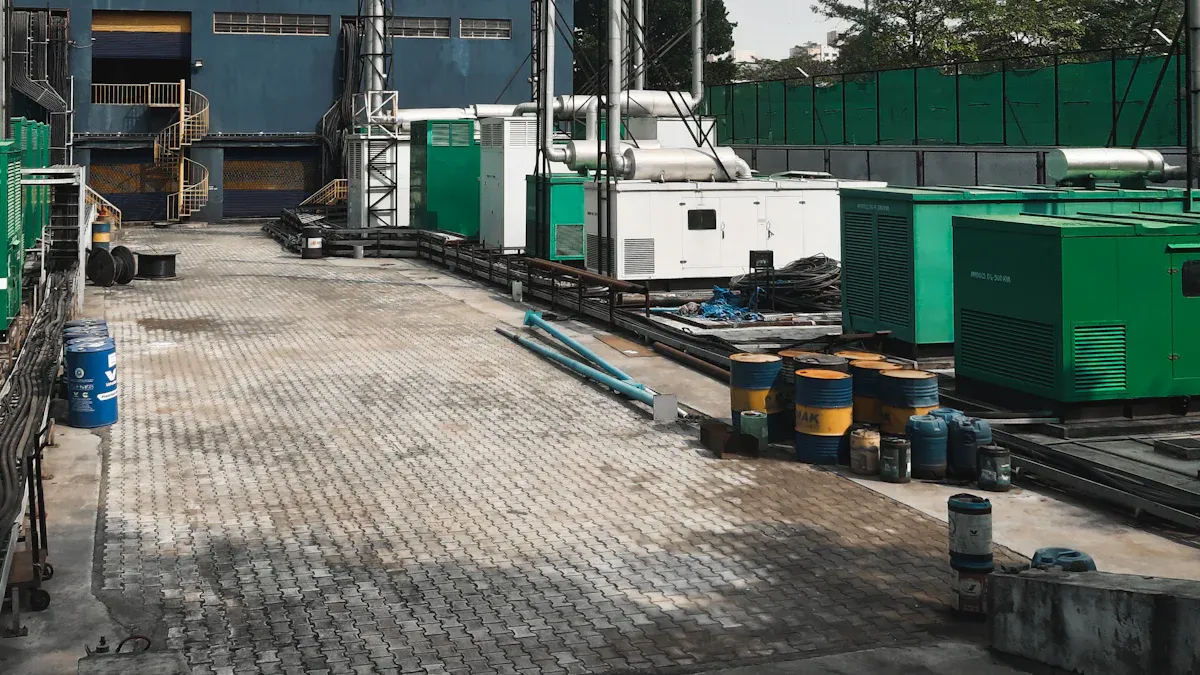
I always say, installing a standby generator is like setting up a fortress for your business. I never just drop it anywhere and hope for the best. I check every detail before the first bolt goes in. Here’s my checklist for a smooth installation:
- I scout the perfect location, making sure I follow all local codes and regulations.
- I look for a spot with plenty of airflow. My generator hates to overheat, so sometimes I add remote cooling systems.
- I plan the fuel delivery system. Outdoor and indoor tanks keep my standby generator ready for action.
- I fight noise and vibration with sound barriers and vibration pads. My neighbors thank me.
- I lock down security, letting only trusted folks near the generator.
- I keep the area clear of debris and watch wind patterns. I don’t want leaves piling up around my investment.
- I build barriers for severe weather. Flood-prone? I raise the generator up high.
- I double-check sound ordinances and keep the generator far enough from property lines.
- I make sure technicians can reach the generator, even in a blizzard.
When I want the job done right, I call in LETON POWER’s experts. Their team handles everything from site surveys to final testing. I get peace of mind and a generator that’s ready for anything.
Maintenance Planning
I treat my standby generator like a prized race car. Regular maintenance keeps it running at top speed. I never skip a checkup, because I know a little care now saves me from big headaches later. Here’s my go-to maintenance schedule:
| Maintenance Task | Frequency |
|---|---|
| Routine Inspections | Weekly/Monthly |
| Load Testing | Monthly/Quarterly |
| Oil and Filter Changes | Every 100-200 hours or Annually |
| Fuel System Maintenance | Annually |
| Cooling System Check | Regularly |
| Battery & Electrical Inspections | Regularly |
| General Inspections with Each Use | Each Use |
| Weekly Generator Maintenance | Weekly |
| Monthly Commercial Generator Maintenance | Monthly |
| Annual Inspections | Annually |
I stick to this plan because it prevents surprise breakdowns, extends the life of my standby generator, and guarantees backup power when I need it most. I always say, a well-maintained generator is a happy generator.
Peak Shaving and Operational Costs
I love saving money, and peak shaving is my secret weapon. When utility rates spike during busy hours, I fire up my standby generator to cover my facility’s needs. This trick slashes my demand charges and keeps my bills in check.
- I use my generator during peak hours to dodge high utility rates.
- I reduce the amount of electricity I buy from the grid when prices soar.
- I keep my business running smoothly, never missing a beat.
- I lower my peak demand curve, which means long-term savings.
Peak shaving lets me use my standby generator for more than just emergencies. I turn it into a money-saving machine. My accountant loves it, and so do I.
Tip: Don’t let your standby generator sit idle. Use it for peak shaving and watch your operational costs drop.
Negotiation and Incentives
I always feel like a detective when I walk into a negotiation for a standby generator. I put on my best poker face, grab my notepad, and get ready to hunt for hidden deals. The price tag on a generator might look set in stone, but I know there’s often room to wiggle. I never settle for the sticker price. I ask questions, I push for extras, and I keep my eyes peeled for incentives that can save me a bundle.
Here’s my go-to strategy for getting the best deal:
- Do My Homework
I research prices from different suppliers. I compare features, warranties, and after-sales support. I walk in with facts, not just hope. - Ask for Discounts
I never feel shy about asking for a better price. Sometimes, suppliers offer discounts for bulk orders, repeat customers, or even just for asking nicely. - Look for Freebies
I love a good freebie. I ask about free installation, extended warranties, or complimentary maintenance visits. These perks add up fast. - Check for Incentives
I always ask about government or utility incentives. Some regions offer rebates for energy-efficient standby generator models or for using cleaner fuels. I check local programs and bring them up during negotiations. - Negotiate Payment Terms
I sometimes ask for flexible payment plans. Spreading out payments can help my cash flow, especially when I’m investing in backup power for the long haul.
Tip: I always get every promise in writing. If a supplier offers a discount or a free service, I make sure it’s on the contract.
Here’s a quick table I use to keep track of possible incentives:
| Incentive Type | What to Ask For | Who Offers It |
|---|---|---|
| Price Discounts | Lower unit price, bulk order savings | Suppliers, manufacturers |
| Free Installation | Waived setup fees | Suppliers |
| Extended Warranty | Extra months or years of coverage | Manufacturers |
| Maintenance Packages | Free or discounted service visits | Suppliers, service teams |
| Government Rebates | Cash back for efficient models | Local/state programs |
When I work with a reputable manufacturer like LETON POWER, I find they often have special offers or seasonal promotions. Their team sometimes throws in free site surveys or after-sales support, which makes my decision easier. I always ask about current deals, because I never know what I might score.
Negotiating for a standby generator feels like a game, and I play to win. I keep my cool, stay polite, and remember that every dollar saved is a dollar I can invest elsewhere in my business. With the right approach, I turn a big purchase into a smart investment.
I see an industrial standby generator as my business’s silent guardian. It leaps into action during power outages, delivering backup power when I need it most. I always look beyond the sticker price. I check maintenance, fuel, and compliance costs. Here’s a quick table I use to compare generator types:
| Generator Type | Acquisition Cost | Maintenance Cost | Operational Cost |
|---|---|---|---|
| Diesel | Low | Moderate | Low |
| Gasoline | Moderate | High | Moderate |
| Propane | High | Moderate | High |
- Set a maintenance schedule.
- Monitor fuel systems.
- Follow regulations.
Choosing a reliable standby generator and caring for it pays off. I protect my equipment, keep my business running, and save money for years.
FAQ
How do I know what size generator I need?
I grab my calculator and check my facility’s peak power usage. I add up all the critical equipment. I ask an expert if I get stuck. Picking the right size keeps my backup power source running strong.
Can I use my standby generator for more than emergencies?
I use my generator for peak shaving during high utility rates. I save money and keep my business humming. Some folks even use standby systems for planned outages or maintenance.
How often should I maintain my generator?
I stick to a schedule. I check my generator weekly, test it monthly, and service it yearly. Regular maintenance keeps my generator ready for action and avoids surprise breakdowns.
What fuel type is best for my business?
I look at local fuel availability and my budget. Diesel works well for long-term reliability. Natural gas burns cleaner and costs less over time. I pick what fits my needs and local rules.
Will my generator be noisy?
I choose silent models or add sound barriers. I check local noise ordinances before installation. My neighbors appreciate the quiet, and my business stays peaceful.
How long does installation take?
I plan ahead and work with professionals. Most installations take a few days to a week. Site prep, permits, and testing add time, but I get reliable backup power when it’s done.
Can I get incentives or rebates for buying a generator?
I always ask suppliers about discounts, free installation, or extended warranties. I check local government programs for rebates on energy-efficient models. Every little bit helps me save.
What happens if my generator fails during an outage?
I keep my generator maintained and test it often. If it fails, I call my service team right away. Reliable standby systems rarely let me down, but I always have a plan just in case.

