

You should know the top 10 diesel generator parts for backup power in 2026. These parts are the engine, alternator, fuel system, cooling system, lubrication system, exhaust system, control panel, starting system, filters, and baseframe. If you understand each part, your generator will work better. You will get more reliability, save fuel, and have good performance. You can stop common problems like not starting, shutting down, and overheating. Use maintenance tips and good parts to help. This knowledge lets you fix problems and keep your generator running well.
Key Takeaways
- Learn the main parts of a diesel generator. These are engine, alternator, fuel system, cooling system, lubrication system, exhaust system, control panel, starting system, filters, and baseframe.
- Knowing each part helps make the generator work better. It also helps the generator last longer and use less fuel.
- Doing regular maintenance is important. Changing oil and filters stops problems like overheating and starting trouble.
- Use good replacement parts. This helps your generator run well and stay working for a long time.
- Check the fuel system often. This helps stop problems with fuel delivery and engine power.
- Keep the cooling system clean and working. This stops overheating and keeps the engine safe.
- Watch the control panel for warnings and information. This helps you find problems early and keep things safe.
- Write down all maintenance work. This helps you know how healthy your generator is and plan for future care.
Diesel Generator Parts Overview
Key Components List
It is important to know the main parts of a diesel generator. Each part does something special. The table below shows the most important parts and what they do:
| Component | Function |
|---|---|
| Engine | Gives power to the generator; bigger engines make more power. |
| Alternator | Changes engine power into electricity. |
| Fuel System | Holds diesel and sends clean fuel to the engine. |
| Voltage Regulator | Keeps the voltage steady so devices stay safe. |
| Battery Charger | Makes sure the battery stays charged so the generator can start. |
| Control Panel | Lets you watch and control how the generator works. |
Other important parts are the cooling system, lubrication system, exhaust system, filters, and baseframe. These parts work together to give you power when you need it.
Importance of Each Part
All parts in a diesel generator help it work well. The engine uses fuel to make energy. The alternator turns this energy into electricity. The fuel system gives the engine clean fuel. The cooling system keeps the engine from getting too hot. The lubrication system helps parts move easily and last longer. The exhaust system gets rid of bad gases. The control panel helps you check and run the generator. The starting system helps the generator turn on fast. Filters stop dirt from getting inside. The baseframe holds everything and makes the generator quieter.
Tip: Use good parts and take care of your generator often. This helps stop problems like overheating, not starting, or shutting down.
Taking care of each part is important. Changing oil and filters stops engine damage. Checking the battery helps the generator start when needed. Keeping the fuel system clean protects the engine. Looking after the cooling system stops overheating. Testing the generator makes sure all parts work together. If you forget maintenance, small problems can become big ones. This can cost a lot and make you lose backup power.
Always use good parts and follow the maker’s rules. This helps your generator last longer and work better. When you know what each part does, you can find problems early. This keeps your generator ready for emergencies.
Diesel Engine Replacement Parts
Engine Function
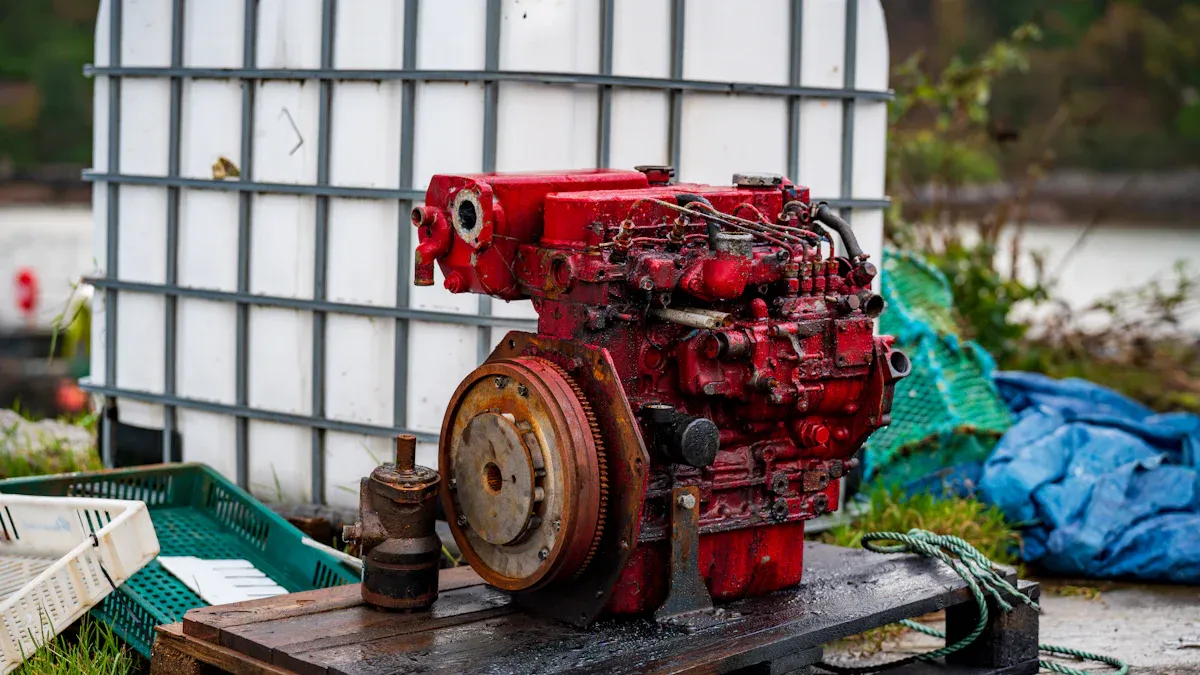
The engine changes diesel fuel into power. It does this by burning fuel inside. This burning makes energy that moves parts. These moving parts help the alternator make electricity. The engine in a diesel generator works like a car engine. It burns fuel and uses moving parts to keep working. If you know how the engine works, you will see why diesel engine replacement parts are important for reliability.
Common Engine Parts
Diesel engine replacement parts help your generator work well. Some parts wear out faster than others. These parts keep the engine strong and stop breakdowns.
Pistons
Pistons move up and down inside the engine. They push against the fuel mixture to make power. Pistons work very fast and can break if not replaced. You should check pistons for damage when doing maintenance.
Crankshaft
The crankshaft turns the pistons’ up-and-down motion into spinning. This spinning helps the alternator make electricity. The crankshaft is a key diesel engine replacement part. If it wears out, the engine cannot make power. You should look for cracks or wear on the crankshaft.
Cylinder Head
The cylinder head sits on top of the engine block. It seals the combustion chamber and holds valves and injectors. The cylinder head helps the engine work well. If it gets damaged, you lose power and reliability. You should check the cylinder head for leaks and cracks.
Here is a table that shows which engine parts wear out most:
| Engine Part | Susceptibility to Wear and Tear |
|---|---|
| Cylinder Liner | Can get damaged from heat and moving parts |
| Piston | Works fast and can break if not replaced |
| Connecting Rod | Gets damaged from heat and moving parts |
You should also check other diesel engine replacement parts. These include oil filters, fuel filters, block heaters, batteries, belts, and voltage regulators. These parts often need to be replaced to keep your generator working.
- Oil filter
- Fuel filter
- Block heater
- Battery
- Belt
- Spark plugs
- Voltage regulators
Using original diesel engine replacement parts helps your generator run better. Original parts fit your engine and work with other parts. They help save energy and lower the chance of damage. Good parts give you better performance and help your generator last longer.
Maintenance Tips
You can keep your diesel generator parts working with regular care. Follow these tips to protect your engine and backup power:
Tip: Always use the manufacturer’s manual for maintenance. This helps you avoid mistakes and keeps your generator reliable.
- Look at the generator often for leaks and rust.
- Check oil and coolant levels.
- Change the oil filter and fuel filter every year.
- Check belts for damage and replace them if needed.
- Drain and change antifreeze when needed.
- Keep battery terminals clean and check battery health.
- Check air intake and fuel systems for blockages or leaks.
- Test the exhaust system for leaks.
- Run the generator every month to make sure all diesel engine replacement parts work together.
If you use good diesel engine replacement parts and do regular care, your generator will work better and last longer. You protect your backup power and avoid expensive repairs.
Alternator Parts
Alternator Role
It is important to know how the alternator works. The alternator turns engine energy into electricity. This gives you backup power when you need it. The alternator helps the engine work well. It keeps the voltage steady to protect your devices. If voltage changes too much, your equipment can break. The alternator stops overloads and underloads. This helps your generator stay reliable. When you learn about the alternator, you see why it matters.
Key Alternator Components
The alternator has many important parts. These parts work together to make power. Knowing these parts helps you find problems early. This keeps your generator working well.
Rotor
The rotor moves inside the alternator. It acts like an electromagnet. When the engine spins the rotor, it makes a magnetic field. This field helps create electricity. If the rotor breaks, your generator cannot make power. You should check the rotor during maintenance.
Stator
The stator does not move. It surrounds the rotor. The stator helps make a magnetic field. It works with the rotor to make power. If the stator wears out, you may lose backup power. You should look for damage or wear during maintenance.
Here is a table that shows the main alternator parts and what they do:
| Component | Function |
|---|---|
| Stator | Makes a magnetic field needed for electric power. |
| Rotor | Acts as an electromagnet and helps make voltage. |
| Diode Rectifier Assembly | Changes AC to DC for steady power. |
| Voltage Regulator | Keeps voltage steady to protect equipment. |
| Cooling Mechanisms | Controls temperature for safe and long alternator use. |
Tip: Use good parts for your alternator. This helps your generator last longer and keeps your backup power safe.
Troubleshooting
You may have problems with your alternator. Knowing common issues helps you fix them fast. This keeps your generator reliable. Here are some problems you might see:
- Strange voltage between the neutral line and ground. This can mean short circuits or bad insulation. You should check for these problems and fix them soon.
- Alternator gets too hot. This happens if loads are not balanced, air ducts are blocked, or lubrication is poor. You should check the engine and cooling system to stop overheating.
- Alternator has too much current. This can be caused by overload or short circuits. You should lower the load or fix faults to protect your generator.
If you check your alternator often and use good replacement parts, you can stop many problems. Regular care helps you find issues early. You keep your generator ready for emergencies. Always use good parts to make your generator last longer and work better.
Fuel System Parts
Fuel Tank
You need a fuel tank to store diesel for your generator. The fuel tank supplies the engine with enough fuel for several hours of operation. Most tanks can run the engine for 6 to 12 hours. The tank must stay clean and free from water or dirt. If water gets inside, it can damage the engine and reduce reliability. You should check the tank often for leaks or rust. A clean tank helps you avoid problems with the engine and keeps your backup power ready.
Fuel Lines
Fuel lines carry diesel from the tank to the engine. These lines must stay tight and free from leaks. If air enters the fuel lines, the engine may not start or run well. You should inspect the lines for cracks or loose connections. Good fuel lines help the engine get the right amount of fuel. If you see leaks, fix them right away to protect the engine and other diesel generator parts. Clean fuel lines also help the engine work with other components, like the fuel supply pump and injectors.
Fuel Filters
Fuel filters remove dirt and water from the diesel before it reaches the engine. Clean fuel is important for engine health and reliability. If the filter gets clogged, the engine may lose power or stop running. You should replace fuel filters as part of regular maintenance. Some systems use a fuel water separator to remove water before it reaches the engine. This helps protect the engine from damage. Quality parts, like good filters, keep the engine safe and help your generator last longer.
Here is a list of the main diesel engine replacement parts in the fuel system:
- Day fuel tank
- Fuel water separator
- Fuel strainer
- Fuel supply pump
- Fuel filter
- Fuel injection pump
- Injectors
- Return line to the day tank
Each part works together to deliver clean fuel to the engine. If any part fails, the engine may not run. Problems like leaks, dirt, or water in the fuel can stop the engine and reduce backup power. You should use quality parts and check the system often. This helps you avoid costly repairs and keeps your generator ready for emergencies.
Tip: Run your generator regularly. This helps prevent air from building up in the fuel system and keeps the engine working well.
A good fuel system protects the engine and supports the reliability of your diesel generator. When you use quality parts and follow a maintenance plan, you help your generator provide power when you need it most.
Maintenance Practices
You should use good maintenance steps to keep your diesel generator fuel system working well. These steps help protect the engine and other parts. Taking care of the fuel system makes your generator more reliable. It helps make sure you have power when you need it.
Check the fuel tank often. Try to keep the tank almost full. This stops water from forming inside. Water in the tank can hurt the engine and other parts. Change the diesel fuel in storage tanks every three to six months. Old fuel can cause problems for the engine. Use stabilizers if you store fuel for a long time. Stabilizers help slow down fuel breakdown.
Fuel polishing is important. It cleans the fuel and removes dirt or water. Clean fuel helps the engine run well. It protects diesel engine replacement parts. Test and polish fuel if you do not use it soon. If you find water, use biocides to stop bacteria. This keeps the engine safe and helps reliability.
Drain fuel filters often to get rid of water. Water in filters can reach the engine and hurt diesel engine replacement parts. Check the fuel system during every maintenance check. Look for leaks, rust, or loose connections. Make sure all parts work together. Fix problems right away to protect the engine.
Run your generator often. This uses stored fuel before it gets old. Running the generator helps you find engine problems early. During inspections, check coolant, oil, and the fuel system. These steps help keep the engine and all parts in good shape.
Tip: Always use good parts when you replace diesel engine replacement parts. Good parts help the engine last longer and work better.
Here is an easy checklist for fuel system care:
- Keep the fuel tank almost full.
- Change diesel fuel every 3 to 6 months.
- Use stabilizers for long storage.
- Polish fuel and test for dirt or water.
- Drain fuel filters often.
- Check the fuel system during every maintenance check.
- Run the generator often.
- Use good parts for all diesel engine replacement parts.
If you follow these steps, you protect the engine and all parts. You help your generator give you power and avoid expensive repairs. Good care and good parts make your diesel generator last longer and work better.
Cooling System Parts
Radiator
The radiator keeps the engine cool. It takes heat away from the engine. Coolant flows through the radiator and absorbs heat. The radiator then lets the heat out into the air. Most generators have the radiator in front. Hoses connect the radiator to the engine. If the radiator breaks, the engine can get too hot. This can make the generator stop working. Check the radiator for leaks and dirt often. Clean it to keep the engine safe. A good radiator helps your generator last longer and work better.
Tip: Use good parts for your radiator. This keeps the engine cool and protects other diesel engine replacement parts.
Fan
The fan blows air through the radiator. It helps take heat away from the engine. The fan and radiator work together to keep the engine cool. The fan is close to the radiator and spins when the engine runs. If the fan breaks, the engine can get too hot. Look at the fan blades for cracks or damage. Make sure the fan spins easily and does not make weird sounds. Clean the fan to get rid of dust and dirt. A working fan keeps the engine cool and protects diesel engine replacement parts.
Here are some cooling system parts you will see in most generators:
- Heat exchanger
- Water pumps
- Thermostat
- Coolant
- Hoses
These parts help keep the engine cool and safe.
Water Pump
The water pump moves coolant through the engine and radiator. It helps control the temperature and stops overheating. The water pump is near the engine and connects to hoses. When the engine runs, the water pump pushes coolant around. If the water pump breaks, the engine can get too hot. This can hurt diesel engine replacement parts. Check the water pump for leaks and strange sounds. Replace it if it does not move coolant well. A good water pump helps your engine work better and keeps your generator ready for emergencies.
| Cooling System Part | Function | What to Check |
|---|---|---|
| Radiator | Takes heat from engine | Leaks, dirt, corrosion |
| Fan | Blows air through radiator | Cracks, noise, free spinning |
| Water Pump | Moves coolant | Leaks, noise, flow |
Note: Take care of cooling system parts often. This protects your engine and other diesel engine replacement parts. Always use good parts to keep your generator working well.
Preventing Overheating
You must keep your generator engine cool. This protects its parts and helps it work well. If the engine gets too hot, it can break down. You might lose power and pay a lot for repairs. You can stop overheating by using good parts and simple steps.
Overheating can hurt your generator in many ways:
- The alternator can burn out inside. This stops electricity from moving.
- The rotor can bend if it gets too hot. Then the generator will not work.
- Bearings can melt and break. This stops the engine from running.
- The cylinder head can get too hot. It can crush the head gasket and block coolant.
- The radiator core can break. This makes it hard to cool the engine.
- Exhaust valves can get bigger and damage the valve guide. This causes more engine trouble.
You can stop these problems with regular care. Always check the coolant before you start the generator. If it is low, add more to keep the engine safe. Clean the radiator and fan to remove dust. Dirt blocks air and makes the engine overheat faster. Look at hoses and connections for leaks. Even small leaks can make the engine lose coolant and get too hot.
Run your generator in a clean, open area. Good airflow helps the cooling system work better. Do not put the generator near walls or things that block air. If you use diesel engine replacement parts, pick good ones that fit your engine. These help the cooling system keep the engine at the right temperature.
Test the water pump and thermostat often. If the water pump does not move coolant, the engine will get too hot. A broken thermostat can also stop coolant from flowing. Change these parts if you find problems. Use good coolant and change it when the maker says. Old coolant can cause rust and block the cooling system.
Tip: Make a schedule for generator care. Write down when you check coolant, clean the radiator, and change parts. This helps you remember and keeps your engine safe.
If you do these things, you protect your engine and other parts. Your generator will be ready to give you power when you need it. Good care and good parts help your generator last longer and work better.
Lubrication System Parts
The lubrication system helps your generator engine run well. It lowers friction and heat in the engine. This makes moving parts last longer. If you care for the lubrication system, your generator works better. You also protect your power supply.
Oil Pump
The oil pump pushes oil through the engine. It sends oil to all moving parts. This keeps the engine cool and stops metal from rubbing. The oil pump is near the bottom of the engine. When the engine starts, the oil pump works right away. If the oil pump stops, the engine can break fast. You should check the oil pump during big services or if oil pressure is low. A good oil pump keeps your engine safe and gives steady power.
Here are the main parts of a diesel generator lubrication system:
- Oil pumps
- Oil filters
- Oil cooler
- Oil manifold
- Oil sump
All these parts work together to protect the engine. Using good parts helps the engine last longer.
Oil Filter
The oil filter cleans oil before it goes to the engine. It catches dirt and metal pieces that can hurt the engine. Clean oil helps the engine run better and last longer. Change the oil filter every time you change the oil. If you use a dirty filter, the engine can wear out faster. Always pick a good oil filter for your generator. This easy step keeps your engine safe and your backup power ready.
Lubrication Maintenance
You need to check and change the oil often. This keeps the engine safe and helps all parts work well. If you skip care, the engine can get too hot or break. Follow a schedule for checking oil, changing oil, and replacing filters. Good care means your generator will be ready when you need it.
Here is a table to help you remember when to do each job:
| Maintenance Task | Frequency |
|---|---|
| Regularly Inspect and Replace Engine Oil | Every 100 to 250 operating hours or annually |
| Check Oil Levels and Top Off | Weekly or as part of a regular inspection |
| Replace Oil Filters | During every oil change or as recommended |
| Monitor Oil Pressure | Each time the generator is tested or operated |
| Test for Oil Contamination | Annually or more often in harsh environments |
| Inspect the Oil Pump | During major services or if issues arise |
| Ensure Proper Ventilation and Cooling | As part of routine inspections |
| Document All Maintenance Activities | Every time maintenance is performed |
Tip: Write down every time you do maintenance. This helps you keep track of your generator and find problems early.
Always use good parts for your lubrication system. This keeps the engine strong and helps it work better. If you follow these steps, your generator will give you power when you need it.
Exhaust System Parts
The exhaust system helps your generator work safely and quietly. It takes away bad gases and lowers noise. This keeps your generator safe for people and the environment. The exhaust system also helps your generator run better.
Muffler
The muffler makes your generator less noisy. It is part of the exhaust system. The muffler sits between the exhaust manifold and the exhaust pipe. It uses special parts to soak up sound. If the muffler gets blocked or broken, your generator will get loud. It may not work as well. You should look at the muffler when you do maintenance. Clean it or change it if you see rust or holes. Good mufflers help keep noise down and protect your ears.
Tip: A good muffler can also catch some tiny bits from the exhaust. This helps keep the air around your generator cleaner.
Exhaust Pipe
The exhaust pipe moves gases away from the engine. It connects to the muffler and sends gases outside. The pipe should not have leaks or blockages. If you see cracks or holes, fix them fast. Leaks can let dangerous gases out near you. The exhaust pipe also helps control pressure in the system. Too much pressure can hurt the engine and lower power. Check the exhaust pipe often and use good parts for repairs. This keeps your generator safe and working right.
Here are the main parts in a diesel generator exhaust system:
- Exhaust manifold: Collects gases from the engine.
- Muffler: Makes noise lower and catches some particles.
- Exhaust pipe: Sends gases outside.
- Back pressure valve: Controls gas flow and affects how well the generator works.
Emission Control
Emission control is very important for new generators. In 2026, new rules say you must lower bad gases like nitrogen oxides and tiny particles. You can use different tools and parts to follow these rules and help the environment.
| Technology Type | Function |
|---|---|
| Engine Design Technologies | Change how fuel goes in to lower bad gases. |
| Use exhaust gas recirculation to lower nitrogen oxides. | |
| Make the air go in better to help the engine and lower particles. | |
| Control air temperature to lower bad gases. | |
| Design the engine to measure and control tiny particles. | |
| Fuel & Lubricant Technologies | Use special oil to use less fuel. |
| Try other fuels to make less carbon dioxide. | |
| Exhaust Add-ons and Aftertreatment | Use Selective Catalytic Reduction to lower nitrogen oxides by half. |
| Technologies | Use Diesel Particulate Filter to cut emissions by over 90 percent. |
| Use Exhaust Gas Recirculation to lower all bad gases. | |
| Use Diesel Oxidation Catalyst to lower harmful gases and help other parts work better. |
You should check emission control parts during maintenance. Clean or change filters and other devices when needed. Good parts help you follow the rules and keep your generator running well. Good emission control keeps you healthy and helps the planet.
Control Panel Parts

Monitoring Features
The control panel helps you watch your generator. It shows numbers like voltage and current. You can also see the frequency. Warning lights turn on if there is a problem. Alarms will sound if something is wrong. New control panels let you check engine temperature. You can also see oil pressure and fuel level. This helps you find problems early. You can keep your generator safe. Some panels have screens that show data. Others use meters and dials. You get updates right away. This helps you make fast choices. Good monitoring keeps your generator safe and working well.
Control Functions
Control panels let you start or stop your generator. You can pick manual or automatic mode. Some panels let you set timers. You can also connect to remote systems. You can change voltage and frequency settings. You can reset alarms with buttons. You can test the generator easily. These controls help you get ready for emergencies. You make sure all parts work together. You control how the generator runs.
Digital vs. Analog Panels
There are two main types of control panels. These are analog and digital. Each type has its own features. The table below shows how they are different:
| Feature | Analog Control System | Digital Control System |
|---|---|---|
| Operating | Simple and easy to use | More complex and needs more skill |
| Service & Repair | Easy to fix; replace meters one by one | Harder to fix; must change the whole panel |
| Maintenance Cost | Costs less | Costs more |
| Networking | Cannot connect to smart systems | Can connect to smart systems |
| Environmental Requirements | Works in tough places like dust or humidity | Needs a clean place |
Analog panels are simple and work in rough places. You can use them easily. They are not hard to fix. You do not spend much money on repairs. Digital panels give you exact data. You can check them from far away. You can connect them to smart systems. They help you control the generator better. Digital panels need more skill to use.
- Analog control panels:
- Simple to use and fix.
- Work in tough places.
- Cheaper to repair.
- Digital control panels:
- Show data right away.
- Let you check from far away.
- Make changes by themselves and work better.
LETON POWER Innovations
LETON POWER is a top company in China for diesel generators. You can get engines from brands like Cummins, Perkins, and others. LETON POWER uses strong all-copper motors for alternators. You can pick top brands like Stamford or Marathon for alternators. LETON POWER lets you choose good parts from around the world. You get a generator that works well and costs less. LETON POWER’s control panels use strong materials and new technology. They are made to fit what you need.
Tip: Pick a control panel that fits your skills and where you use it. Use good parts for better safety and easy care.
Starting System Parts
The starting system helps your generator turn on when you need power. You should know the main parts and how they work together. If you learn about these parts, your generator will be more reliable. You can keep it ready for emergencies.
Battery
The battery gives the first power to start your generator. It stores energy and sends it to the starter motor. This happens when you turn on the generator. Check the battery often. Look for rust on the terminals. Make sure the connections are tight. If the battery is weak, the generator may not start. Use a battery charger to keep it full. Clean terminals and a strong battery help your generator start every time.
Starter Motor
The starter motor uses power from the battery. It turns the engine’s crankshaft. This starts the engine’s burning cycle. The starter motor is small but strong. It must work well for quick starts. Listen for clicking or grinding sounds when starting. These noises can mean the starter motor needs help. Check the starter motor and solenoid often. This helps you find problems early. If you keep the starter motor working well, you protect other parts. This makes your generator more reliable.
Here is a table that shows the main parts of a diesel generator starting system:
| Component | Description |
|---|---|
| Battery | Supplies the first electrical power to start the starter motor. |
| Starter Motor | Turns the engine’s crankshaft to begin the burning cycle. |
| Fuel System | Sends fuel into the chamber at the right time for burning. |
| Air Intake | Gives enough air for burning and has filters to protect the engine. |
| Control Panel | Controls all parts for best performance. |
Use good parts for the starting system. Good parts help your generator start fast and last longer.
Starting Methods
You can use different ways to start your generator. Each way helps you get power in different situations.
- Warm up the engine in cold weather. This makes starting easier.
- Check the starting motor and solenoid often. This helps you find and fix problems early.
- Run the generator regularly. This keeps all parts working well.
- Change oil and filters on time. Clean oil and filters help the engine and starting system.
- Make a plan for maintenance. This helps you check all parts and fix small problems early.
Tip: If you use good parts and follow a maintenance plan, your generator will start when you need it.
Take care of the starting system to keep your generator reliable. If you know how each part works, you can fix problems fast. Your generator will be ready for emergencies.
Filters in Diesel Generator
Air Filter
The air filter helps your generator work well. It stops dust and dirt from getting inside the engine. Clean air lets the engine burn fuel better. This keeps power steady. If the air filter gets blocked, the engine cannot get enough air. This makes the generator work worse and can cause black smoke. You should look at the air filter often. Change it if you see dirt or damage. Good air filters protect the engine and help it last longer.
Tip: Keep an extra air filter nearby. This helps you fix problems fast if the filter gets dirty.
Fuel Filter
The fuel filter takes out dirt and water from diesel. Clean fuel helps all parts in the fuel system. If the fuel filter gets blocked, the engine may lose power or stop. You should check the fuel filter every time you do maintenance. Change it if it looks clogged or the engine is hard to start. Good fuel filters stop damage and keep your generator ready.
Here is a simple checklist for fuel filter care:
- Look for water or dirt in the filter bowl.
- Change the filter if you see rust or sludge.
- Drain water from the filter if you can.
Oil Filter
The oil filter keeps engine oil clean. It catches dirt and metal bits. Clean oil helps moving parts last longer. It also keeps the engine cool. If the oil filter gets blocked, dirty oil can hurt the engine. You should change the oil filter every time you change the oil. This easy step protects your generator and helps it work well for a long time.
| Filter Type | What It Blocks | When to Replace |
|---|---|---|
| Air Filter | Dust, dirt, debris | When dirty or damaged |
| Fuel Filter | Water, rust, sludge | During maintenance or if clogged |
| Oil Filter | Metal, dirt, sludge | With every oil change |
Note: Good filters help your generator work better and last longer. They protect the engine and other parts from damage.
If you take care of your filters and use good parts, your generator will give you strong power. Clean filters are an easy way to protect your generator and save money on repairs.
Replacement Schedules
You need to follow a set plan to change filters. This helps your generator work well and keeps your power safe. If you change filters on time, you stop sudden problems. Your generator will run smoothly. Good care helps you find issues early. It also keeps your equipment safe.
Check your filters often. Each filter has its own best time to change. Air filters, fuel filters, and oil filters are all important. If you use good parts and change them on time, your generator lasts longer.
Here is a simple table to help you remember when to check and change filters and other parts:
| Task Frequency | Recommended Actions |
|---|---|
| Weekly/Biweekly | Start generator, look for leaks, check fuel and coolant. |
| Monthly | Check belts, oil, battery charger, and clean dust and dirt. |
| Every Six Months | Add coolant, check hoses, fuel and air filters, exhaust, wires, and test with loadbank. |
| Annually | Change engine oil, oil and fuel filters, air filters, flush coolant, and test fuel and batteries. |
| Oil Change | After first 25 hours, then every 100-200 hours or once a year. |
| Fuel Filter Change | Usually every 500 hours. |
Always use good parts when you change filters. This keeps your generator safe and helps all parts work together. Bad filters let dirt get inside the engine. This can hurt your generator and make it less reliable.
Tip: Write down each maintenance job on your calendar. Set reminders so you do not forget important steps.
Keep a log of all care. Write the date and what you changed. This helps you see patterns and plan for future care. If filters get dirty fast, check other parts for problems.
If you follow a good plan, you protect your generator. You make sure it gives you power when you need it. You also save money by stopping big repairs. Good care and good parts keep your generator strong and reliable.
Baseframe and Anti-Vibration System
Structural Support
Your generator needs a strong baseframe. The baseframe holds all the parts together. It supports the engine, alternator, and other pieces. A solid baseframe keeps the generator steady when it runs. Most baseframes are made from steel or other tough materials. These materials give the generator a strong base. Using good parts for the baseframe makes your power system work better. The baseframe also helps you move the generator safely if you need to.
Tip: Make sure the baseframe sits flat on the ground. This stops shaking and keeps other parts safe.
Noise Reduction
You can make your generator quieter with an anti-vibration system. This system uses rubber pads or mounts under the baseframe. These pads soak up shakes from the engine and other moving parts. Less shaking means less noise. Your generator will be quieter for homes, schools, or hospitals. Some systems use springs or special materials to help even more. These systems help you follow noise rules in your area. Check the anti-vibration mounts when you do maintenance. Change them if you see cracks or damage.
Here is a simple table that shows how anti-vibration systems help:
| Feature | Benefit |
|---|---|
| Rubber Mounts | Less noise and shaking |
| Spring Isolators | More comfort indoors |
| Advanced Materials | Support lasts longer |
Maintenance Considerations
Take care of the baseframe and anti-vibration system to keep your generator working well. Look for rust, cracks, or loose bolts on the baseframe. Clean off dirt and oil to stop rust. Check the anti-vibration mounts for damage. Change old mounts for new ones to keep the system strong. Write down each check in your logbook. This helps you see problems early and plan repairs.
Note: Good care keeps your generator safe and helps it last longer. You protect your money and make sure you always have power.
If you do these things, your generator will work when you need it. You also make your space quieter and safer.
It is important to learn about every diesel generator part. This helps your generator stay strong. Doing regular maintenance lets you find problems early. Using good parts protects your power and makes your generator work better. Always look at the parts and change them when needed. Keep learning about new technology and ways to care for your generator in 2026. Brands like LETON POWER give you good parts for your generator.
FAQ
What is the most important part of a diesel generator?
Every part matters for strong power. The engine makes energy. The alternator changes energy into electricity. These two parts work together. If one breaks, the generator stops.
How often should you change the filters?
Check filters every month. Change air, fuel, and oil filters once a year. You can also change them after 100 to 200 hours of use. Clean filters help your generator work well.
Why does your generator overheat?
Your generator gets too hot if the cooling system fails. Low coolant, a blocked radiator, or a broken fan cause heat. Checking and cleaning these parts stops overheating.
How do you know when to replace the battery?
Test the battery every month. If the generator starts slowly or the battery is weak, get a new one. Clean the battery terminals and keep it charged for best results.
What maintenance helps your generator last longer?
Look at all parts often. Change oil and filters on time. Check coolant and the battery. Clean the generator and fix leaks. Good care stops breakdowns and saves money.
Can you use any brand for replacement parts?
Use parts that fit your generator’s model and needs. Brands like LETON POWER are trusted and work well. Always check if new parts match before you buy them.

