

Selecting the right fuel for an industrial electric generator is crucial for optimizing both cost and efficiency. Diesel generators lead the industrial electric generator market, accounting for over 42% share in 2024, thanks to their reliable power generation and outstanding performance in demanding environments. Many industries rely on diesel for their industrial electric generator requirements due to its superior fuel efficiency and consistent output. Natural gas generators are also significant in the industrial electric generator sector, providing stable fuel costs and lower upfront expenses when the necessary infrastructure is available. Additionally, some facilities choose electric generators for industrial electric generator applications where clean energy solutions or regulatory compliance are priorities. I always evaluate these factors when recommending an industrial electric generator for emergency backup or continuous power needs.
Key Takeaways
- Choosing the right fuel for industrial generators affects both cost and efficiency.
- Diesel generators are popular for their reliability and high power output, especially in demanding environments.
- Natural gas generators offer cleaner emissions and stable fuel costs, making them ideal for facilities with gas lines.
- Electric generators are best for clean energy projects and noise-sensitive areas, as they produce no direct emissions.
- Consider initial costs, operating costs, and maintenance when selecting a generator type for your facility.
- Regular maintenance extends the lifespan of generators, with diesel units lasting up to 25 years with proper care.
- Evaluate local fuel availability and environmental regulations to avoid unexpected costs and compliance issues.
- For heavy-duty applications, diesel generators provide the best performance, while natural gas and electric generators suit cleaner, quieter needs.
Industrial electric generator fuel types
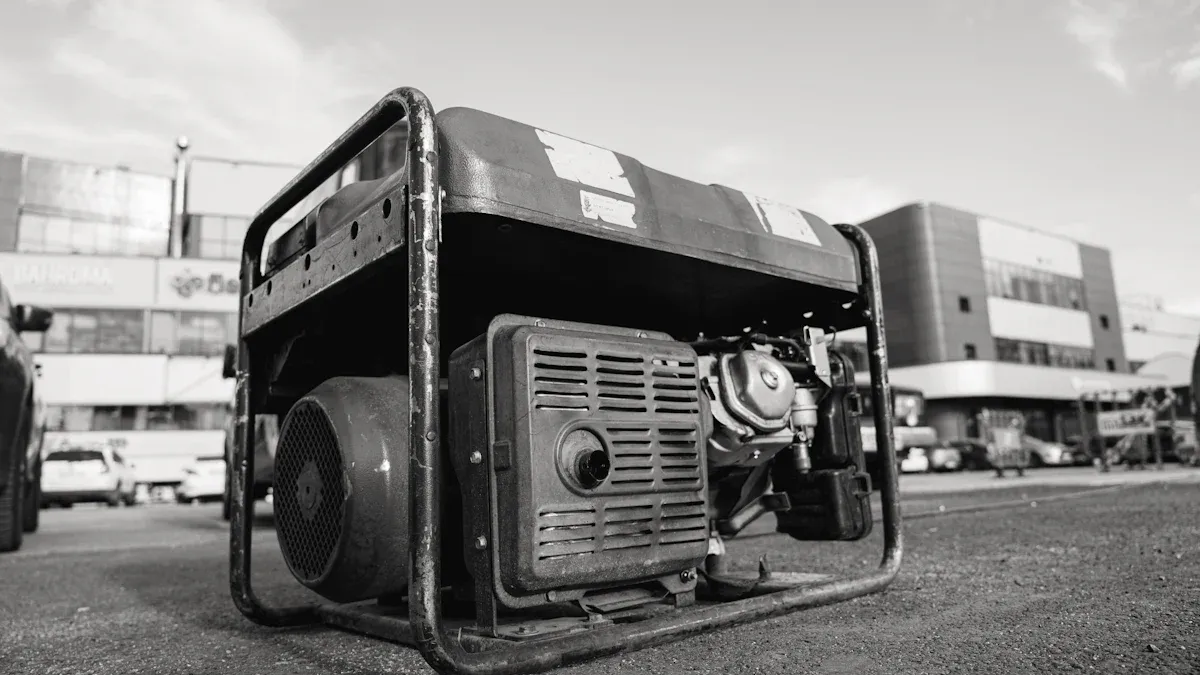
Industrial electric generators use several types of fuels, each with unique advantages for different applications. I often see companies choose a generator based on their operational needs, fuel availability, and cost considerations. Here is a quick comparison of the main fuel types and their typical uses:
| Fuel Type | Characteristics | Typical Applications |
|---|---|---|
| Diesel | Durable, high power output | High-power, continuous operation |
| Natural Gas | Clean burning, cost-effective | General industrial use, connected to gas lines |
| Propane | Available as liquid or vapor | Portable, long-term storage |
| Biodiesel | Non-petroleum-based, eco-friendly | Green energy projects |
| Dual Fuel | Uses multiple fuel types | Flexible, backup power |
| Bi-Fuel | Combines different fuels | Versatile, industrial flexibility |
Diesel generators overview
I rely on diesel generators when I need robust, high-output power for critical operations. Diesel generators stand out for their durability and ability to deliver continuous power in demanding environments. Many industries use diesel generators for backup and prime power because they perform well under heavy loads.
Natural gas generators overview
Natural gas generators provide a clean and cost-effective solution for many industrial applications. I see these generators used in facilities with access to existing gas lines. Natural gas generators produce fewer emissions compared to other fossil fuels. They work well for continuous or standby power in hospitals, manufacturing plants, and commercial buildings. I find that natural gas generators offer stable fuel costs and require less on-site fuel storage. Their efficiency and lower emissions make them a popular choice for companies focused on sustainability.
Electric generators overview
Electric generators, sometimes called battery energy storage systems, use stored electricity instead of traditional fuels. I notice more industries adopting electric generators for clean energy projects and locations with strict emission regulations. These generators operate quietly and require minimal maintenance. I recommend electric generators for indoor use, sensitive environments, or as part of hybrid power systems. While electric generators may not match the raw power of diesel generators or natural gas generators, they play a growing role in modern industrial power strategies.
Cost comparison
Initial costs: diesel generators
When I help clients evaluate industrial generator options, I always start with the initial purchase price. Diesel generators often stand out for their wide range of available sizes and price points. The initial cost depends on the generator’s power output, soundproofing features, and installation requirements. I have seen that supply chain expenses and rising fuel prices can also influence the final price tag. For example, a small 10-50 kW diesel generator may cost between $5,000 and $20,000. Larger models, such as those in the 200-500 kW range, can reach $75,000 to $200,000. For heavy-duty applications above 1,000 kW, the price can exceed $500,000.
Here is a table that summarizes the typical price range for industrial diesel generators by power output:
| kW Range | Approximate Price Range (USD) |
|---|---|
| 10-50 kW | $5,000 – $20,000 |
| 50-200 kW | $20,000 – $75,000 |
| 200-500 kW | $75,000 – $200,000 |
| 500-1000 kW | $200,000 – $500,000 |
| 1000 kW and above | $500,000+ |
Several factors can affect the initial cost of diesel generators:
- Supply chain expenses, including logistics and transportation
- Generator power output and intended application
- Fuel type and efficiency
- Soundproofing for noise-sensitive environments
- Professional installation and site preparation
I often recommend LETON POWER diesel generators because they offer a broad range of models and customization options. Their expertise in both standard and silent generator sets helps clients find the right balance between performance and cost.
Initial costs: natural gas generators
Natural gas generators have become a popular choice for many industrial facilities, especially where gas lines are already available. The initial cost for these generators can be similar to diesel generators in some size categories, but installation requirements often add to the total investment. For example, a 30 kW natural gas generator typically costs between $15,000 and $25,000. Larger units, such as those in the 60-100 kW range, may range from $30,000 to $60,000. For high-capacity needs above 500 kW, the price can reach $100,000 to $500,000 or more.
| Generator Size | Price Range |
|---|---|
| 30 kW | $15,000 – $25,000 |
| 60-100 kW | $30,000 – $60,000 |
| 500 kW+ | $100,000 – $500,000+ |
Installation costs for natural gas generators can vary widely. I have seen projects where installation adds $10,000 to $25,000 or more, depending on the complexity and size of the system. Space requirements and the need for additional equipment, such as gas regulators or safety systems, can also impact the total cost. I always advise clients to factor in these expenses when budgeting for a new generator.
Initial costs: electric generators
Electric generators, especially those designed for industrial use, require a significant initial investment. The market for these generators continues to grow, reflecting the demand for clean and reliable backup power. I have noticed that the initial cost for electric generators depends on several factors, including size, output, battery technology, and advanced features. For large-scale applications, the investment can be substantial. The overall market value for industrial generators reached $18.3 billion in 2022, and the trend points to continued growth. When I discuss electric generator options with clients, I always highlight the importance of considering both the upfront cost and the long-term benefits of clean energy solutions.
Tip: Always compare the total installed cost, not just the purchase price, when evaluating generator options for your facility.
Operating costs and fuel supply
When I help clients compare industrial generators, I always focus on operating costs and fuel supply. These factors often have a bigger impact on budgets than the initial purchase price. I look at how much it costs to run each generator type per kilowatt-hour (kWh) and how stable the fuel supply is over time.
Here is a table that shows the average operating cost per kWh for diesel, natural gas, and electric generators:
| Generator Type | Average Operating Cost (per kWh) |
|---|---|
| Diesel | $0.005 – $0.010 |
| Natural Gas | $0.007 – $0.015 |
| Electric | N/A |
Diesel generators usually have the lowest operating cost per kWh. I see many factories and construction sites choose diesel for this reason. Natural gas generators cost a bit more to run, but they offer cleaner emissions and steady fuel prices in areas with reliable gas lines. Electric generators do not have a direct fuel cost, but their operating expenses depend on the price of electricity and battery technology.
Fuel supply stability is another key factor. I always check if a site has easy access to diesel, natural gas, or electricity. Diesel fuel prices tend to be more stable than gasoline, which helps companies plan their budgets. Natural gas prices can change, but they are often less volatile than gasoline. I find that electric generators rely on the local power grid or renewable energy sources, which can be an advantage in some regions.
Here is a table that compares fuel price stability, fuel efficiency, and operational costs for different generator types:
| Generator Type | Fuel Price Stability | Fuel Efficiency | Operational Costs |
|---|---|---|---|
| Diesel | More stable | 35-45% | Lower |
| Gasoline | More volatile | 25-30% | Higher |
Diesel generators stand out for their high fuel efficiency. They convert 35-45% of the fuel’s energy into usable power. Gasoline engines only reach 25-30% efficiency, which means higher fuel costs over time. I always remind clients that diesel’s efficiency leads to significant savings, especially for continuous or heavy-duty use.
When I evaluate total cost of ownership, I consider not just fuel costs but also maintenance, repairs, and downtime. Diesel generators often provide the best balance of low operating costs and reliable fuel supply. LETON POWER’s diesel generator sets, for example, are designed for high efficiency and stable performance. This makes them a smart choice for industries that need dependable power and predictable expenses.
Tip: Always review local fuel supply options and price trends before choosing a generator. Reliable access to fuel can prevent costly downtime and keep operations running smoothly.
Efficiency and performance
Diesel generators efficiency
I often recommend diesel generators for industrial sites that demand high performance and consistent output. Diesel generators deliver impressive energy conversion rates, which means they turn more of the fuel’s energy into usable electricity. When I look at efficiency ratings, I see that most industrial diesel generators operate within a 35% to 45% efficiency range under standard load conditions. Modern models can even exceed 40% efficiency when running at ideal loads. I find that the best results occur when these generators operate within 70% to 80% of their rated capacity.
| Efficiency Rating | Description |
|---|---|
| 35% – 45% | Typical efficiency range for industrial diesel generators under standard load conditions. |
| > 40% | Modern generators can exceed 40% efficiency under ideal loads. |
| 70% – 80% | Best efficiency results occur when operating within this load range. |
Diesel generators are 20-40% more efficient than natural gas generators. This higher efficiency allows diesel engines to generate more power using less fuel. I have seen this advantage translate into lower operating costs and longer run times between refueling. For continuous industrial operations, diesel generators provide reliable energy output and help companies manage their energy budgets more effectively.
Natural gas generators efficiency
I often see companies choose natural gas generators when they want a cleaner-burning option and have access to a steady supply of natural gas. The average efficiency of industrial natural gas generators is about 35.38%. Some high-efficiency models can reach up to 45.2%. These generators perform best when they run at steady loads and have a reliable natural gas supply.
- The average efficiency of industrial natural gas generators is 35.38%.
- High-efficiency generators can improve this efficiency to 45.2%.
Natural gas generators offer stable energy production and lower emissions compared to other fossil fuels. I find that their efficiency depends on the quality of the natural gas and the generator’s design. While they may not match the peak efficiency of diesel generators, they provide a strong balance between performance and environmental responsibility. Many industries use natural gas generators for both backup and continuous power, especially in regions with established natural gas infrastructure.
Electric generators efficiency
Electric generators, especially those powered by battery energy storage systems, have become more common in industrial settings. I notice that their efficiency depends on both the battery technology and the source of the electricity used for charging. In my experience, electric generators can deliver high energy conversion rates, especially when paired with renewable energy sources like solar or wind. However, the overall efficiency also depends on the stability of the local power grid.
- The stability of the local power grid is a critical factor in risk management for businesses with essential operations.
- Day-to-day grid performance significantly impacts operational planning, beyond just major storm events.
- Data-driven insights are necessary for developing effective power strategies.
Electric generators do not have fuel-based efficiency ratings like diesel or natural gas generators. Instead, I focus on how efficiently they store and deliver energy to meet industrial needs. I always advise clients to consider grid reliability and the quality of their energy storage systems. When these factors align, electric generators can provide an energy-efficient and sustainable solution for modern industrial operations.
Load handling and reliability
When I help clients choose an industrial generator, I always focus on how well each type handles different loads and how reliable it is during demanding operations. Load handling means the generator’s ability to respond to changes in power demand, especially when equipment starts or stops suddenly. Reliability measures how consistently the generator delivers power without failure.
Diesel generators stand out in heavy-duty environments. I see them perform best when factories need to start large motors or run equipment that draws a lot of power at once. Diesel engines produce high torque, which means they can handle sudden spikes in demand. This makes them ideal for variable loads, such as those found in manufacturing plants or construction sites. I often recommend diesel generators for operations where power needs change quickly and reliability is critical.
Natural gas generators work well in situations where the load stays steady. I notice that these generators are more efficient when running at a constant output. They respond quickly to changes in demand, thanks to advancements in engine technology. However, they do not match the raw torque of diesel engines. I suggest natural gas generators for facilities with stable power needs, like data centers or hospitals connected to a reliable gas supply.
Electric generators, especially battery-based systems, offer quiet and clean operation. I find that they handle light to moderate loads well, but their ability to manage sudden, high-torque demands depends on battery size and inverter technology. For sensitive environments or backup systems where noise and emissions matter, electric generators provide a reliable solution. I always check the battery capacity and charging infrastructure before recommending them for variable industrial loads.
Here is a table that summarizes how each generator type handles load and their reliability:
| Generator Type | Torque Output | Load Handling Capability | Reliability |
|---|---|---|---|
| Diesel | Superior | Excellent for high-torque, variable loads | Very high |
| Natural Gas | Moderate | Best for stable, lighter loads | High |
| Electric | Variable | Good for light/moderate, steady loads | High (with proper maintenance) |
Tip: For industries with frequent equipment startups or unpredictable power needs, I recommend diesel generators for their superior load handling and proven reliability. For steady, long-term power, natural gas or electric generators can be a smart choice.
In my experience, matching the generator’s load handling ability to your facility’s needs ensures smooth operations and reduces the risk of costly downtime.
Maintenance and lifespan
Diesel generators maintenance
I always pay close attention to the maintenance schedule for diesel generators. Regular upkeep keeps these machines running smoothly and extends their lifespan. I follow a schedule that includes weekly, monthly, and annual tasks. Running the genset with no load every week helps prevent fuel system issues. I inspect engine coolant and oil monthly to catch any leaks or contamination early. Twice a year, I perform a comprehensive inspection to check belts, hoses, and electrical connections. Annually, I change the oil and filters to maintain engine health.
Here is a table that summarizes typical maintenance tasks and their frequency:
| Maintenance Task | Frequency |
|---|---|
| Run genset with no load | Weekly |
| Inspect engine coolant and oil | Monthly |
| Comprehensive inspection | Twice per year |
| Change oil and filters | Annually |
Maintenance costs can vary depending on the type of repair. I see oil and filter changes usually cost between $100 and $300. Fuel system repairs range from $400 to $1,000. Coolant system issues cost $200 to $600. Injector cleaning or replacement runs $300 to $900. A full engine overhaul can reach $2,000 to $6,000.
| Repair Type | Estimated Cost |
|---|---|
| Oil & filter change | $100–$300 |
| Fuel system repair | $400–$1,000 |
| Coolant system issues | $200–$600 |
| Injector cleaning/replacement | $300–$900 |
| Full engine overhaul | $2,000–$6,000 |
Tip: I always recommend following the manufacturer’s maintenance schedule to maximize reliability and minimize unexpected downtime.
Natural gas generators maintenance
Natural gas generators require less complex maintenance than diesel units. I find that their simpler exhaust systems reduce the need for frequent servicing. Lower emissions mean fewer after-treatment components to inspect or replace. I focus on basic tasks like checking spark plugs, inspecting air filters, and monitoring coolant levels. These generators comply with environmental regulations more easily, which simplifies routine checks.
Here is a table comparing maintenance complexity and emissions impact:
| Generator Type | Maintenance Complexity | Emissions Impact |
|---|---|---|
| Diesel | High due to exhaust after-treatment systems | Higher emissions requiring complex systems |
| Natural Gas | Lower due to simpler exhaust systems | Lower emissions, easier compliance with regulations |
I notice that natural gas generators benefit from steady fuel quality, which reduces the risk of clogged filters and injector problems. Regular inspections keep these units running efficiently.
Electric generators maintenance
Electric generators offer the simplest maintenance routines. I check fuel, coolant, and oil lines regularly to prevent clogs. I make sure the generator is set to auto-start every week. Monthly, I inspect the battery charger and cables. During startup, I look for alarms or warnings.
Common issues include dead batteries, stalling from dirty filters, overheating, and electrical problems like damaged wiring. I address these by following a checklist:
- Check and refill fuel, coolant, and oil levels.
- Ensure auto-start is enabled weekly.
- Inspect battery charger and cables monthly.
- Monitor for alarms or warnings during startup.
I find that electric generators rarely need major repairs if I maintain them consistently. Their design reduces the risk of complex mechanical failures.
Note: Consistent inspections and prompt attention to minor issues keep electric generators reliable and efficient.
Lifespan and durability
When I help clients choose an industrial generator, I always consider how long each type will last. Lifespan and durability play a big role in the total value of a generator investment. I have seen that proper maintenance can extend the life of any generator, but some types stand out for their ruggedness and long service.
Here is a table that shows the average operational lifespan for diesel, natural gas, and electric industrial generators:
| Generator Type | Average Lifespan (hours) | Average Lifespan (years) |
|---|---|---|
| Diesel | 10,000 – 30,000 | 20 – 25 |
| Natural Gas | 15,000 – 30,000 | N/A |
| Electric | N/A | N/A |
From my experience, diesel generators often last between 10,000 and 30,000 hours. Well-maintained diesel units can even reach up to 40,000 hours. I have seen LETON POWER diesel generator sets operate reliably for decades in tough industrial environments. Their robust engineering and quality components help them achieve long service lives, especially when clients follow a regular maintenance schedule.
Natural gas generators also offer impressive durability. Most units run for about 15,000 to 30,000 hours before major overhauls become necessary. I notice that natural gas generators perform best in clean environments with steady fuel quality. Their simpler exhaust systems and lower emissions can reduce wear on engine parts, which helps extend their operational life.
Electric generators, especially battery-based systems, have a different lifespan profile. The durability of these systems depends on the battery technology and the number of charge cycles. I find that battery packs may need replacement every 5 to 15 years, depending on usage and environmental conditions. The generator’s electronics and inverters can last longer, but I always advise clients to plan for periodic battery upgrades to maintain reliable performance.
Here are some key points I keep in mind when evaluating generator durability:
- Diesel generators can last up to 25 years or more with proper care.
- Natural gas generators provide long service, especially with clean fuel and regular checks.
- Electric generators require battery replacements, but their core systems can last many years.
Tip: I always recommend choosing a generator with a proven track record for durability, like LETON POWER’s diesel generator sets, for critical industrial applications. Long lifespan reduces total cost of ownership and ensures reliable power for years.
I believe that understanding the expected lifespan and durability of each generator type helps clients make informed decisions. Regular maintenance and quality components are the keys to maximizing generator value.
Environmental and noise impact

Emissions: diesel vs. natural gas vs. electric
I always consider emissions when I help clients select an industrial generator. Diesel generators produce more particulate matter and nitrogen oxides than other types. These emissions can affect air quality, especially in urban or enclosed environments. Natural gas generators burn cleaner and release fewer pollutants. I see many companies choose natural gas to meet stricter environmental regulations. Electric generators stand out because they do not produce direct emissions during operation. Facilities that use renewable energy to charge electric generators can further reduce their environmental footprint. I recommend electric generators for projects that prioritize sustainability and regulatory compliance.
Noise levels and site suitability
Noise output plays a big role in generator selection. I measure noise levels in decibels (dB) to compare options. Diesel generators usually produce between 70 and 100 dB under industrial conditions. This level suits remote sites but may not work for hospitals or schools. Natural gas generators operate more quietly, with noise levels ranging from 50 to 70 dB. Inverter generators, which include many electric models, can be as quiet as 50 dB. I use the following table to help clients understand typical noise levels:
| Generator Type | Noise Level (dB) |
|---|---|
| Diesel Generators | 70-100 |
| Natural Gas Generators | 50-70 |
| Inverter Generators | as low as 50 |
I often recommend LETON POWER’s silent and low-noise diesel generator sets for noise-sensitive environments. Their sound-attenuated enclosures help reduce noise pollution, making them suitable for hospitals, data centers, and residential areas. I find that choosing the right generator for the site ensures compliance with local noise regulations and improves working conditions.
Sustainability considerations
Sustainability matters more than ever in industrial power planning. I encourage clients to look beyond immediate costs and consider long-term environmental impact. Diesel generators offer durability and reliability, but they rely on fossil fuels. Natural gas generators provide a cleaner alternative and support lower carbon footprints. Electric generators, especially those powered by renewable sources, represent the most sustainable choice. I see many businesses invest in hybrid systems that combine diesel or natural gas with battery storage to balance reliability and sustainability. LETON POWER engineers custom solutions that optimize fuel efficiency and support green initiatives. I believe that selecting the right generator type helps companies meet sustainability goals and prepare for future regulations.
Tip: I always advise clients to review local environmental standards and noise ordinances before installing a generator. This step prevents compliance issues and supports community relations.
Best use cases and recommendations
Industrial electric generator selection tips
I always start by looking at the specific needs of each industrial site before recommending a generator. The right choice depends on several important factors. I use a checklist to guide my decision-making process. Here is a table that summarizes what I consider:
| Factor | Description |
|---|---|
| Fuel Availability and Storage | I check if the fuel type is easy to access and store, especially during emergencies. |
| Cost Considerations | I compare current and future costs, including efficiency and long-term savings. |
| Environmental Impact | I analyze emissions and sustainability goals for each fuel type. |
| Generator Size and Power Output | I match the fuel type to the generator’s specifications and the site’s power needs. |
| Local Regulations and Codes | I review legal requirements for fuel storage and generator installation. |
| Maintenance Requirements | I consider how much upkeep each fuel type needs and its effect on overall maintenance. |
Tip: I always recommend reviewing local fuel supply options and regulations before making a final decision. This step helps avoid unexpected costs and compliance issues.
When to choose diesel generators
I often recommend diesel generators for industries that need reliable, high-output power. Diesel units perform well in tough environments and handle heavy loads with ease. I see them used in many sectors where grid access is limited or where backup power is critical. Here is a table that shows common applications for diesel generators:
| Industry Sector | Common Applications |
|---|---|
| Construction | Power for lighting, machinery, and tools at remote sites without grid access. |
| Airports | Power for runway lights, navigational systems, and security equipment during outages. |
| Marine | Reliable power for communication, refrigeration, and cargo handling on vessels and at ports. |
| Agriculture | Power for irrigation systems, farm equipment, and processing facilities to support crop cultivation. |
| Healthcare | Power for life-saving medical equipment and essential functions during outages. |
| Hospitality | Backup power for hotel operations, ensuring guest comfort and service continuity. |
| Data Centers | Backup power for servers and IT infrastructure to prevent data loss during power disruptions. |
I choose diesel generators when a site needs continuous or standby power and faces unpredictable load demands. Their durability and fuel efficiency make them ideal for remote locations and mission-critical operations. LETON POWER offers a wide range of diesel generator sets that meet these needs, from compact units for small businesses to large systems for industrial complexes.
When to choose natural gas generators
Natural gas generators work best in facilities with access to a stable gas supply. I recommend them for sites that want cleaner emissions and lower operating costs. Natural gas units offer several advantages that make them attractive for many industrial applications. Here is a table that highlights these benefits:
| Advantage | Description |
|---|---|
| Lower and More Stable Pricing | Natural gas prices stay low and steady, which helps with budgeting and reduces exposure to price spikes. |
| Elimination of Fuel Delivery and Storage Costs | Continuous delivery means no need for fuel transportation or storage. |
| No Fuel Degradation or Polishing | Natural gas does not degrade, so maintenance costs stay low. |
| Cleaner Combustion | Fewer emissions lead to less wear on engine parts and reduced maintenance. |
| Extended Service Intervals | Longer intervals between maintenance tasks save time and money. |
| Scalability | Easy to add more units as power needs grow. |
| Redundancy and Reliability | Paralleled units ensure continuous operation, even during maintenance. |
| Optimized Efficiency | Multiple units can run at their most efficient load points, reducing fuel use. |
I choose natural gas generators for hospitals, manufacturing plants, and commercial buildings with reliable gas infrastructure. Their clean operation and cost stability make them a smart choice for companies focused on sustainability and long-term savings.
When to choose electric generators
I often recommend electric generators for industrial sites that prioritize clean energy and quiet operation. These generators work best in environments where emissions must stay low and noise reduction is important. I see electric generators used in hospitals, laboratories, and data centers. These places need reliable backup power without the risk of air pollution or loud noise.
Electric generators fit well in locations with access to renewable energy sources. Solar panels and wind turbines can charge battery systems, making electric generators a sustainable choice. I suggest electric generators for facilities that want to meet strict environmental regulations or reduce their carbon footprint. Many companies choose electric generators to support green initiatives and improve their public image.
I look for several key factors before recommending electric generators:
- The site must have a stable power grid or renewable energy supply.
- The facility should require low to moderate power output.
- The environment must benefit from reduced noise and zero direct emissions.
- The company should plan for regular battery maintenance and replacement.
I notice that electric generators excel in indoor settings. Their quiet operation makes them ideal for offices, schools, and residential buildings. I also see them used in hybrid systems, where they work alongside diesel or natural gas generators. This combination provides both reliability and sustainability.
However, I always consider the limitations of electric generators in heavy industrial use. Improper sizing can lead to inefficiencies and even damage the system. If the battery capacity does not match the facility’s needs, the generator may shut down unexpectedly. Neglected maintenance can cause contamination and operational failures. I remind clients that regular inspections and battery replacements are essential for long-term performance.
Here is a table that summarizes when electric generators are the best choice:
| Situation | Why Electric Generators Work Well |
|---|---|
| Hospitals and labs | Quiet, clean power for sensitive equipment |
| Data centers | Reliable backup with low emissions |
| Offices and schools | Silent operation, safe for indoor use |
| Green energy projects | Supports sustainability goals |
| Hybrid power systems | Combines reliability and clean energy |
Tip: I always advise clients to assess their power needs carefully. Proper sizing and regular maintenance keep electric generators running efficiently.
I believe electric generators offer unique advantages for modern industrial sites. Their clean operation and quiet performance make them a smart choice for facilities with specific environmental and regulatory requirements. When paired with renewable energy, electric generators help companies achieve long-term sustainability.
Quick comparison summary
Cost, efficiency, maintenance, and environmental impact table
I find that a side-by-side comparison helps my clients make faster decisions. Here is a table that summarizes the main differences between diesel, natural gas, and electric industrial generators. I included the most important factors: cost, efficiency, maintenance, and environmental impact.
| Generator Type | Initial Cost | Operating Cost | Efficiency | Maintenance | Lifespan | Emissions | Noise Level | Best Use Cases |
|---|---|---|---|---|---|---|---|---|
| Diesel | Moderate to High | Low | 35–45% | Moderate to High | 20–25 years | Higher | 70–100 dB | Heavy-duty, remote, backup |
| Natural Gas | Moderate | Moderate | 35–45% | Low to Moderate | 15–30 years | Lower | 50–70 dB | Facilities with gas lines, steady loads |
| Electric | High | Variable | High (battery dependent) | Low | Battery: 5–15 years | None | 50 dB or less | Clean energy, indoor, hybrid systems |
Note: LETON POWER offers a wide range of diesel generator sets, including silent models for noise-sensitive sites. Their products stand out for durability and efficiency.
Key recommendations for industrial scenarios
I always match the generator type to the specific needs of each facility. Here are my top recommendations for common industrial scenarios:
- Construction sites and remote operations:
I choose diesel generators for these locations. They provide reliable power where grid access is limited. Their high torque handles heavy equipment and variable loads. - Hospitals, data centers, and commercial buildings with gas infrastructure:
I recommend natural gas generators. They offer clean operation and stable fuel costs. These units work best where power needs stay steady. - Indoor environments, green energy projects, and noise-sensitive areas:
I select electric generators. They operate quietly and produce no direct emissions. I often use them in hybrid systems with diesel or natural gas for added reliability. - Mission-critical and backup power:
I trust diesel generators from LETON POWER. Their robust engineering ensures continuous operation during emergencies.
Tip: I always advise clients to review local fuel availability, regulations, and long-term sustainability goals before making a final choice.
I believe that understanding these key differences helps my clients choose the right generator for their industrial needs. The right decision supports both operational efficiency and long-term cost savings.
I see clear differences between diesel, natural gas, and electric industrial generators. Diesel generators give strong performance and long life. Natural gas units offer cleaner emissions and steady costs. Electric generators provide quiet, clean power for sensitive sites. I always match the generator to the site’s needs, fuel access, and budget. For expert advice and reliable products, I trust LETON POWER.
Tip: Contact LETON POWER for help choosing the right generator for your industry.
FAQ
What is the most cost-effective fuel for industrial generators?
I find diesel fuel usually offers the lowest operating cost for industrial generators. Diesel engines deliver high efficiency and reliable performance, making them a popular choice for heavy-duty applications.
How do I choose the right generator fuel type for my facility?
I always assess fuel availability, site power needs, environmental regulations, and budget. Matching these factors helps me recommend the best generator for each facility.
Are diesel generators noisy?
Diesel generators can be loud, but I often recommend LETON POWER’s silent models for noise-sensitive environments. Their sound-attenuated enclosures reduce noise levels significantly.
Which generator type requires the least maintenance?
Electric generators need the least maintenance. I check batteries and cables regularly. Diesel and natural gas generators require more frequent inspections and servicing.
Do natural gas generators produce fewer emissions than diesel?
Yes, natural gas generators emit less particulate matter and nitrogen oxides. I suggest natural gas units for facilities focused on cleaner operation and regulatory compliance.
How long do industrial generators typically last?
Diesel generators often last 20–25 years with proper care. Natural gas units can reach similar lifespans. Electric generators depend on battery replacements, usually every 5–15 years.
Can I use renewable energy with industrial electric generators?
I often pair electric generators with solar or wind systems. This combination supports sustainability goals and reduces reliance on fossil fuels.
What makes LETON POWER diesel generators stand out?
I trust LETON POWER for their robust engineering, wide product range, and silent generator options. Their solutions meet global standards and suit diverse industrial needs.

