

I always ask myself, what matters most when choosing a portable genset? Some folks crave fuel efficiency and want to stretch every drop. Others chase the lowest cost or demand rock-solid reliability when the lights go out. Let me break down what buyers like me value most:
- Fuel efficiency saves money and cuts emissions.
- Cost makes or breaks a decision.
- Reliability keeps everything running, rain or shine.
If you want the best fit, you need to weigh what matters most to you.
Key Takeaways
- Think about how much power you need before picking a portable genset. Add up the wattage of all devices you want to use.
- Diesel generators use fuel better and last longer. They are good for tough jobs and using for a long time.
- Gas generators are not heavy and make less noise. They work well for camping and short power needs.
- Look at the starting price and the cost to run it. Diesel gensets cost more at first but save money later.
- Both types need regular care. Diesel models need less care than gas models.
- Noise can be very different. Diesel generators can be very loud. Gas models are usually quieter, which helps in homes.
- Think about where you will keep the fuel. Diesel stays good longer than gasoline. This makes it easier to store for emergencies.
- Pick a generator that matches your way of living. LETON POWER has many models for different needs, like home backup or job sites.
Portable Genset Overview

What Is a Portable Genset?
The first time I saw a portable genset, I was amazed. It looked like a special box that could make lights work at a campsite. It also powered tools at a job site. A portable genset is a small generator you can move easily. People use these machines when they need power but cannot use the regular electric grid. I think of them as heroes for backup power. They come in many shapes and sizes. They help in emergencies, outdoor trips, or work projects.
Diesel vs. Gas Portable Genset Basics
When I look at diesel and gas portable gensets, I see big differences. Diesel generators are strong. They last a long time and can handle hard work. I see them used on construction sites and in mining. People use them when they need something very reliable. Gas portable gensets are lighter and make less noise. People pick them for camping or events where quiet is important.
Here is what I know about how they work:
- Diesel generators are tough and last a long time. They work well in rough places.
- Gas generators, like gasoline models, are quieter. They are good for places where noise matters.
- Diesel gensets cost more at first, but they save money later because they last longer.
- Gas gensets are cheaper to buy, but you might have to replace them sooner.
- Diesel makes more nitrogen oxides and particulates. Gas makes more carbon monoxide and hydrocarbons.
I always think about these things before I choose a portable genset.
Common Applications
Portable gensets are helpful in many situations. I have seen them help during power outages. They keep farms working and light up outdoor events. Here is a table that shows where people use portable generators:
| Application | Description |
|---|---|
| Construction | Powers tools and machines. Very important for projects, especially if the power goes out. |
| Camping | Gives power for things like lights, heaters, and cooking gear outside. |
| Emergency Power | Gives electricity for important things during sudden outages from storms or disasters. |
| Routine Outages | Keeps small appliances working during planned or small outages. |
| Mining | Powers tools and lights for work underground. |
| Events | Helps with fun activities, giving power for sports, fairs, and family events. |
| Farming Operations | Gives steady power for machines and animals. This is important for farm work. |
I use portable gensets for many things. They help at backyard parties and keep my house safe during storms. LETON POWER has models for every need. I can get a silent diesel generator for my neighborhood or a strong one for a busy job site.
Here are some popular types:
- Silent diesel generators for quiet use at home.
- Dual fuel portable generators that use gas or diesel.
- Heavy-duty welding generators for big jobs.
No matter what I need, I can find a portable genset that gives me power where I want it.
Fuel Efficiency and Longevity
Diesel Portable Genset Efficiency
Typical Run Times
I remember the first time I fired up a diesel portable genset at a family reunion. The thing just kept humming along, powering our lights and music for hours. Diesel models love to run long and steady. When I check the specs, I see that diesel gensets often run for 10 to 24 hours on a single tank, depending on the load and tank size. That means I can keep my fridge cold and my phone charged all night during a blackout. No one wants to wake up at 3 a.m. just to refuel!
Fuel Consumption
Now, let’s talk about fuel efficiency. Diesel portable gensets are famous for squeezing every bit of power from their fuel. I learned that diesel fuel packs a punch, with about 129 BTU per unit. Gasoline and natural gas can’t match that. The compression ignition system in diesel engines helps them use less fuel to make the same amount of electricity. I notice this most when I run heavy tools or appliances. The diesel genset just keeps going, barely sipping fuel. This high fuel efficiency really shines when I need power for long stretches or big jobs.
Tip: If you want to save money on fuel and get more hours of power, diesel is a smart pick for fuel efficiency.
Gas Portable Genset Efficiency
Typical Run Times
Gas portable gensets have their own charm. I like using them for quick jobs or camping trips. They usually run for 6 to 12 hours on a full tank. That’s enough for a night of fun or a short power outage. I always keep an eye on the fuel gauge, though. Gas models burn through their tanks faster, especially when I plug in bigger devices.
Fuel Consumption
When it comes to fuel efficiency, gas gensets use more fuel to make the same power as diesel. Gasoline and natural gas have lower energy density, with natural gas at about 37 BTU per unit. I notice I have to refill the tank more often. For short bursts of power, this isn’t a big deal. But if I need to run things all day, I start to miss the fuel efficiency of diesel.
Longevity Comparison
I always want my genset to last as long as possible. Here’s a quick look at how long each type usually sticks around:
| Generator Type | Average Lifespan |
|---|---|
| Diesel Portable Gensets | 20,000 to 30,000 hours |
| Gas Portable Gensets | 5 to 10 years |
Diesel portable gensets are like the marathon runners of the generator world. They just keep going, year after year. Gas gensets work hard too, but they usually retire sooner. If I want something that lasts for decades, diesel wins the longevity race.
I always weigh fuel efficiency and lifespan before I choose my next portable genset. For long-term savings and fewer refuels, diesel keeps coming out on top.
Cost Factors
Initial Cost: Diesel vs. Gas
When I looked for my first generator, I was shocked by the price. Diesel generators usually cost more at the start than gas models. I remember looking at the prices and feeling confused. Here is what I found:
| Generator Type | Typical Cost Range |
|---|---|
| General Generators | $400 to $5,000 |
| Portable Generators | $400 to $3,000 |
| Inverter Generators | $400 to $5,000 |
Diesel generators are at the top of these price ranges. Gasoline generators often start at lower prices. I felt worried about spending more on diesel, but I knew there was more to think about.
Operating Cost Comparison
I learned that the price tag is just the start. The real costs show up when you use the generator. Diesel and gas have their own good and bad points. Diesel fuel prices go up and down a lot. Gas prices stay about the same, especially if you use natural gas or propane. I like to plan my money, so I watch these price changes.
Here is what I learned:
- Diesel is better for big jobs that need lots of power.
- Gas generators can be cheaper if gas prices are low where you live.
- Diesel prices change a lot, but gas prices are usually steady.
- Diesel generators work best for long, hard jobs. Gasoline generators are good for short, light jobs.
This table helped me make my choice:
| Factor | Diesel Generators | Gas Generators |
|---|---|---|
| Fuel Price Volatility | Goes up and down with the world market | Usually stays steady and easy to guess |
| Cost Predictability | Harder to guess because of fuel taxes | Easier to plan with contracts |
| Efficiency Under Load | Works better with heavy loads | Good for steady, long jobs |
| Maintenance Requirements | Needs regular but simple care | Needs less oil changes, but more complex |
| Application Suitability | Good for big jobs in far places | Cheaper if gas prices are steady |
In some places, natural gas or LPG costs less than diesel. Diesel engines work better when you use them for big jobs. That makes diesel a good pick for heavy work, even if fuel prices change.
Maintenance Cost Differences
Now let’s talk about keeping your generator working. Diesel generators need less care. I like that because I do not have to fix them as much. Gasoline generators have spark plugs and carburetors. These parts need more cleaning and fixing. I find myself working on them more often.
Here is a quick look:
| Generator Type | Maintenance Frequency | Maintenance Cost | Efficiency |
|---|---|---|---|
| Diesel | Needs less care because of liquid cooling | Costs less to keep running | Usually more efficient |
| Gas | Needs more care because of spark plugs and carburetors | Costs more to keep running | Less efficient because of higher speed and air-cooling |
- Diesel generators need less care, so I save money over time.
- Gasoline generators need more work, which costs more.
I always think about these costs before I buy. The best choice depends on how much work you want to do and how much you want to spend later.
Maintenance and Reliability
Diesel Portable Genset Maintenance
I feel proud when I take care of my diesel generators. These machines work best with regular care. I check the oil every 100 hours. I change the air intake filter and spark plug every 200 hours. Every six months, I look over the whole generator. I search for leaks and check the belts. I also make sure the battery works well. Each week, I run the genset with no load to keep it ready. Twice a year, I check the outside and the exhaust system. Once a year, I clean everything, change all the filters, and test the fuel. This routine helps my diesel generators last longer and stay reliable.
Here’s a simple look at my maintenance plan:
| Maintenance Task | Interval |
|---|---|
| Complete inspection and maintenance | Every 6 months or 400 hours |
| Oil change | Every 100 hours |
| New air intake filter and spark plug | Every 200 hours |
Tip: I always do my weekly and monthly checks. They help me find small problems before they get worse.
Gas Portable Genset Maintenance
Gas generators need special care too. I learned that dirty air filters or loose wires make them hard to start. Sometimes, the generator stops working without warning. I always check the fuel and oil first. If I forget to use all the fuel, sticky stuff builds up in the tank. That means I have to clean it more. Bad weather can cause more problems. One time, my generator had trouble after a rainy weekend. Now, I keep my gas generators dry and refuel them safely to stop fires. Regular care keeps these generators working, but they need more attention than diesel models.
Here’s what I watch for with gas generators:
- Hard starts from dirty filters or loose wires
- Sudden stops from low fuel or oil
- Sticky fuel if gas sits too long
- Problems in wet or cold weather
- Fire risks if I skip maintenance
Reliability in Various Conditions
Reliability is very important to me. I want my generators to work when I need them. Diesel generators are good for tough jobs and long hours. In cold weather, diesel fuel can gel and make starting hard. Cold batteries slow down too. Hot weather can make small generators overheat. Humidity can cause rust, and floods can hurt electrical parts. Snow and ice can block air and freeze parts. Gas generators have these problems too. I always store my generators in a dry place and check for blockages after storms. With good care, both diesel and gas generators stay reliable in any weather.
Note: I always get ready for bad weather. I keep fuel additives for winter and make sure my generators are clean and dry. This helps my generators stay reliable and stops surprises.
Portability, Noise, and Storage

Weight and Size
When I buy a portable genset, I think about how easy it is to move. I want to carry my generator without hurting myself or needing help. Diesel generators are heavier than gas models. One time, I tried to lift a diesel genset onto my truck. It felt super heavy, like lifting a big animal! Gas generators are lighter and much easier to move. I can roll one across my yard or take it camping. Some diesel models have wheels or can be pulled by a trailer. This makes moving them easier for big jobs. LETON POWER has mobile trailer diesel generators that help with this. If I need to move fast, I pick a generator that fits my strength and how much I need to move it.
Noise Levels
Noise is important to me, especially when I want things quiet. Diesel generators are louder than gas models. I used a small diesel generator at a picnic once. It was as loud as busy traffic, about 85 decibels. Big diesel gensets can get even louder, up to 105 decibels. That is almost as loud as a jet flying over. Gas generators, like natural gas ones, are much quieter. My neighbor has a natural gas generator for his house. I can barely hear it from my porch. If I want to keep things peaceful or sleep well, I pick a quieter model. Silent diesel generators from LETON POWER help lower the noise. These are good for homes or events where quiet is needed.
Tip: Always look at the decibel rating before you buy. Your ears and your neighbors will be happy!
- Small diesel generators: about 85 decibels
- Big diesel generators: up to 105 decibels
- Natural gas generators: usually quieter
Fuel Storage and Shelf Life
Storing fuel can be hard. I found out that old fuel can cause problems. Diesel fuel lasts longer than gasoline. I can keep diesel for 6 to 12 months, or even 2 years if I store it right. Gasoline goes bad faster, so I use it up quickly. I always fill my tanks up to 95% to keep water out. I use tight containers and write the fuel type and date on them. Every six months, I check my fuel for cloudy spots or weird smells. If I see sludge or thick stuff, I know it is time to clean up.
Here’s a table that helps me remember how to store fuel:
| Aspect | Recommendation |
|---|---|
| Shelf Life | Diesel: 6-12 months (up to 2 years with care) |
| Ideal Storage Conditions | Clean, dry, airtight tank; below 70°F; away from sunlight and water |
| Use of Additives | Fuel stabilizers and biocides recommended |
| Tank Capacity | Keep tanks up to 95% full |
| Inspection Frequency | Inspect every 6 months |
| Signs of Degradation | Cloudy fuel, sludge, sour odor |
I always pick a cool, dry place for my fuel. I keep tanks away from the sun and heat. I use special containers for fuel and make sure to use the oldest fuel first. These steps help my genset work well and keep my fuel fresh. This makes it easier to move and use my generator whenever I need power.
Environmental Impact
Emissions: Diesel vs. Gas
When I start a diesel generator, I smell strong exhaust. The air feels thick and heavy. Gas generators smell different. Their exhaust is lighter, but it still does not smell good. I wanted to know how they compare, so I looked up some numbers. Here is what I found:
| Fuel Type | Category | NOx (mg/Nm3) | PM (mg/Nm3) | SO2 (mg/Nm3) |
|---|---|---|---|---|
| Natural gas | Existing engines | 190 | – | – |
| New engines | 95 | – | – | |
| Diesel | Existing engines (1 ≤ P ≤ 5) | 250 | – | – |
| 5 < P < 50 | 190 | – | – | |
| New engines (1 ≤ P < 50) | 190 | – | – |
I like looking at charts because they make things clear. This chart shows that diesel engines make more nitrogen oxides than natural gas. You can see the difference:
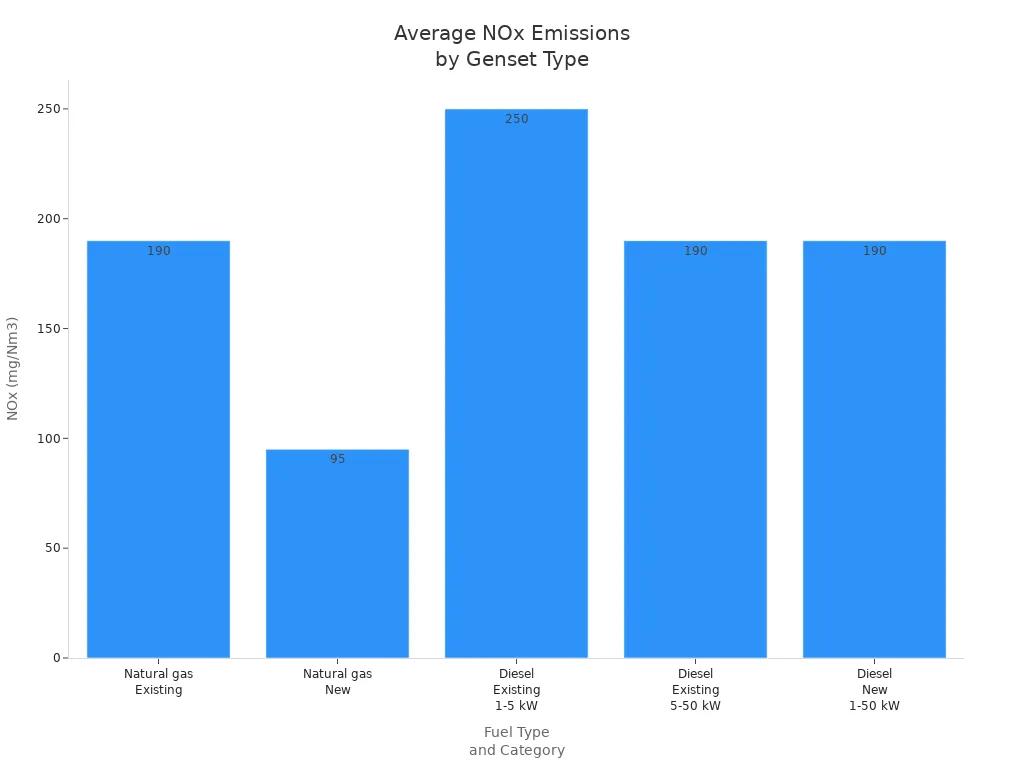
When I use a diesel genset, it makes more nitrogen oxides. Gas generators are better, but natural gas generators are the cleanest. LETON POWER has silent and low-emission diesel genset models. These are good for places where clean air is important.
Advantages of Natural Gas Generators
I think natural gas generators have some cool advantages. They run cleaner than diesel or gasoline models. I checked the facts and saw that natural gas makes about 30% less carbon dioxide than diesel. It also makes less nitrogen oxide and almost no particulate matter. This means less smoke and cleaner air for everyone.
Here are some benefits:
- Natural gas makes about 30% less carbon dioxide than diesel.
- It makes less nitrogen oxides and particulate matter.
- It is one of the cleanest-burning fossil fuels.
I feel good when I use natural gas generators. They help the planet by making less pollution. If you care about the environment, these generators are a smart choice.
Disadvantages of Natural Gas Generators
But nothing is perfect, and natural gas generators have some downsides. Even though they are cleaner, they still make some pollution. Natural gas generators give off sulfur dioxide, nitrogen oxide, and a little mercury. These gases can hurt the environment and add to the greenhouse effect. Sometimes I worry about these problems, even if the generator is quiet.
Note: Natural gas generators are better for the air, but they still make some pollution. I always use them carefully and do regular maintenance to lower their impact.
I always think about the good and bad before I pick a generator. Clean air is great, but I try to remember the whole story.
Eco-Friendly Options
I want to help the planet, even when I need backup power. I used to think all generators hurt the environment. But I found out some are much greener than others. I learned this while searching for a cleaner and quieter backyard.
First, I look for generators that use less fuel. Using less fuel means less pollution. Diesel gensets with new engines run cleaner than old ones. My friend has a LETON POWER silent diesel generator. It runs quietly and makes almost no smoke. This is because LETON POWER uses smart technology to lower emissions and noise. Their silent and low-emission diesel gensets work well at home or at quiet events.
Here’s my simple checklist for picking an eco-friendly portable genset:
- ✅ Pick a model with low emissions (look for EPA or EU certification)
- ✅ Choose a silent generator to lower noise pollution
- ✅ Use fuel stabilizers and keep your generator in good shape
- ✅ Try dual-fuel models that use cleaner fuels like natural gas or propane
- ✅ Get the right size—bigger is not always better!
Tip: I always pick a generator that fits my needs. If it is too big, it wastes fuel and makes more pollution.
I also look for features that help the environment. Some generators have automatic idle control. This means the engine slows down when I use less power. It saves fuel and keeps the air cleaner. One time, I forgot to turn off my old generator during lunch. It ran fast for an hour and wasted fuel! Now, I look for smart features that save energy without extra work.
Here’s a table that helps me compare eco-friendly features:
| Feature | Why It Matters |
|---|---|
| Low Emissions Engine | Less air pollution, better for health |
| Silent Enclosure | Less noise, neighbors stay happy |
| Dual-Fuel Capability | Lets me use cleaner fuels |
| Automatic Idle Control | Saves fuel, lowers emissions |
| Proper Sizing | Stops waste, boosts efficiency |
I think every small step helps. I recycle my oil, use clean fuel, and keep my generator working well. LETON POWER’s silent and low-emission diesel gensets make it easy to get power and protect the planet. If you want to go green, start with your next generator!
Pros and Cons Comparison
Advantages of Diesel Generators
I think diesel generators are tough machines. They work like superheroes when I need power. If I want a generator that keeps running, I pick diesel. Here is why they are special:
| Advantage | Description |
|---|---|
| Durability | Diesel generators last many years. I do not worry about fixing or replacing them often. |
| Performance | I see them used in hospitals and factories. They work hard and do not stop. |
| Fuel Efficiency | Diesel engines use less fuel. This helps when I run big tools or appliances. |
| Energy Density | Diesel fuel is strong. My generator runs longer on one tank than gas. |
| Long Runtime | I can power my house or job site for hours. I do not need to refuel often. |
| Safety | Diesel is not as easy to catch fire as gas. I feel safe keeping it in my shed. |
| Robust Construction | These generators work in bad weather and tough jobs. I trust them in emergencies. |
Diesel generators help me feel safe. I know they will work when I need them.
Pros and Cons: Diesel vs. Gas Portable Genset
When I shop for a generator, I think about the good and bad points. Diesel and gas have fans. I have used both types. Each one is different.
- Fuel efficiency saves me money.
- Durability means I do not replace them much.
- High torque helps with big jobs.
- Low maintenance gives me free weekends.
- Better fuel storage makes me feel safe.
Cons of Diesel Generators:
- Higher initial cost makes me think before buying.
- Noise and vibration can be annoying at parties.
- Higher emissions make me worry about the air.
Pros of Gasoline Generators:
- Affordability lets me buy one easily.
- Portability means I can take it camping.
- Low noise keeps my neighbors happy.
- Easier starting, even in cold weather.
Cons of Gasoline Generators:
- Fuel is hard to find in emergencies.
- Fuel storage is tricky. Gas goes bad fast.
- Lower efficiency means more trips for fuel.
I ask myself what I need most. Do I want long-term savings and strong power? Or do I need something light and quiet for a trip?
Tip: I pick my generator based on my needs. For big jobs and long outages, I choose diesel. For quick, quiet power, I use a gas model.
Comparison Table
Sometimes, I want to see the facts side by side. Here is a table that helps me compare diesel and gas portable gensets:
| Feature | Diesel Generator | Gas Generator |
|---|---|---|
| Power Density | High | Moderate |
| Fuel Efficiency | Excellent, especially under heavy load | Good, best at steady load |
| Emissions | Higher | Lower |
| Noise Level | Higher | Lower |
| Initial Cost | Higher | Lower |
| Fuel Cost | Variable, often higher | Stable, often lower (pipeline supply) |
| Fuel Storage | On-site tank, less flammable | Pipeline or can, more flammable |
| Best Application | Heavy-duty, variable loads | Stable loads, low emissions |
| Portability | Heavier, often needs wheels or trailer | Lighter, easy to carry |
| Maintenance | Less frequent, simple | More frequent, more parts to check |
I use this table when friends ask which generator to buy. It shows the pros and cons clearly. I remind them to think about what matters most: power, price, or quiet.
Best Uses for Portable Gensets
Home Backup
When the power goes out, I want my house to stay safe. I remember a big storm that made the lights go off for hours. My gasoline generator helped a lot. It kept running while I watched cartoons and ate ice cream. Picking backup power for home is like picking a hero for your family. Here are things I check before I buy a generator for home backup:
- Power needs—How many things do I want to keep on during an outage?
- Fuel type and what’s easy to get—Should I use diesel, gasoline, or gas? I check what is simple to find and store.
- Generator type—Do I want power for the whole house or just the fridge and lights?
- Setup and care—Can I set it up and keep it working well?
- Budget—How much can I spend, and what will it cost to run and fix?
I always want backup power I can trust, so I look for diesel generators or a gasoline generator that fits my needs. Diesel lasts longer, but gasoline is easy to buy. Gas generators are quiet and good for neighborhoods. I always check the steady power rating, so my freezer stays cold.
Job Sites
Job sites are busy and full of surprises. One time, I tried to use a small gasoline generator for a cement mixer. It stopped working and left me with a mess. Now, I always bring the right backup power. Diesel generators are best for job sites. They run big machines and keep work going. Here is a table that helps me pick the best generator for tough jobs:
| Feature | Description |
|---|---|
| GFCI protection | Stops shocks and keeps people safe. |
| Automatic idle control | Saves fuel and lowers noise when not working hard. |
| Customization options | Lets me change the generator for special tools or needs. |
| Automatic voltage regulators (AVR) | Keeps power steady, so tools work right. |
| Clean power | Meets EPA rules, so there is less smoke. |
I trust diesel for job sites because it gives backup power all day. Gasoline generators work for small tools, but diesel runs the big stuff. Gas is good if I need something fast and easy to move.
Camping and Outdoor
Camping trips help me get away from the city. I like hearing crickets, not loud engines. I always pick a generator that is quiet and won’t scare animals. Gasoline generators are light and easy to carry. Diesel is strong, but too heavy for tents. Gas models are quiet and great for roasting marshmallows at night. Here is a table I use to compare outdoor generators:
| Generator Model | Power Output | Fuel Type | Portability | Noise Level |
|---|---|---|---|---|
| Nature’s Generator Lithium 1800 | 1800 watts | Solar | Light and easy to move | Silent operation |
| Honda EU2200i Companion Portable | 2200 watts | Gasoline | Small and easy to carry | Very quiet at 57 dB |
| Predator 9500-Watt Inverter | 9500 watts | Gasoline | Has wheels and handles | Pretty quiet |
I always bring a gasoline generator for camping. It is easy to move and does not wake up the forest. Diesel generators are good for RVs or big camps, but I use gas for my tent. Gasoline keeps my lanterns bright and my phone charged, even far from home. When I need portable power for outdoor fun, I check the weight, noise, and fuel type.
Tip: Always pack extra gasoline and keep your generator dry. A wet, quiet generator can ruin a camping trip!
LETON POWER Product Examples
When I shop for a portable genset, I want something that fits my life. LETON POWER gives me choices for every adventure. I have tried their models at home, on job sites, and even during a wild camping trip. Each time, I found a genset that made my day easier.
Let me show you some LETON POWER options that stand out. I made a table to keep things simple:
| Feature | Description |
|---|---|
| Power Output | 10kW (10,000 watts) – enough for homes, job sites, or outdoor events |
| Portability | Easy to move and set up, perfect for remote spots or quick jobs |
| Durability | Built with tough metal parts, ready for years of hard work |
| Price | Competitive and fair, so I get value without breaking the bank |
I remember hauling a LETON POWER mobile diesel genset to a construction site. The wheels rolled smooth, and the handles felt sturdy. I set it up in minutes. The engine started with a remote click—no more yanking a cord until my arm hurt! That day, we powered saws, lights, and even a coffee maker. The genset never missed a beat.
For quiet neighborhoods or peaceful campsites, I pick their silent diesel models. These machines hum softly, so I can hear birds instead of engine noise. My neighbor once asked if the power was out because he couldn’t hear my generator running. That’s how quiet it gets!
Here’s another table with more details:
| Feature | Specification | Benefit |
|---|---|---|
| Material | Durable Metal | Stands up to bumps and bad weather |
| Cooling System Type | Air Cooling System | Keeps the engine cool and running smooth |
| Fuel | Diesel | Long runtime, less refueling |
| Rated Power | 5kW, 8kW, 10kW | Pick the size that fits your needs |
| Starting System | Remote/Auto Start | Easy to use, even in the dark |
Tip: I always choose remote start for cold mornings. I stay warm while my genset gets to work!
LETON POWER also makes trailer-mounted diesel generators. I use these for big events or when I need power far from home. The trailer hooks up fast, and I can tow it behind my truck. These models are lifesavers for outdoor weddings, festivals, or emergency repairs.
No matter where I go, LETON POWER has a genset that matches my needs. I get reliable power, easy setup, and peace of mind. If you want a generator that works as hard as you do, LETON POWER has you covered.
I found out diesel generators are great for hard work. They use fuel well and last a long time. Gas models are better for small jobs and make less noise. They also help keep the air cleaner. I pick my generator based on what I need most. Do I want more power, a lower price, or cleaner air? Here is my simple checklist:
- Diesel: Saves fuel, needs less fixing, costs more money
- Gas: Costs less, easy to move, makes more pollution
- Natural Gas: Cleanest choice, but needs special setup
I always look at the specs and read reviews before I buy. LETON POWER’s generators are safe, easy to use, and give good backup power.
| Specification | Details |
|---|---|
| Power Output | Works well for homes and job sites |
| Safety Features | Stops problems from too much power or heat |
| User Interface | Easy buttons and a clear screen |
FAQ
What size portable genset do I need for my house?
I always start by adding up the watts for everything I want to power. My fridge, lights, and TV usually need about 3,000 to 5,000 watts. I pick a generator with a little extra power, just in case.
Can I run my portable genset indoors?
No way! I never run a generator inside my house or garage. The fumes can make me sick or worse. I always keep my genset outside, far from windows and doors.
How often should I service my diesel generator?
I check my diesel genset every 100 hours or once a season. I change the oil, clean the filters, and look for leaks. Regular care keeps my generator happy and ready for action.
Is diesel or gas better for cold weather?
I find gas generators start easier in the cold. Diesel can get thick and stubborn when it’s freezing. I use winter additives for diesel or store my genset in a warm spot.
How loud is a portable diesel generator?
Diesel generators can get noisy—sometimes as loud as a lawnmower. I use LETON POWER’s silent models when I want peace and quiet. I always check the decibel rating before I buy.
Can I use my generator for sensitive electronics?
Yes, but I always use an inverter generator or one with automatic voltage regulation. This keeps my laptop and phone safe from power spikes. I never plug electronics straight into a basic genset.
What fuel lasts longer in storage: diesel or gasoline?
Diesel wins this round! I store diesel for up to two years with stabilizers. Gasoline goes bad much faster. I always label my fuel and use the oldest first.
Do I need to ground my portable generator?
Yes, I always ground my generator for safety. I follow the instructions in the manual. A simple grounding rod and wire keep me safe from shocks.

