

You will see that a 4 stroke engine lasts longer than a 2-stroke engine. This is because it uses different systems for oil and burning fuel. This helps the engine parts wear out less. The table below shows that a 4 stroke engine can work for more than 400 hours. A 2-stroke engine does not last as long. How you take care of your engine matters. Good oil and how the parts move also affect how long your engine works.
| Engine Type | Average Lifespan (Hours) | Maintenance Cost | Ease of Maintenance |
|---|---|---|---|
| 4-Stroke | Over 400 hours | Higher | More complex |
| 2-Stroke | Shorter lifespan | Lower | Easier |
Tip: You can make your engine last longer. Do regular maintenance and use good oil.
Key Takeaways
- A 4-stroke engine usually lasts longer than a 2-stroke engine because it has a better way to keep parts slippery. Regular care and using good oil can make any engine last much longer. 4-stroke engines stay cooler and have less rubbing, so they do not break down as fast. 2-stroke engines are lighter and quicker, but you need to fix them more often. Picking a 4-stroke engine can help you save time and money because it needs fewer fixes. Knowing how the slippery systems work helps you pick the best engine for you. Both engines need special care, and doing this can help them work better and last longer. Rules about pollution might change what you pick; 2-stroke engines usually make more pollution.
4 Stroke Engine vs 2-Stroke Engine Lifespan
Which Lasts Longer
You may wonder which engine lasts longer. The answer is clear. A four-stroke engine usually outlasts a two-stroke engine. You can see this difference in many machines, from motorcycles to lawnmowers. A four-stroke engine can run for many more hours before it needs major repairs. This happens because the four-stroke engine uses a better oil system. The oil does not mix with the fuel. This keeps the moving parts safe from too much friction.
You can look at the table below to compare the durability of both types:
| Metric | 4-Stroke Engines | 2-Stroke Engines |
|---|---|---|
| Lifespan | More durable due to better lubrication | Less durable, runs hotter, leading to fatigue |
| Lubrication | Separate oil system for moving parts | Oil mixed with fuel, less effective lubrication |
| Heat Management | Operates cooler, reducing metal fatigue | Runs hotter, increasing risk of permanent damage |
A four-stroke engine stays cooler and lasts longer. A two-stroke engine runs hotter and wears out faster. You will find that a four-stroke engine is the better choice if you want your engine to last for many years.
Why 4 Stroke Engines Outlast 2-Stroke
You may ask why a four-stroke engine lasts longer than a two-stroke engine. The answer comes from how each engine works. Here are the main reasons:
- A four-stroke engine has a strong and steady design. It uses a separate oil system. This system keeps the moving parts smooth and cool. You get less friction and less wear.
- A two-stroke engine mixes oil with fuel. This does not protect the parts as well. The engine gets hotter and wears out faster.
- You need to do regular oil changes with a four-stroke engine. This may seem like more work, but it helps the engine last longer.
- Many people choose a four-stroke engine for cars, bikes, and tools. They like the lower fuel use and the longer life.
- A four-stroke engine costs more to fix, but you do not need to fix it as often as a two-stroke engine.
Note: If you want an engine that lasts, pick a four-stroke engine. You will spend less time fixing it and more time using it.
A two-stroke engine is lighter and faster. It works well for short jobs or racing. But if you want your engine to last, a four-stroke engine is the best choice.
Difference Between 2-Stroke and 4-Stroke Engines
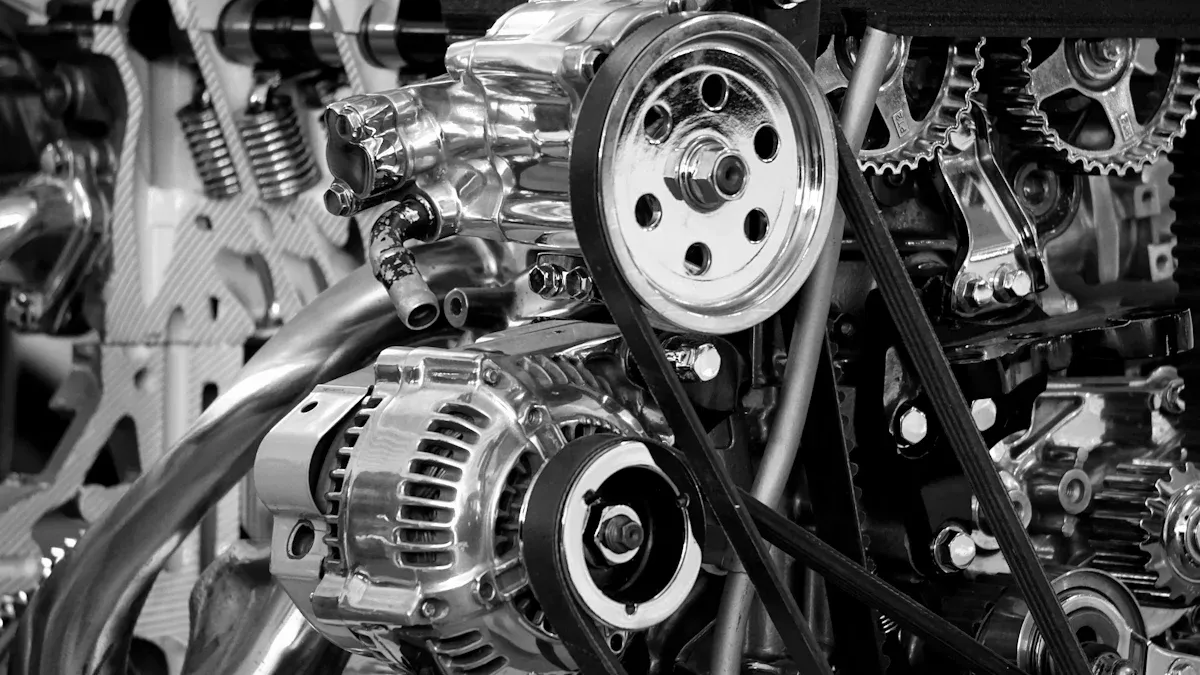
Design and Operation
Power Stroke Cycle
The biggest difference between 2-stroke and 4-stroke engines is how they finish their power cycle. A 2-stroke engine completes a power cycle in only two moves of the piston. This means you get power every time the piston goes up or down. You feel more power in a short amount of time. A 4-stroke engine needs four moves to finish one cycle. You get power every other turn of the crankshaft. This makes the engine run smoother and helps it last longer.
Lubrication System
Lubrication is very important for how long your engine works. In a 2-stroke engine, oil mixes with the fuel. This does not protect the moving parts as well. Pistons and rings wear out faster. A 4-stroke engine has a separate oil system. Oil moves through the engine and keeps the parts cool and smooth. This helps stop damage and makes the engine last longer.
| Engine Type | Lifespan Characteristics |
|---|---|
| 4-Stroke | Longer lifespan due to better lubrication and lower RPMs. |
| 2-Stroke | Shorter lifespan due to higher RPMs and less lubrication. |
Performance and Power
Torque and RPM
2-stroke engines run at higher RPMs. This means the engine spins faster and gives quick bursts of power. But high RPMs make the parts wear out faster. You need to fix the engine more often. A 4-stroke engine makes more torque at lower RPMs. You get smoother power and less stress on the parts. This helps the engine last longer.
- 2-stroke engines spin faster, so they wear out quicker and do not last as long because of how they are built and how they use oil.
- 4-stroke engines make more torque at lower RPMs, so they give smoother power and do not wear out as fast, which helps them last longer.
- High RPMs and fewer parts in 2-stroke engines make them wear out faster, so you need to fix them more often.
- More repairs can cost more money and make the engine less reliable over time.
Weight and Speed
2-stroke engines are lighter than 4-stroke engines. This makes them easier to carry and lets them speed up faster. The light weight is good for racing and tools you can move around. But less oil means the parts wear out quickly. You have to change pistons and rings more often. The exhaust system in 2-stroke engines also gets damaged faster. A 4-stroke engine is heavier but lasts longer. You get steady power and do not need to fix it as much.
- Two-stroke engines use less oil, so parts like pistons and rings wear out faster.
- You need to replace parts in two-stroke engines more often than in four-stroke engines because of how they are made.
- The exhaust system in two-stroke engines breaks more easily, which can make the engine not last as long.
| Engine Type | Longevity Impact |
|---|---|
| 2-Stroke | Generally wears out faster due to high-revving nature and simpler design. |
| 4-Stroke | Known for durability and longer lifespan between services. |
You can see that 2-stroke and 4-stroke engines are different in how they work, how they perform, and how long they last. If you want an engine that lasts longer and does not need repairs as often, you should pick a 4-stroke engine.
Longevity Factors for 2-Stroke and 4-Stroke Engines
Wear and Tear
Engines can get worn out in different ways. A 2-stroke engine wears out faster than a 4-stroke engine. This is because it works at higher speeds and shakes more. You might hear a loud, high sound when you use a 2-stroke engine. These shakes can make the parts break sooner. Doing regular check-ups helps your engine last longer, but you cannot stop all damage.
- Two-stroke engines wear out faster, so they do not last as long.
- They make more shaking and loud sounds when running.
- Checking and fixing your engine often is important to keep it working well.
A 4-stroke engine lasts longer because it runs smoother and cooler. The parts do not rub together as much, so there is less damage over time.
Maintenance Needs
You have to take care of your engine if you want it to last. Taking care of a 2-stroke engine is not the same as a 4-stroke engine. Look at the table below to see the main differences:
| Engine Type | Maintenance Requirements | Impact on Lifespan |
|---|---|---|
| 2-Stroke | Needs oil mixed with fuel for smooth running. | Wears out faster, does not last as long. |
| 4-Stroke | Has its own oil system inside the engine. | Wears out slower, lasts longer. |
You must mix oil with fuel every time you use a 2-stroke engine. If you forget, the engine can break down fast. A 4-stroke engine has a separate oil system. You only need to change the oil sometimes. This makes it easier to keep the engine working well for many years.
Tip: Always follow the care schedule for your engine. Small steps can help your engine last longer.
Environmental Impact
Where you use your engine can change how long it works. A 2-stroke engine makes more pollution because of how it is built. When you use this engine, some fresh fuel goes into the air. This puts more chemicals and tiny bits into the environment. These things can hurt your health and the air you breathe.
- Two-stroke engines make more pollution, so they are worse for the air.
- When both the intake and exhaust ports are open, fresh fuel escapes and adds more bad chemicals to the air.
- Burning oil in two-stroke engines makes more smoke and tiny bits that can hurt your lungs.
- Because of this, some places have rules or bans on two-stroke engines to keep the air and water clean.
A 4-stroke engine makes less pollution. Some places do not allow 2-stroke engines because they pollute more. Always check the rules in your area before you buy or use an engine.
Note: Clean air is good for your engine and your health. Pick the right engine for where you live and always follow the rules.
Engine Lifespan Comparison Table
Durability Metrics
When you look at engines, you want to know how long they last and how much work they need. Durability means how well an engine handles use over time. There are a few ways to check durability:
- Hours of operation: This tells you how many hours the engine can run before big repairs are needed.
- Maintenance frequency: This shows how often you need to check or fix the engine.
- Ease of repair: Some engines are easier to fix than others.
A 4-stroke engine usually lasts longer and does not need repairs as often. A 2-stroke engine works harder and wears out faster. You might have to change parts more often in a 2-stroke engine.
Tip: Pick an engine with a strong design and good lubrication if you want less fixing.
Typical Lifespan Ranges
You can see how long engines last by looking at real numbers. Outboard engines show a big difference between types. Most 4-stroke outboard engines run for 1,500 to 3,000 hours. If you take care of them, some last over 4,000 hours. 2-stroke engines do not last as long. Older ones need repairs sooner and may not reach as many hours.
Here is a table to help you compare lifespan, maintenance, and durability:
| Engine Type | Lifespan Range (Hours) | Maintenance Needs | Durability Notes |
|---|---|---|---|
| 4-Stroke Outboard | 1,500 – 3,000+ | Regular oil changes | Modern designs last longer, often over 4,000 hours with care |
| 2-Stroke Outboard | 800 – 1,500 | Mix oil with fuel | Older models wear out faster, need more repairs |
| 4-Stroke (General) | 400 – 2,000+ | More complex service | Strong design, better lubrication, longer life |
| 2-Stroke (General) | 200 – 1,000 | Simple service | Lighter, faster wear, shorter lifespan |
You can use this table to pick the right engine for you. If you want an engine for many years, a 4-stroke engine gives you more hours and fewer problems. If you want something light and easy to fix, a 2-stroke engine is good for short jobs.
- 4-stroke engines last longer because they run cooler and have better oil systems.
- 2-stroke engines are lighter but need more repairs and do not last as many hours.
- Always follow the care schedule to help your engine last longer.
Note: How long your engine lasts depends on how you use and care for it. Good care helps any engine last longer.
Real-World Examples of Engine Longevity

Motorcycles and Dirt Bikes
You see both 2-stroke and 4-stroke engines in motorcycles and dirt bikes. Riders often choose 2-stroke engines for racing because they are light and give quick bursts of power. These engines help you speed up fast and handle rough trails. However, you may notice that 2-stroke engines need more repairs. They wear out faster, especially if you ride hard or race often. Most riders find that 2-stroke engines last for a few seasons before needing a rebuild.
If you want a bike for daily use or long trips, you may prefer a 4-stroke engine. These engines run smoother and last longer. Many riders report that 4-stroke engines can go thousands of miles with regular oil changes and basic care. You spend less time fixing your bike and more time riding. This makes 4-stroke engines a smart choice for commuters and adventure riders.
Tip: If you ride for fun or use your bike every day, a 4-stroke engine gives you more years of reliable service.
Lawn Equipment
You use engines in trimmers, mowers, and blowers to keep your yard neat. The type of engine you pick changes how long your equipment lasts. Here is what many users report:
- If you use a trimmer part-time, you can expect it to last 5 to 10 years.
- If you work full-time with your mower, you may get only 2 to 3 years before you need a new one.
- In heavy-duty jobs, such as graveyard or state grounds, the lifespan can drop to just 1 or 2 years.
- After 4 to 5 years, many 2-stroke engines start to have small problems. Repairs can cost more than buying a new tool.
You see that 2-stroke engines work well for short jobs and light use. If you use your equipment every day, a 4-stroke engine may last longer and save you money on repairs.
Note: Always follow the care instructions for your lawn equipment. Clean air filters and use the right oil mix to help your engine last.
Marine Engines
Boats and watercraft need engines that can handle long hours and tough conditions. You find both 2-stroke and 4-stroke engines in the marine world. The table below shows how each type performs over time:
| Engine Type | Lifespan Characteristics |
|---|---|
| 2-Stroke | Wears out faster from high-speed use and less lubrication. |
| 4-Stroke | Built for durability with better oil systems, lasts longer. |
If you use your boat for fishing or family trips, a 4-stroke engine gives you more years on the water. You spend less time on repairs and more time enjoying your boat.
Tip: Choose a 4-stroke marine engine if you want fewer breakdowns and longer service life.
You also see companies like LETON POWER in the engine market. LETON POWER is a Chinese manufacturer of diesel generator sets. They use engines from brands like Cummins, Perkins, Weichai, Isuzu, and Kubota. LETON POWER offers affordable products and can customize generators to fit your needs. Many users trust their products for quality and value.
Industrial Use
You see engines working hard in many industrial settings. Factories, farms, and construction sites all depend on engines to power machines. You might use engines in generators, water pumps, or concrete mixers. The type of engine you choose can change how long your equipment lasts and how much work you need to do to keep it running.
When you look at industrial machines, you often find both 2-stroke and 4-stroke engines. Each type has strengths and weaknesses. You need to know how they compare before you decide which one fits your needs.
- 2-stroke engines have a shorter lifespan. They wear out faster because they run at higher speeds and have less protection for moving parts.
- 4-stroke engines last longer. They use a better oil system that keeps parts cool and smooth. This means you do not need to fix them as often.
You might notice that 2-stroke engines are lighter and easier to move. You can start them quickly and use them for short jobs. Many small tools, like chainsaws and portable pumps, use 2-stroke engines. If you need to carry your equipment from place to place, a 2-stroke engine can help you work faster. However, you will spend more time on maintenance. You need to check the engine often and replace worn parts. If you use the engine every day, you may need to rebuild it after a few months.
4-stroke engines work best in machines that run for many hours each day. You see them in large generators, water pumps, and construction equipment. These engines handle heavy loads and long work shifts. You do not need to mix oil with fuel. You only need to change the oil and check the filters. This makes your job easier and helps the engine last for years.
Here is a simple table to help you compare:
| Engine Type | Durability in Industrial Use | Maintenance Needs |
|---|---|---|
| 2-Stroke | Shorter lifespan, more wear | Frequent checks, rebuilds |
| 4-Stroke | Longer lifespan, more durable | Less frequent service |
You should think about how you use your machines. If you need power for a short time or want a light tool, a 2-stroke engine can work. If you want your equipment to last and do not want to fix it often, a 4-stroke engine is a better choice.
Tip: For most industrial jobs, you get better value from a 4-stroke engine. You save time and money on repairs, and your machines stay on the job longer.
You can keep any engine running longer if you follow the care instructions. Clean the air filter, use good oil, and check for leaks. When you take care of your engine, you help your business run smoothly.
Tips to Maximize Engine Life
If you take care of your engine, it will last longer. There are easy things you can do to help your engine work well for many years. Here are some simple tips for both 2-stroke and 4-stroke engines.
For 2-Stroke Engines
Fuel-Oil Mixing
You must mix fuel and oil the right way in a 2-stroke engine. The correct mix keeps engine parts safe and helps them move smoothly. Many people use a 32:1 oil-to-fuel mix. If you add more oil, your engine parts can last longer. If you use less oil, your engine may wear out faster. Always pick good oil made for 2-stroke engines.
- Mix fuel and oil just like the instructions say.
- Always use fresh and clean oil when you fill up.
- Do not use old or dirty oil.
Tip: More oil in the mix helps your engine last longer and stops wear.
Maintenance Intervals
Doing regular checks helps your engine stay strong. You should look at and change the spark plug every 20 hours. Clean the fuel system every 50 hours to get rid of dirt and carbon. Change clogged fuel filters to keep the engine strong. Clean the carburetor often so your engine does not break down.
| Maintenance Type | Recommended Interval (miles) |
|---|---|
| Top-end refresh | 1,500 (high load), 2,500-3,000 (general) |
| Bottom-end check | 5,500 (high load), 9,000+ (general) |
| Overall lifespan | 4,000-5,000 (well-designed bottom end) |
- Check and change parts before they break.
- Use a good cleaner for the fuel system.
- Write down when you do maintenance to remember the next time.
For 4-Stroke Engines
Oil and Filter Changes
Changing oil and filters is very important for a 4-stroke engine. New oil keeps parts clean and stops friction. Dirty oil can make sludge and hurt the engine. Change the oil filter to stop bad stuff from moving inside. You should change oil and filters often, especially if you drive short trips or in traffic.
- Change the oil when the maker says to.
- Put in new oil filters so they do not get blocked.
- Use good oil to protect your engine better.
Note: Clean oil and filters help your engine run well and last longer.
Monitoring Performance
You can stop engine problems by watching for changes. Make a schedule for maintenance and follow it. Check sensors and read codes every month. Clean sensors so they do not get dirty or rusty. Change important sensors after a set number of hours. Use good parts when you fix your engine.
- Look at sensors and connectors often.
- Clean engine parts to stop rust and buildup.
- Keep your engine in a dry place when you are not using it.
Universal Tips
You can use these tips for both types of engines to help them last:
- Clean and check spark plugs often so the engine starts well.
- Change gearbox oil at least once each season to stop friction.
- Look at fuel lines for leaks and clean the carburetor.
- Get your engine ready for winter by draining water and adding fuel stabilizer.
- Have a mechanic check your engine on a schedule.
- Store your engine safely when you are not using it.
Tip: Taking care of your engine and fixing problems fast helps it stay strong and work well.
If you follow these steps, your engine will work better and last longer. Good habits and regular checks keep your engine running year after year.
A 4-stroke engine lasts longer because it uses better oil. It also runs cooler than other engines. Doing regular checks helps any engine last more years. You should look at spark plugs often. Use good oil every time you fill up. Store your engine in a safe place to stop damage. If you take care of your engine, it will work well for a long time.
Remember: Fix problems fast and use your engine carefully to keep it strong.
FAQ
How can you tell if your engine is a 2-stroke or 4-stroke?
You can check the fuel system. A 2-stroke engine needs you to mix oil with fuel. A 4-stroke engine has a separate oil tank. You can also look for a dipstick on a 4-stroke engine.
Why do 2-stroke engines wear out faster?
2-stroke engines run at higher speeds and use oil mixed with fuel. This gives less protection to moving parts. You will see more wear and need repairs sooner.
Can you make a 2-stroke engine last as long as a 4-stroke?
You cannot match the lifespan, but you can help your 2-stroke engine last longer. Use the right oil mix, clean the engine often, and follow a strict maintenance schedule.
What is the main reason 4-stroke engines last longer?
A 4-stroke engine uses a separate oil system. This keeps parts cool and well-lubricated. You get less friction and slower wear, so the engine lasts longer.
Do 4-stroke engines cost more to maintain?
You may pay more for oil changes and parts. However, you will need repairs less often. Over time, you save money because the engine lasts longer.
Which engine type is better for daily use?
You should pick a 4-stroke engine for daily use. It runs smoother, lasts longer, and needs less frequent repairs. You will spend less time fixing it.
Are 2-stroke engines banned in some places?
Yes, some cities and states ban 2-stroke engines. They make more pollution. Always check local rules before you buy or use a 2-stroke engine.
What is the best way to store your engine?
You should clean the engine, drain old fuel, and add a fuel stabilizer. Store it in a dry, safe place. This helps prevent rust and damage.

